The unsealing of Nicolás Maduro cocaine corruption charges has triggered a geopolitical shockwave after US prosecutors accused the Venezuelan president of leading a narco-state enterprise that flooded America with cocaine.
United States justice officials say the indictment, revealed in New York, lays out years of alleged criminal conduct linking Maduro, his wife Cilia Flores, and senior regime figures to drug trafficking, terrorism conspiracies, and weapons offences.
The case follows Maduro’s dramatic capture in Venezuela during a US-led operation, an event that has already redrawn diplomatic lines across Latin America and intensified global scrutiny of Washington’s foreign policy under President Donald Trump.
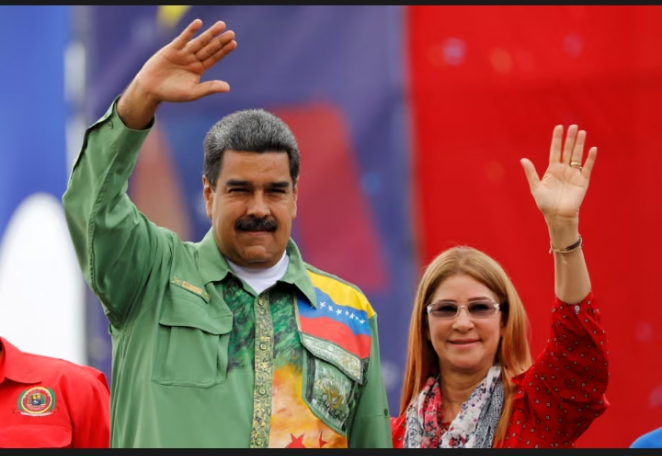
According to prosecutors, the Venezuelan leader used the machinery of the state to protect violent cartels, enrich his inner circle, and weaponise narcotics as a tool against the United States.
“This defendant ran a criminal enterprise from the highest office in Venezuela,” US attorney general Pam Bondi said. “He will now face American justice.”
A presidency recast as a criminal enterprise
The indictment accuses Maduro of overseeing what US officials describe as a “corrupt, illegitimate government” sustained by cocaine profits and enforced through terror.
Federal prosecutors allege the Venezuelan state became a logistical hub for cocaine trafficking, with airstrips, ports, and military protection facilitating shipments north.
Maduro is charged with narco-terrorism conspiracy, cocaine importation conspiracy, and multiple weapons offences involving machine guns and destructive devices.
“These were not rogue actors,” the indictment states. “This was a system.”
The charges mirror a 2020 Manhattan case filed during Trump’s first term but expand dramatically to include Maduro’s wife, son, and additional co-conspirators.
Maduro and his wife at the centre
Cilia Flores, Venezuela’s first lady, is accused of acting as a political fixer for traffickers, allegedly accepting bribes to arrange protection and access to senior anti-drug officials.
US prosecutors claim Flores accepted hundreds of thousands of dollars in illicit payments in exchange for facilitating drug flights through Venezuelan airspace.
“These bribes ensured safe passage for cocaine shipments,” the indictment alleges, “with proceeds flowing directly to regime insiders.”
The charges also revive scrutiny of Flores’ nephews, who were convicted in 2017 of attempting to smuggle large cocaine shipments into the United States.
Cartels, gangs and state protection
American authorities allege Maduro’s government worked directly with organisations such as the Sinaloa cartel and the Tren de Aragua gang.
The indictment claims traffickers paid Venezuelan officials for protection, intelligence, and logistical support, transforming the country into a central cocaine corridor.
By 2020, prosecutors say, as much as 250 tons of cocaine transited Venezuela annually, destined largely for US markets.
“This cycle of narcotics-based corruption lined the pockets of Venezuelan officials and their families,” the indictment states.
Allegations of violence and intimidation
Beyond trafficking, the charges describe kidnappings, beatings, and killings allegedly ordered to enforce debts and silence rivals.
Prosecutors cite the alleged murder of a Caracas drug boss as an example of how violence was used to maintain discipline within the operation.
“These were not isolated acts,” a justice department official said. “They were tools of governance.”
The indictment accuses Maduro of using fear to consolidate power while presenting himself internationally as a legitimate head of state.
The raid that changed everything
Maduro’s arrest followed what US officials describe as a precision operation carried out at the request of the Department of Justice.
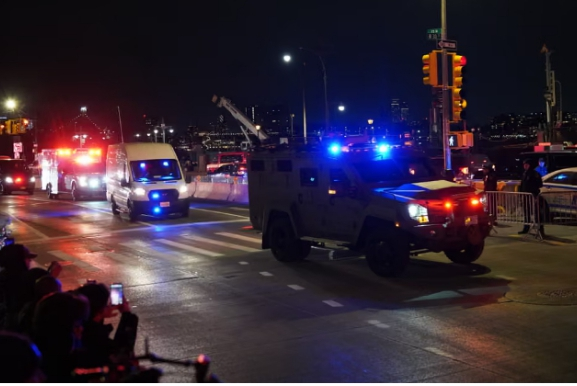
A video released by the White House shows Maduro smiling as federal agents escorted him through a Drug Enforcement Administration facility in New York.
He is expected to remain detained in a federal jail in Brooklyn while awaiting trial in Manhattan.
General Dan Caine, chair of the joint chiefs of staff, said the military supported law enforcement “as requested.”
“This was a justice operation,” Caine said. “The Department of War supported the Department of Justice.”
Trump administration takes victory lap
President Donald Trump has framed the arrest as proof of restored American strength.
“A fugitive of American justice is now in custody,” secretary of state Marco Rubio said. “There was a $50m reward on his head.”
Rubio described the operation as a law enforcement action rather than an act of war, though critics dispute that characterisation.
The Trump administration argues the indictment validates years of sanctions and diplomatic pressure against Caracas.
International backlash builds
China, Russia, and several Latin American governments have condemned the arrest, warning it violates sovereignty and international law.
Beijing called for Maduro’s immediate release, urging dialogue rather than confrontation.
“This sets a dangerous precedent,” a Chinese foreign ministry spokesperson said.
Venezuela’s allies accuse Washington of using criminal law as a geopolitical weapon.
Venezuela in political freefall
Inside Venezuela, the indictment has intensified uncertainty amid economic collapse and mass migration.
State television dismissed the charges as “imperialist fiction,” while opposition figures called the moment historic.
“This confirms what Venezuelans have known for years,” an opposition lawmaker said. “The state was captured by criminals.”
Markets reacted nervously, with oil traders assessing potential disruptions to Venezuelan crude exports.
Legal mountain ahead for prosecutors
Despite the dramatic arrest, securing a conviction will be challenging.
Defence lawyers are expected to argue political motivation, lack of jurisdiction, and reliance on informants.
Maduro has long denied all allegations, previously calling US indictments “cartoonish lies.”Still, prosecutors insist the evidence is overwhelming.
“This case is built on years of intelligence, testimony, and financial records,” a justice department source said.Still, prosecutors insist the evidence is overwhelming.
“This case is built on years of intelligence, testimony, and financial records,” a justice department source said.
A trial with global consequences
The trial, expected to begin later this year, could redefine how international law treats sitting heads of state accused of transnational crimes.
Legal scholars say the case tests the boundaries between sovereignty and accountability.
“If convicted,” one expert noted, “this would mark one of the most consequential prosecutions of a foreign leader in modern US history.”
Venezuela’s future hangs in balance
As Maduro awaits trial, Venezuela faces an uncertain transition.
Whether the indictment accelerates political change or deepens instability remains unclear.
What is certain is that the Nicolás Maduro cocaine corruption charges have transformed a regional crisis into a global legal and diplomatic reckoning.
About The Author