The Nigeria Football Federation (NFF) has reiterated its stance that no payment can be directed from public funds without a substantial contract to back it up.
Speaking on administrative and financial issues within the federation, an NFF official emphasized the importance of formal agreements in all dealings involving coaches and staff.
“There is no way we can direct anyone to make payment from public funds without substantial contract to back it up,” the official said. He noted that the issue is not restricted to the national team but is also present at club level, where similar challenges have emerged.
Contractual Obligations for Coaches
The official highlighted a growing concern regarding coaches taking up positions either within the NFF or with clubs without signing formal contracts. This trend has created complications in ensuring accountability and adherence to financial regulations.
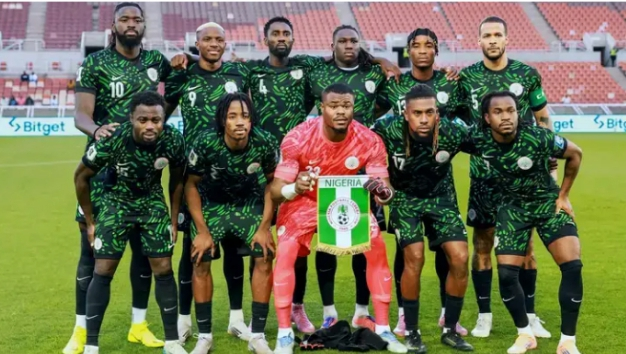
“Even at the club level, it is happening too. We are having the challenge with the players’ statute committee. No coach should take up a job with the NFF or any club without signing a contract. It is a general problem with our coaches,” he added.
He further stressed the need to educate coaches about the importance of formal agreements to prevent financial mismanagement and contractual disputes. “Let’s try to enlighten them to stop this desperation of getting jobs without signing a contract,” he noted, emphasizing that formal contracts protect both the individual and the organization.
Funding From the Government
Beyond contracts, the official also shed light on how the NFF sources funds to carry out its operations and manage the national teams. According to him, government intervention plays a crucial role in financing highly capital-intensive activities.
Read also: Arsenal vs Wolves: Shearer predicts Arsenal to dominate Arokodare’s Wolves in Premier League clash
“NFF usually go to government to seek for intervention fund. This is similar to what they do in other countries because the government have interest in the team’s achievement and performance,” he explained.
He clarified that while the NFF maintains a level of independence in its development programs, the federation manages the national teams on behalf of the government. “NFF as a body, when you talk about independency, is more about development, but we are holding the national team on trust on behalf of the government. It is a government property; it belongs to the public. Whenever we go to the government for money, we always make it clear what we want to use it for,” he said.
The official emphasized that government funds are not sought routinely but are requested when the financial requirement is substantial. “Like I said, it is not all the time that we go to the government for money. It is when it is highly capital intensive that we seek for support,” he noted.
FIFA Grants and Oversight
In addition to government funding, the NFF also receives financial support from FIFA, primarily through annual grants. The official explained that FIFA provides strict guidelines on how the funds should be utilized, ensuring transparency and accountability.
“On FIFA, what they give is an annual grant. Whenever they give NFF money, there is always instruction on how the money should be spent. They have their auditors, who always monitor things for them,” he stated.
These external oversight mechanisms, both from FIFA and the government, ensure that all expenditures are properly documented and justified. This system of checks and balances is critical to maintaining financial integrity within the federation and protecting public funds.
The Broader Context of NFF Financial Management
The NFF has faced scrutiny in recent years regarding financial management and contractual issues, particularly around coaching appointments and player compensation. The insistence on signed contracts before any payment is part of a broader effort to strengthen governance and ensure that funds—whether from the government or FIFA—are appropriately used.
By formalizing contracts and clarifying the use of funds, the federation aims to create an environment of accountability, transparency, and professionalism in Nigerian football. This approach not only protects the federation but also builds confidence among stakeholders, including players, coaches, sponsors, and fans.
Challenges With Coaches and Clubs
One of the pressing issues highlighted is the lack of formal agreements between coaches and clubs or the NFF. This often leads to disputes, misunderstandings, and financial irregularities. The federation hopes to curb this trend through continuous education and strict enforcement of contractual obligations.
“Coaches need to understand that taking up a job without a contract exposes them to risks. They may not receive their dues, or they may face disciplinary actions. Similarly, the organization is protected when contracts are in place,” the official added.
The NFF’s focus on contractual compliance is part of a wider initiative to professionalize Nigerian football. This includes implementing standardized procedures, strengthening internal controls, and ensuring that all stakeholders are fully aware of their rights and responsibilities.
Importance of Government and FIFA Collaboration
The NFF’s financial structure is heavily reliant on both government support and FIFA grants. While government intervention is typically sought for capital-intensive projects, FIFA funds are granted annually with strict conditions. This dual-source funding model requires careful planning and transparent reporting.
“Both sources of funding have checks and balances. Government funds are public funds, and FIFA funds come with clear instructions. Our responsibility is to ensure that all expenditures are accounted for and properly documented,” the official explained.
This collaboration ensures that Nigerian football can develop sustainably while adhering to international standards of financial management. It also reinforces the importance of accountability, not just within the federation but across all levels of football administration in the country.
Educating Stakeholders
A key part of the NFF’s strategy is educating stakeholders about financial responsibility and contractual obligations. By raising awareness, the federation hopes to prevent the desperation that leads some coaches to accept roles without proper agreements.

“Education is critical. Coaches, administrators, and clubs need to understand the importance of formal contracts. It is not just about money; it is about professionalism, accountability, and the long-term growth of Nigerian football,” the official concluded.
The NFF’s proactive stance on contracts and funding transparency demonstrates its commitment to building a professional and accountable football environment in Nigeria. By combining government support, FIFA oversight, and internal governance, the federation is working to ensure that Nigerian football remains competitive, well-managed, and sustainable.
About The Author