

Nearly 300,000 people in the southern Ukrainian city of Odesa have been left without electricity or running water following a large-scale Russian drone strikes. Local officials reported the outage, which comes amid a harsh winter. One person was injured in the assault.
The strikes were part of a coordinated series targeting energy infrastructure across Ukraine. Cities including Kyiv and Dnipro in the southeast also experienced disruptions as Russian forces pressed on with attacks aimed at weakening essential services.
“Hundreds of drones and ballistic missiles targeted energy systems, depriving people of power, heating, and water,” said Ukraine’s foreign minister, Andrii Sybiha. He confirmed that among those injured were two children, including a toddler and a four-year-old.
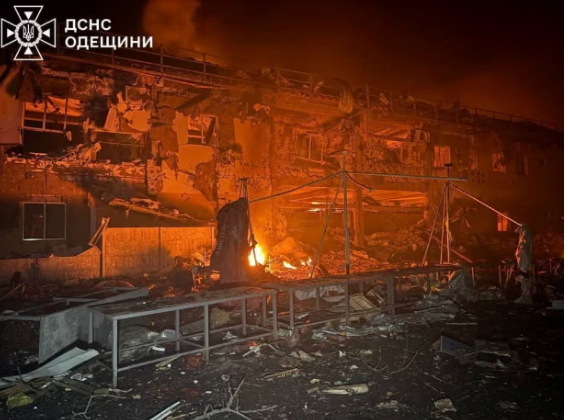
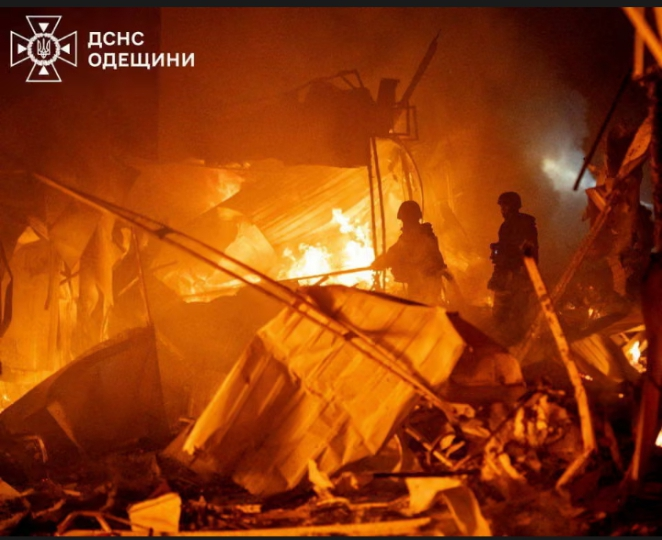
Authorities in Odesa described widespread damage to residential buildings, public facilities, and marketplaces. Fires broke out across several districts during the night, with emergency teams racing to contain the blazes. Images from the scene show blackened buildings and smoke still rising in the morning.
Residents described a harrowing night, with families huddled together in cold apartments, relying on emergency generators and bottled water.
Many faced hours of uncertainty as the city worked to restore essential services, while electricity providers struggled to assess the full scale of the damage.
Russia’s attacks on Ukraine have intensified this winter, focusing on energy systems. Analysts note that depriving citizens of heating and water is a calculated strategy to exacerbate civilian hardship during the cold season.
The strikes underscore the ongoing vulnerability of Ukrainian infrastructure despite diplomatic efforts to end the war.
International observers condemned the strikes, with EU officials reiterating support for Ukraine’s right to protect its citizens. Brussels-based analysts emphasized the urgency of strengthening Ukraine’s energy resilience to withstand continued attacks from Russian forces.
Meanwhile, EU leaders convened at Alden Biesen Castle in Belgium for an informal economic summit. The meeting, set in a historical venue founded by Teutonic knights, was designed as a brainstorming session rather than a decision-making forum. Officials discussed strategies to enhance Europe’s competitiveness against the United States and China.
One EU official explained that changing the summit’s location fostered a productive atmosphere. “It is useful to create a different environment to encourage open discussions,” they said, noting that such retreats often influence subsequent EU policy decisions.
The summit comes against the backdrop of wider geopolitical tensions, including ongoing Russian aggression in Ukraine and trade disputes involving the United States.
European leaders explored plans to strengthen the single market and reduce dependency on external powers, aiming to secure long-term economic stability.
Back in Ukraine, emergency crews continued to battle fires caused by the overnight drone strikes. Photographs show scorched markets and buildings, highlighting the severity of the damage.
Local authorities warned that recovery would take days, with priority given to restoring power, water, and heating systems.
Civilians reported difficulties accessing food and medical care, prompting aid agencies to deploy emergency supplies. Volunteers distributed blankets, heaters, and bottled water to families affected by the blackout, while hospitals relied on backup generators to maintain critical services.
The Ukrainian government called on international partners for support in rebuilding damaged infrastructure. Officials emphasized the importance of rapid assistance, especially in regions like Odesa, where energy and water systems are vital during the cold winter months.
In addition to the crisis in Ukraine, Portugal and parts of Europe faced flooding caused by successive winter storms.
The extreme weather led to the resignation of Portugal’s interior minister, Maria Lúcia Amaral, after criticism over the government’s handling of the disasters. Thousands of residents were displaced, and infrastructure suffered extensive damage.
The dual challenges of war and climate-related disasters highlight the vulnerability of European communities. Humanitarian organizations stressed the need for coordinated relief efforts to address both the immediate and long-term impacts on affected populations.
Sports events were also affected by the Ukraine conflict. Ukrainian skeleton racer Vladyslav Heraskevych was disqualified from the Winter Olympics for wearing a helmet honoring athletes killed in the war. The International Olympic Committee cited rules against political statements at Olympic venues, despite pleas for compromise.
The attacks on energy infrastructure and the ongoing humanitarian challenges illustrate the broader consequences of Russia’s campaign in Ukraine. Analysts note that civilian populations often bear the brunt of strategic attacks, with critical services deliberately targeted to maximize disruption.
EU leaders acknowledged the broader security and economic implications of such attacks. Discussions at the Belgian summit touched on the importance of coordinated measures to protect energy infrastructure and maintain resilience against future crises.
As Odesa begins the slow process of recovery, residents are adapting to temporary measures to cope with power and water shortages. Community organizations have mobilized volunteers, while international partners have pledged technical and financial support to restore essential services.
The Russian strikes underscore the enduring vulnerability of Ukrainian cities to aerial assaults, particularly those targeting energy and water systems. The government continues to coordinate defensive measures, while the international community monitors developments closely.
In the coming days, Ukrainian authorities are expected to release updates on the restoration of electricity and water services in Odesa and other affected regions. Recovery efforts will require substantial resources and coordination, given the extensive damage to infrastructure.
The Odesa blackout and related attacks serve as a stark reminder of the human cost of conflict. Families coping with the loss of basic services face increased hardships, while emergency responders and volunteers work tirelessly to mitigate the crisis.
Meanwhile, European policymakers continue to evaluate strategic responses to both Russian aggression and economic challenges posed by global competition. The informal summit in Belgium represents a platform for discussion on resilience, cooperation, and long-term planning.
Despite the ongoing war, Ukrainians in Odesa and across the country remain determined to rebuild and maintain essential services. Aid groups are working around the clock to provide relief, while engineers and technicians repair power lines and water infrastructure.
Russia’s continued drone attacks highlight the need for strengthened security and contingency planning. Observers note that energy infrastructure in conflict zones is increasingly becoming a focal point of military strategy, emphasizing the importance of protective measures and rapid response capabilities.
The combination of winter storms in Europe and targeted attacks in Ukraine underscores the region’s exposure to both natural and man-made crises. Authorities stress preparedness and community support as key factors in mitigating the effects of such emergencies.
As international attention remains focused on Ukraine, the resilience of cities like Odesa will be critical in maintaining civilian life and essential services. The restoration of power and water systems is not only a technical challenge but also a vital humanitarian priority.
Read also:Canadian Police identify Tumbler Ridge school shooting suspect after nine killed
About The Author


