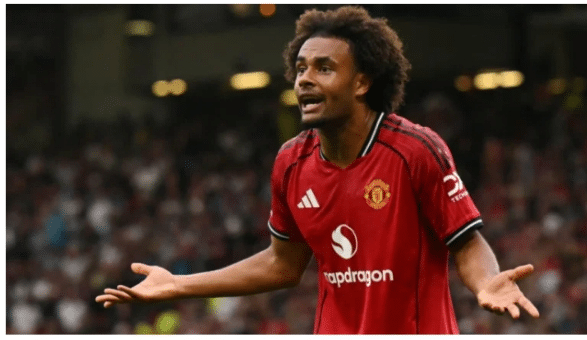
Milan urged to avoid Zirkzee after Filippo Galli strongly cautioned against signing the Manchester United striker, insisting the Dutch forward cannot solve Milan’s immediate structural attacking needs.
Galli explained that Milan’s problems extend far deeper than individual signings, arguing the club must adopt strategic patience rather than rushing toward another high-profile acquisition.
The former defender emphasised that Zirkzee’s profile does not closely match Milan’s requirements, describing him as creative and intelligent but lacking the ruthless precision required from elite strikers.
He stressed that goalscoring responsibility defines Milan’s tactical identity, noting “the team requires a finisher who guarantees decisiveness,” something he believes Zirkzee has yet to consistently demonstrate.
Galli pointed out that the Dutchman’s recent seasons show declining numbers, arguing technical beauty alone cannot resolve pressure-filled Serie A battles where efficiency outweighs experimental movement.
Referencing Zirkzee’s limited contribution at Manchester United, Galli highlighted the challenge of competing with Benjamin Šeško and Bryan Mbeumo, both of whom displaced him from starting opportunities.
He added that reduced playing time hinders continuity for any striker, stating “forwards require rhythm, emotional sharpness, and repetition,” qualities difficult to maintain from the substitutes’ bench.
The warning resonated with analysts who regularly critique Milan’s attacking inconsistency, especially in matches where missed chances altered momentum and cost crucial points across tight league contests.
Supporters welcomed Galli’s honesty, appreciating his willingness to confront sentimental hype surrounding potential signings and insist that Milan avoid repeating recent recruitment miscalculations.
Many fans recall previous forwards who dazzled with technical flair yet failed to deliver consistent end-product, reinforcing concerns about repeating the cycle with another uncertain figure.
Galli insisted recruitment must return to fundamentals, arguing Milan’s identity thrives when accompanied by clarity, discipline, and forwards capable of seizing decisive moments under tremendous pressure.
He emphasised that Milan needs a striker capable of dominating penalty-box spaces, explaining Zirkzee’s instinct to drift wide or deep may disrupt established attacking patterns.
The club’s current system relies heavily on precise positioning, with coaches demanding forwards who provide reliable reference points rather than unpredictable roaming across multiple creative zones.
This perspective reflects ongoing conversations about Milan’s transfer strategy, a longstanding topic among supporters frustrated by inconsistency in identifying players who fit system requirements.
Read also: Super Eagles 2026 qualification failure: Lawal calls for fresh faces
Analysts noted the relevance of Filippo Galli analysis, as his experience provides nuanced understanding of Milan’s internal demands, competitive pressures, and evolving Serie A striker market.
Galli referenced Ruud Gullit’s public endorsement of Zirkzee but cautioned against decisions driven by nostalgia or friendship, stating “the club must choose based on logic, not loyalty.”
He argued that emotional influence cannot dictate long-term planning, especially in an era where Milan must compete financially and athletically with Europe’s most sophisticated clubs.
Galli insisted Milan must learn from past missteps, remembering signings whose potential overshadowed their incompatibility with Italian tactical detail and the defensive intensity of Serie A.
He reminded supporters that Milan historically thrived with forwards who balanced elegance with aggression, citing players who embodied lethal finishing alongside tactical intelligence and positional discipline.
The former defender stressed that recruitment should anticipate future challenges rather than simply addressing current discomfort, a philosophy essential for sustainable growth and competitiveness.
He noted that while creativity remains important, Milan must prioritise players capable of punishing opponents consistently, turning half-chances into tangible momentum-shifting goals.
This sentiment aligns with criticism that Milan have lacked a clinical presence in decisive fixtures, making league ambitions fragile against rivals with sharper frontline reliability.
Galli warned that misaligned purchases prolong rebuilding cycles, urging Milan to remain steadfast in identifying profiles perfectly tailored to tactical, psychological, and structural club demands.
The call reinforced broader concerns within Milan’s hierarchy as executives weigh potential risks against expectations from supporters awaiting ambitious yet responsible long-term planning.
Galli lauded Zirkzee’s intelligence but reaffirmed his stance that Milan urged to avoid Zirkzee because stylistic incompatibility could undermine stability during a period requiring steady progression.
He pointed out that Milan’s midfielders rely on predictable movement patterns from strikers, and sporadic drifting could diminish cohesion that coaches have worked tirelessly to refine.
Others argued Zirkzee’s versatility could expand Milan’s creative options, yet critics countered that such fluidity risks diminishing the core offensive reference point required in structured systems.
Observers highlight that Milan’s recent tactical evolution prioritises verticality, directness, and consistent penalty-box presence—qualities less aligned with Zirkzee’s preferred roaming tendencies.
Galli’s critique sparked debate among supporters, with some believing Zirkzee’s youth justifies investment, while others fear another long-term project with uncertain immediate impact.
He stressed that Milan cannot gamble on projections, stating “the team needs certainty, not experiments,” particularly when competing for tight titles requiring unwavering consistency.
The Milan transfer strategy discussion intensified as analysts reassessed the risks of signing forwards whose strengths emphasise build-up play over decisive scoring contributions.
Galli reiterated that modern Serie A demands relentless mentality, arguing Zirkzee must still prove his capacity to carry an elite Italian team through demanding tactical battles.
He noted that the club must avoid unnecessary pressure on young players, stressing the importance of signing profiles already accustomed to delivering under high expectations.
Galli suggested Milan refocus on forwards with proven records in culminating attacking sequences, particularly those demonstrating resilience against compact Italian defensive systems.
His comments reignited examination of Joshua Zirkzee profile, with analysts dissecting attributes related to decision-making, movement discipline, finishing reliability, and adaptation to high-pressure environments.
The debate extends beyond Zirkzee, prompting reflection on Milan’s historical success built through decisive, intelligent, physically resilient strikers capable of shaping decisive league trajectories.
Supporters acknowledge the need for strategic patience as competing clubs increasingly invest in specialised forwards whose attributes complement specific tactical models.
Galli believes Milan’s long-term project necessitates avoiding distractions, reaffirming that Milan urged to avoid Zirkzee because the team’s rebuilding phase requires certainty over speculation.
Analysts argue that the Serie A striker market currently offers several alternative profiles better aligned with Milan’s needs, potentially providing immediate impact without extensive tactical reshaping.
Galli emphasised that Milan’s success depends on cohesion, warning against introducing profiles that could complicate existing structures and reduce clarity within forward phases.
He urged executives to maintain conviction, insisting the club must pursue signings reflecting maturity, finishing reliability, and tactical compatibility essential for advancing Milan’s ambitions.
As discussions continue, the former defender’s voice remains influential, encouraging Milan to resist pressure and remain committed to sustainable, long-term football development.
Milan supporters remain divided, yet many recognise Galli’s experience as a guiding reference, particularly amid persistent uncertainties surrounding striker recruitment and system coherence.
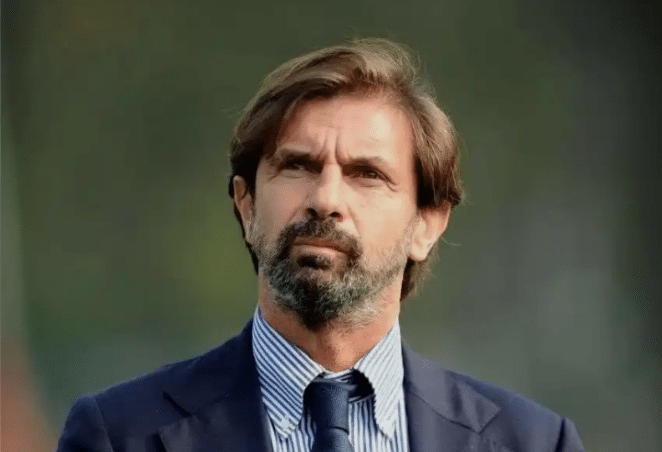
The debate surrounding Zirkzee persists, but Galli’s insistence that Milan urged to avoid Zirkzee continues shaping discourse ahead of critical transfer window decisions.
Observers anticipate Milan refining their approach, balancing immediate performance demands with thoughtful planning that protects identity, ambition, and collective tactical integrity.
The club’s future direction remains under scrutiny, with expectations intensifying as supporters hope strategic decisions will strengthen Milan’s competitiveness across domestic and European competitions.
As Milan consider their options, Galli’s cautionary perspective serves as an essential reminder of the importance of clarity, discipline, and deliberate decision-making in modern football.
His comments highlight the significance of measured planning, ensuring Milan avoid misaligned transfers while pursuing players capable of elevating the team’s long-term vision and performance.
Ultimately, the broader conversation reinforces a central message: Milan urged to avoid Zirkzee not from bias, but from a desire for clearer tactical alignment and sustainability.
About The Author