The Marjorie Taylor Greene messaging shift is drawing attention as she speaks openly about past controversies, insisting she has evolved and wants to focus on unity, not division.
“It’s the same,” she told Bash, emphasizing that her recent statements reflect a deliberate attempt to move beyond previous rhetoric that drew widespread criticism and concern nationwide.
It’s a stark messaging shift for Greene, who has previously been accused of stoking political divisions by promoting antisemitic conspiracy theories and elevating controversial posts on social media.
She liked a post that called for the executions of former Democratic House Speaker Nancy Pelosi and former President Barack Obama, and posted a photo of herself holding a gun beside images of three progressive Democratic congresswomen.
When Bash brought up some of these examples, Greene reiterated her past apologies and said a core part of her Christian faith is forgiveness, a principle guiding her recent public statements.
“People change, and I’ve been clear about my mistakes,” Greene told Bash, reflecting her desire to show growth while acknowledging the impact of her earlier actions on public discourse.

Her shift in messaging comes amid heightened scrutiny, with critics arguing her past behavior contributed to political polarization and alarm, particularly given the nature of the posts and social media engagement.
Greene’s apology remarks are central to her narrative of redemption, suggesting that she sees the controversy not as something to deny but as an opportunity to demonstrate personal accountability.
“I have apologized multiple times,” Greene said, “and I truly hope people understand that my faith teaches me to seek forgiveness and extend it to others in kind.”
Political controversies surrounding Greene remain fresh in the public memory, as previous statements and posts were widely reported, causing bipartisan concern and prompting discussions about responsibility among elected officials.
The shift also appears to be a strategic move in a politically charged environment where candidates are increasingly scrutinized for past statements, especially those that might incite division or fear.
Greene emphasized her Christian faith forgiveness stance, asserting that it is not just rhetoric but a lived principle shaping how she now communicates and approaches political disagreements.
Critics, however, are skeptical, noting that social media actions like liking inflammatory posts or posting controversial images do not vanish with verbal apologies, raising questions about sincerity and long-term behavioral change.
“Faith and actions must align,” Greene told Bash, “and I am committed to showing through my behavior that my focus now is constructive, not destructive.”
Her interview with Dana Bash highlights a careful recalibration, as she attempts to reframe her public persona from provocateur to someone seeking reconciliation and measured dialogue with constituents.
Greene’s messaging shift is also influenced by her recognition that past actions generated headlines and fueled narratives that overshadowed her legislative work and policy positions in Congress.
Political controversies surrounding Greene have included allegations of promoting conspiracy theories about elections and COVID-19, which have drawn condemnation from both Democrats and members of her own party at times.
She acknowledged these controversies in her remarks, framing them within a broader story of personal growth and the lessons she claims to have learned about the consequences of words and social influence.
“None of us are perfect, but we must be accountable,” Greene said. “I have learned the hard way that words carry weight, and I intend to use mine responsibly moving forward.”
Her apology remarks aim to bridge a gap with critics, suggesting that while mistakes were made, genuine acknowledgment and corrective action are possible and necessary in public life.
Greene’s Christian faith forgiveness stance underscores her belief in redemption, a narrative she uses to counter perceptions that past actions define her permanently in the political arena.
Observers note that her interview with Dana Bash serves both as an explanation and a defense, framing her past as a learning period while emphasizing present intentions and commitments.
“This is about growth,” Greene said. “I can’t change the past, but I can choose how I engage with people now, with honesty, respect, and faith guiding me.”
Her messaging shift also comes amid ongoing scrutiny from media outlets and political opponents, who continue to highlight previous posts and statements as evidence of enduring controversies.
Despite skepticism, Greene’s supporters have interpreted her remarks as a sign of maturity, arguing that acknowledgment of past mistakes combined with a focus on faith and forgiveness is a genuine step forward.
Political controversies surrounding Greene have, in some cases, influenced public perception beyond her district, affecting discourse about the tone and responsibilities of elected officials nationwide.
Her apology remarks often highlight the tension between political strategy and personal conviction, illustrating the challenge public figures face when past actions conflict with present intentions.
Greene reinforced her Christian faith forgiveness stance repeatedly, signaling that this principle now underpins her approach to public commentary and engagement with opponents or critics in political debates.
In discussing her messaging shift, she framed it as a conscious choice to prioritize dialogue over divisiveness, citing lessons learned from both media scrutiny and constituent reactions.
Critics remain wary, pointing out that repeated controversial actions, even with apologies, create a credibility gap, and that words must be reinforced by consistent and measurable behavioral change.
Her interview with Dana Bash underscores an effort to present transparency, acknowledging past actions openly while signaling a new approach grounded in moral reflection and strategic communication.
“Forgiveness is key,” Greene said. “Not just asking for it, but offering it to others. That is at the heart of how I see my role now.”
Marjorie Taylor Greene messaging shift, as she frames it, is not merely about optics but about embedding principles of accountability, reconciliation, and faith into her public interactions moving forward.
As political controversies surrounding Greene continue to attract attention, the focus has shifted to whether her stated intentions will manifest in tangible legislative and community outcomes.
Her apology remarks, repeated in interviews, aim to create a narrative of evolution rather than evasion, countering claims that past statements define her entire political career.
Greene’s Christian faith forgiveness stance also provides a lens through which she interprets criticism, suggesting that even harsh judgment can be mitigated by understanding, humility, and a willingness to grow.
The interview with Dana Bash illustrates her attempt to control the narrative, addressing specific past incidents while signaling a broader commitment to civility and responsible conduct in political life.
“Change is a process,” Greene told Bash. “It’s ongoing, visible, and sometimes uncomfortable, but it’s necessary for me to serve my constituents with integrity.”
Observers note that her messaging shift could have political implications, influencing both her reelection prospects and broader discussions about accountability, forgiveness, and conduct in American politics.
Political controversies surrounding Greene remain part of the discourse, but her articulation of apologies, faith, and growth aims to redirect attention toward constructive engagement and policy priorities.
Greene’s apology remarks, framed within a faith-centered narrative, attempt to humanize her public persona while addressing legitimate concerns raised by past actions and statements.
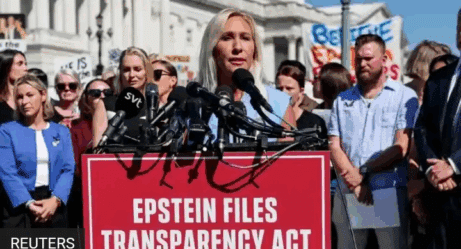
Her Christian faith forgiveness stance has been emphasized repeatedly, highlighting a moral framework that guides her decisions and public statements in the current phase of her political career.
In conclusion, Marjorie Taylor Greene messaging shift, as presented in her interview, reflects a conscious effort to move from controversy toward accountability, using faith, apologies, and dialogue as central components.
About The Author