

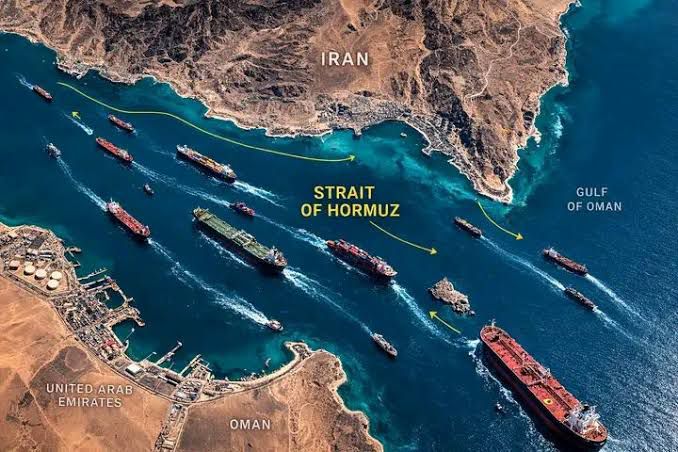
Global concern over the escalating Middle East conflict intensified on Thursday as Nigeria joined 39 other nations in high-level talks aimed at restoring navigation through the strategic Strait of Hormuz, a critical artery for global oil supply.
The emergency virtual meeting, convened amid mounting geopolitical tension, underscores the growing urgency to address disruptions caused by Iran’s blockade of the vital maritime corridor.
M-East war: Nigeria, 39 others meet on Hormuz Strait
The M-East war: Nigeria, 39 others meet on Hormuz Strait discussions brought together a coalition of major economies and maritime stakeholders seeking coordinated diplomatic and security responses to the crisis.
The meeting was initiated by the United Kingdom’s Prime Minister, Keir Starmer, following heightened instability in the Gulf region triggered by ongoing hostilities between Iran and a United States-led alliance.
Participants included global powers such as the United Kingdom, France, Germany, Italy, Canada, Japan, and the United Arab Emirates, alongside Nigeria and several European and Gulf states.
The M-East war: Nigeria, 39 others meet on Hormuz Strait initiative reflects a unified concern over the implications of the blockade, particularly its impact on global energy markets and maritime trade.
Shipping disruption threatens global oil supply
The closure of the Strait of Hormuz by Iran has effectively halted maritime traffic along one of the world’s most critical oil transit routes. The waterway connects the Persian Gulf to international waters and facilitates a significant portion of global crude exports.
Reports indicate that Iran’s retaliatory attacks on commercial vessels have left thousands of seafarers stranded, with over 2,000 ships unable to navigate the strait.
The M-East war: Nigeria, 39 others meet on Hormuz Strait talks come against the backdrop of surging oil prices and heightened fears of prolonged supply disruptions.
Energy analysts warn that any sustained closure could trigger volatility in global markets, particularly for oil-dependent economies.
Diplomatic push to restore maritime access
During the meeting, participating countries jointly called on Iran to cease actions obstructing navigation and pledged support for measures aimed at ensuring safe passage.
The UK Foreign Secretary, Yvette Cooper, who chaired the session, described Iran’s actions as a direct threat to global economic stability.
She disclosed that more than 25 attacks on vessels had been recorded, highlighting the severity of the situation.
The M-East war: Nigeria, 39 others meet on Hormuz Strait engagement is expected to pave the way for a coordinated diplomatic strategy, combining negotiations with potential security interventions.
Military planning and security considerations
Beyond diplomacy, discussions also extended to potential military measures to secure the strait once hostilities subside. According to officials, defence planners are being mobilised to explore options such as de-mining operations and maritime security deployments.
Prime Minister Starmer noted that restoring full shipping operations would require a combination of military preparedness and diplomatic engagement.
However, not all stakeholders support immediate military intervention. The President of France, Emmanuel Macron, cautioned against forceful reopening of the strait, describing it as impractical without a ceasefire agreement.
He emphasised that any sustainable solution must involve direct engagement with Iran.
The M-East war: Nigeria, 39 others meet on Hormuz Strait dialogue therefore reflects a divergence in strategy, with some nations advocating caution while others push for stronger action.
Gulf states push for UN-backed force
In a parallel development, the Gulf Cooperation Council has called on the United Nations Security Council to authorise the use of force to protect maritime routes in the region.
The Secretary-General of the GCC, Jassem Al-Budaiwi, urged the international community to take decisive steps to safeguard global shipping lanes.
A draft resolution proposed by Bahrain seeks to grant member states authority to use “all necessary measures” to ensure free passage through the strait.
However, the proposal has encountered resistance from key global powers, including Russia and China, who have raised concerns about the scope and balance of the resolution.
The M-East war: Nigeria, 39 others meet on Hormuz Strait crisis has thus exposed divisions within the international community over the appropriate response.
Iran signals alternative navigation framework
Amid the standoff, Iran is reportedly working on a new protocol with Oman to regulate maritime traffic in the Strait of Hormuz.
The proposed framework aims to establish a controlled navigation regime, potentially allowing limited passage under specific conditions.
Iranian officials have indicated that the protocol is nearing completion, although details remain unclear.
The development adds another layer of complexity to the M-East war: Nigeria, 39 others meet on Hormuz Strait situation, as stakeholders weigh the implications of such an arrangement on international shipping norms.
Nigeria’s strategic interest in the crisis
For Nigeria, participation in the talks reflects its strategic interest as a major oil-producing nation. Disruptions in global oil supply chains have direct implications for revenue, pricing, and economic stability.
Analysts note that Nigeria stands to benefit from higher oil prices in the short term, but prolonged instability could undermine global demand and market predictability.
The M-East war: Nigeria, 39 others meet on Hormuz Strait engagement therefore aligns with Nigeria’s broader objective of maintaining stability in global energy markets.
Outlook amid rising geopolitical tension
As tensions persist, the path to reopening the Strait of Hormuz remains uncertain. Diplomatic negotiations, military preparedness, and multilateral cooperation will all play critical roles in shaping the outcome.
The M-East war: Nigeria, 39 others meet on Hormuz Strait initiative highlights the interconnected nature of global security and economic systems, where regional conflicts can have far-reaching consequences.
With oil prices already reacting to the crisis and maritime trade under pressure, the international community faces a delicate balancing act between enforcing security and preventing further escalation.
About The Author
