Brazilian President Luiz Inacio Lula da Silva has warned that US President Donald Trump is attempting to replace the United Nations, raising alarm across global diplomacy and multilateral institutions.
Lula’s warning follows Trump’s launch of the controversial “Board of Peace” initiative in Switzerland, a move that critics say undermines decades of UN authority and concentrates power in the United States.
Speaking in Rio Grande do Sul, Lula stated, “Instead of improving the United Nations, President Trump is proposing a new UN where he is the sole authority,” highlighting the potential risks of concentrated power in international affairs. He emphasized that this initiative could reshape global governance without proper oversight.
Lula criticized Trump’s use of social media in global diplomacy, saying, “Every day he tweets, and every day the world reacts,” demonstrating how modern US foreign policy under Trump has become unpredictable and increasingly unilateral. Such actions, he said, threaten stability in international relations.
The Brazilian leader defended multilateralism, stressing that global challenges require collective action rather than unilateral moves. He warned that efforts to bypass the UN risk weakening international law and undermining longstanding agreements that have preserved peace for decades.
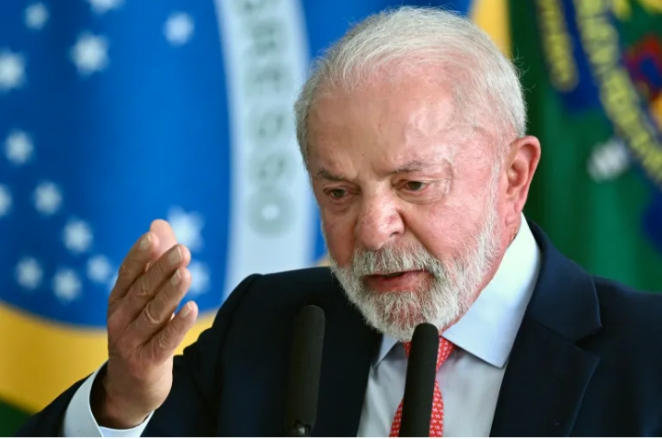
Lula’s remarks came after a call with Chinese President Xi Jinping, who emphasized the UN’s central role in global affairs. Xi urged Brazil to resist efforts that could fragment multilateral structures, noting that preserving consensus-based institutions is critical for international stability.
The White House has withdrawn the US from dozens of UN-affiliated bodies while simultaneously promoting the “America First” agenda.
This includes imposing tariffs, military threats, and launching the Board of Peace, a new institution positioned as an alternative to traditional UN channels.
Trump unveiled the Board of Peace during the World Economic Forum in Davos, Switzerland. It includes controversial figures such as Israeli Prime Minister Benjamin Netanyahu, who is accused of war crimes by the International Criminal Court, raising ethical concerns about the legitimacy of Trump’s initiative.
According to the Board of Peace charter, member countries must contribute $1 billion for membership beyond three years.
This contrasts sharply with the UN’s $3.72 billion annual budget, with the US previously required to contribute $820 million. The disparity signals the scale of Trump’s attempt to dominate global decision-making.
Lula highlighted that these moves could destabilize humanitarian efforts worldwide. The UN already faces funding shortfalls for human rights operations and relief programs, yet the US is redirecting resources toward military spending, leaving critical programs underfunded.
Experts argue that Trump’s strategy reflects a broader attempt to bypass multilateral institutions, replacing consensus-driven decision-making with a US-dominated system. Critics warn that this could erode decades of international cooperation, reduce trust among allies, and increase geopolitical tensions.
Trump’s initiative has also raised questions about global ethical standards. The inclusion of figures facing war crimes allegations undermines credibility, while the focus on financial contributions as membership requirements creates barriers for smaller nations seeking to participate in international decision-making.
Analysts note that the Board of Peace may expand beyond its original stated purpose of Gaza reconstruction, potentially allowing the US to shape international policies on trade, military operations, and humanitarian aid without UN oversight. This could set a dangerous precedent for unilateral global governance.
Lula emphasized that multilateral institutions like the UN are vital for tackling global crises, from climate change to humanitarian emergencies. Bypassing such institutions risks creating fragmented governance and could reduce the effectiveness of international coordination in responding to disasters.
Brazil’s president warned that other world leaders must remain vigilant. Countries that fail to engage with multilateral institutions risk being drawn into a new system controlled by a single nation, undermining global accountability and transparency.
While Trump portrays the Board of Peace as a solution for international stability, critics argue it mirrors past attempts to centralize power under one nation’s agenda.
The initiative has already sparked protests and criticism from diplomats and civil society groups worldwide.
Some US allies have expressed hesitation about joining the Board, questioning whether participation aligns with international law and long-term strategic interests.
The initiative’s lack of clarity regarding its mandate and scope raises concerns about transparency and accountability.
Lula stressed that international law cannot be ignored. Bypassing the UN could weaken established legal frameworks that govern diplomacy, conflict resolution, and humanitarian protections, potentially leading to more instability and disputes across regions.
Despite global criticism, Trump continues to advocate for the Board of Peace, framing it as a more efficient alternative to traditional UN mechanisms.
However, Lula and others argue that efficiency cannot replace legitimacy, multilateral consensus, or adherence to international law.
In response to Lula’s remarks, diplomatic sources indicate that Brazil will continue to support UN-led initiatives while monitoring the Board of Peace.
Maintaining multilateral engagement is seen as essential for ensuring fair representation of all nations in global decisions.
Observers warn that Trump’s approach may accelerate the fragmentation of international governance. Countries may be forced to choose between participation in a US-led system or continued engagement with traditional UN structures, creating parallel institutions with competing mandates.
Read also: US immigration agents detain two-year-old Minnesota girl in late-night transfer despite judge’s order
Lula concluded by urging global leaders to prioritize collaboration over unilateral actions, noting that the UN was created to prevent wars, promote human rights, and coordinate global aid. Weakening its authority could have long-term consequences for peace and development worldwide.