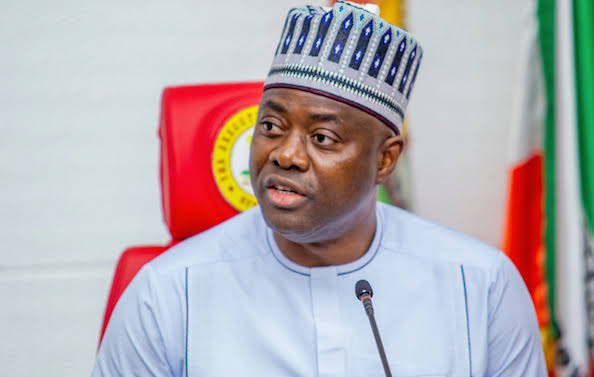
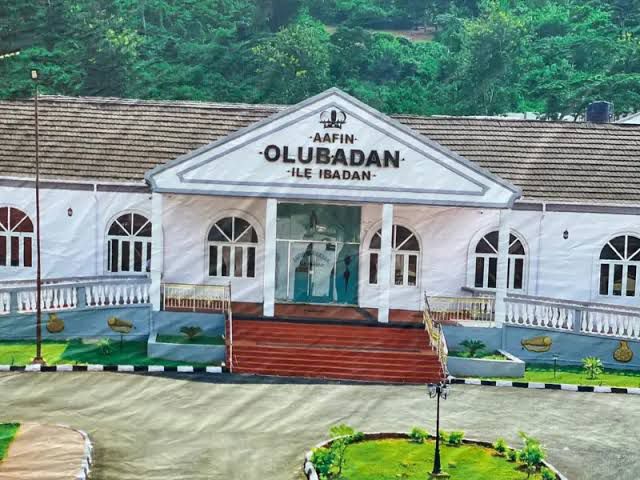
Following the demise of Oba Owolabi Olakulehin on July 7, 2025, the historic throne of the Olubadan of Ibadanland is now vacant.

All eyes have turned to the next in line, Otun Olubadan, Senator Rashidi Adewolu Ladoja, who is now the most prominent contender to ascend the revered stool under the city’s unique traditional succession system.
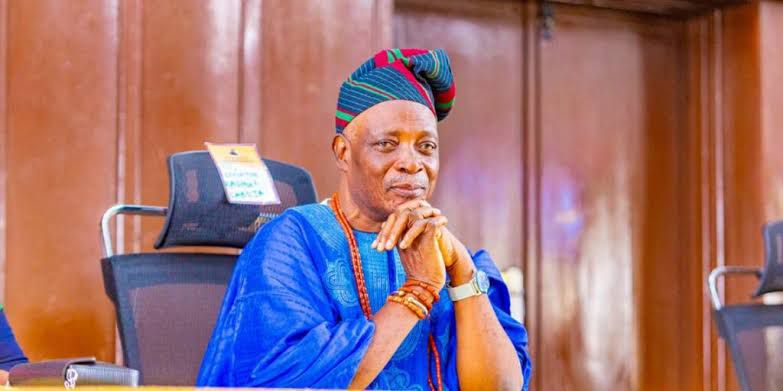
Ibadan’s royal succession system is renowned for its structure, alternating between two major lines: the civil (Otun/Agba) and military (Balogun) ranks.
As the highest-ranking chief in the civil line, Ladoja stands in pole position to become the next Olubadan, in line with the rotational tradition that has defined the city’s kingship hierarchy for over 170 years.
Rashidi Ladoja’s journey to the cusp of royalty has been a long and distinguished one. Born on September 25, 1944, in Gambari village near Ibadan, he had his early education at Ibadan Boys High School and Olivet Baptist High School before proceeding to the University of Liège in Belgium, where he earned a degree in chemical engineering. Upon his return to Nigeria, he began his professional career with Total, an oil company, and later ventured into the business world and politics.
Ladoja’s political career reached its peak when he was elected Governor of Oyo State in May 2003 under the platform of the Peoples Democratic Party (PDP).
However, his tenure was marred by controversy. In January 2006, he was impeached under contentious circumstances, only to be reinstated by the Supreme Court in December of the same year.
He completed his term in May 2007 and has remained a significant political force in the state ever since. Over the years, he contested various elections under different political platforms, eventually joining the Zenith Labour Party in 2018.
In August 2024, Ladoja formally embraced his role as Otun Olubadan by accepting the ceremonial beaded crown—an act that had previously sparked debate and resistance.
This development followed a significant amendment to the Oyo State Chieftaincy Declaration, which now mandates that only titled Beaded Crown Obas are eligible to ascend the Olubadan throne. The revised law, introduced during the administration of Governor Seyi Makinde, stirred controversy across the state.
While the government justified the amendment as a necessary cultural reform—reportedly based on the recommendations of a committee chaired by the late Oba Lekan Balogun—critics alleged that the new regulation was politically motivated.
They argued it was aimed at weakening Ladoja’s eligibility, especially given his strained relationship with Governor Makinde during the latter’s 2023 re-election campaign.
Ladoja had initially resisted the crown, unlike his fellow high chiefs, fueling speculations about a potential conflict between traditional customs and contemporary political interests.
Despite these challenges, Ladoja accepted the crown and confidently expressed his readiness for the throne. Speaking during a radio interview on a private Ibadan station in 2024, he stated: “By the grace of God, I will become Olubadan. My blood pressure has been stable; anyone God destined to become Olubadan will become Olubadan.”
Now, with the throne officially vacant, the Olubadan-in-Council and the kingmakers are expected to begin the formal processes of nominating and presenting the next Olubadan.
This crucial decision will not only influence the leadership of Ibadanland but also reflect the evolving intersection between tradition and modernity in Yoruba kingship.
As history beckons, Rashidi Ladoja—engineer, politician, statesman, and high chief—stands on the threshold of ascending to the highest traditional office in Ibadanland, bringing with him a wealth of experience and a legacy marked by resilience, intellect, and political sagacity.