Residents block the Kwara–Kogi highway as Eruku insecurity worsens, protesting deadly attacks and demanding urgent government action, stronger security, and lasting protection.
The growing threat of insecurity reached its breaking point on Wednesday as residents of Eruku community in the Ekiti Local Government Area of Kwara State staged a massive protest that grounded movement along the Kwara–Kogi highway.
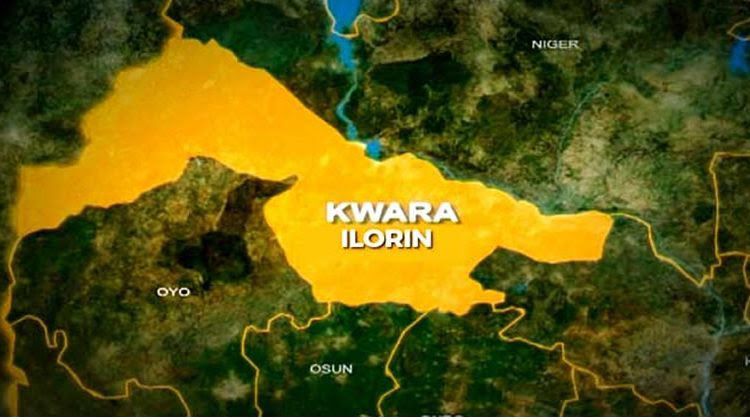
This demonstration, driven by rising fear and anger, followed a brutal terrorist attack at a local church that left the community devastated and desperately demanding action.
What unfolded on the highway was not just a protest—it was a cry for survival from a community long abandoned to violence.
Before daybreak, young people from the town had already mobilised, gathering at strategic points along the busy interstate route. By 6am, they had blocked the road completely using logs, tyres, planks and stones.
The barricades stretched across both lanes, forcing motorists heading in and out of Kwara State to come to a sudden halt.
Long lines of stranded vehicles quickly formed as frustrated travellers stepped out to assess the situation.
According to the protesters, the blockade became necessary because all their previous appeals for protection had fallen on deaf ears.
Many said they were tired of living in fear, tired of burying neighbours, and tired of seeing their community repeatedly targeted by armed groups.
To them, the worsening wave of Eruku insecurity has made life unbearable and unsafe.
The catalyst for the latest outrage was the deadly Tuesday, November 18, 2025 attack, when gunmen stormed the Christ Apostolic Church (CAC) in Eruku during a worship session.
According to residents, the terrorists entered the church during a meeting and immediately opened fire. Chaos erupted as terrified worshippers attempted to flee, but three people were shot dead instantly.
The attackers then seized an unknown number of victims, including the church pastor, and marched them into the bush.
Survivors described the attack as sudden and ruthless. One witness said the gunmen “came without warning and began shooting indiscriminately,” adding that the scene was filled with screams, panic and confusion.
As the bullets tore through the air, worshippers scrambled for safety, but many were cornered. The attackers forced their captives into the dense forest linking Eruku with neighbouring border communities, escaping through familiar bush paths.
By Tuesday night, the atmosphere in Eruku had shifted from regular evening routines to deep panic. Families rushed to the church premises searching frantically for loved ones.
Some discovered the bodies of relatives, while others realised their family members had been abducted.
This attack, added to a string of earlier ones, hardened the community’s resolve to confront what residents now describe as a chronic pattern of Eruku insecurity.
At the Wednesday protest, demonstrators displayed placards with bold messages: “Stop the Killings,” “We Need Security Now,” “Government Must Protect Us,” and “Enough is Enough.”
The youths leading the protest insisted that they would not remove the barricades until government officials addressed them directly and initiated practical steps toward securing the community.
A number of elders joined the demonstration, arguing that Eruku’s geographical location exposes it to repeated attacks.
The town sits close to border pathways connecting Kwara and Kogi States, making it vulnerable to criminals who move easily through forest routes.
According to residents, the terrorists know these terrains better than local security personnel, allowing them to strike and disappear in minutes.
The protesters listed several demands, chief among them the immediate deployment of well-equipped security operatives to the area.
They called for improved intelligence gathering, consistent military patrols, and the establishment of a permanent security base in Eruku and other border villages.
Many said the reliance on vigilantes—who lack advanced weapons—has proven inadequate in the face of increasingly sophisticated attackers.
One of the youths leading the protest explained that the community’s trust in the government is rapidly deteriorating.
He noted that the people have been left to fend for themselves for too long, despite multiple reports of suspicious movements around the forests.
He added that with the escalating pattern of killings and kidnappings, the community now views the crisis of Eruku insecurity as a direct threat to their right to live.
As the protest persisted into the late morning, tensions intensified along the highway. Motorists stuck in traffic appealed to the protesters to open at least one lane, but the demonstrators remained resolute.
Some travellers sympathised with the residents, acknowledging the severity of the attacks, while others expressed frustration over the long delay.
However, the protesters insisted that the temporary inconvenience was necessary to force authorities to confront the insecurity.
Meanwhile, families of the abducted victims remained overwhelmed with worry. Many spent the night awake, hoping for calls from their relatives or information from vigilantes searching the forest.
The fear that the captives could be moved further away or harmed only deepened the community’s despair. Vigilante groups attempted to track the attackers but were limited by inadequate weapons and the vastness of the forested terrain.
Community leaders later issued a statement saying the protest was not politically motivated but a survival strategy.
They stressed that if proactive measures had been taken earlier, hundreds of residents across Eruku and surrounding towns would not be living under constant fear of attacks.
They added that unless the government responds swiftly, the pattern of deaths, abductions and displacement will continue.
The impact of Eruku insecurity is now felt in every corner of the town. Schools operate in fear, churches hold shorter services, and economic activities have slowed drastically.
Even farmers, who rely on the vast farmlands around the community, now avoid remote areas due to fear of ambush.
Residents hope the protest will become a turning point—one that compels the government to finally recognise their plight and take decisive action.
For the people of Eruku, the struggle is no longer just about security; it is about reclaiming peace, dignity and the right to live without fear.
More news at ireport247news