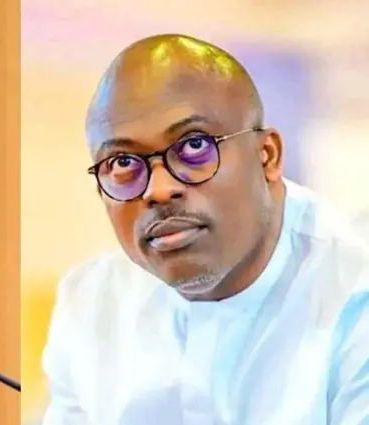
Rabiu Kwankwaso condemns Trump Nigeria military threat, urges U.S.–Nigeria diplomacy, technology cooperation, and unity to protect Nigeria’s sovereignty and stability.
Senator Rabiu Kwankwaso, the 2023 presidential candidate of the New Nigeria People’s Party (NNPP), has strongly criticized the recent Trump Nigeria military threat, describing it as an unnecessary provocation that undermines Nigeria’s sovereignty and international peace.
Kwankwaso made this known through a statement shared on his official X (formerly Twitter) handle on Sunday.
He expressed deep concern over U.S. President Donald Trump’s comments, in which the American leader labelled Nigeria a “country of particular concern” and threatened military action if the Nigerian government failed to curb ongoing violence.
According to Kwankwaso, Nigeria remains a sovereign and independent nation, fully capable of addressing its internal challenges without foreign interference.
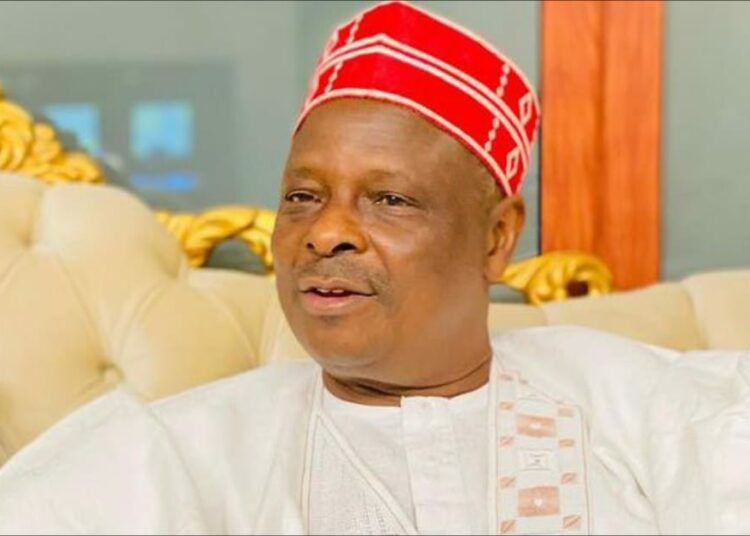
He noted that the nation’s ongoing insecurity—driven by criminality, banditry, and terrorism—cannot be defined by religion, ethnicity, or politics, but rather by deeper socio-economic issues that require thoughtful and collaborative solutions.
“I have noted with increasing concern the heightened pronouncements on Nigeria by President Donald Trump,” he said.
“Our country is sovereign, and its people face threats from various outlaw groups that have no respect for any religion or political identity.”
The former governor of Kano State emphasized that such complex issues demand global cooperation and constructive engagement, not coercion.
He urged the United States to replace the Trump Nigeria military threat with practical support—such as providing cutting-edge technology, intelligence sharing, and training to help Nigeria combat terrorism effectively.
“The United States should assist Nigerian authorities with advanced technology and intelligence rather than issuing threats of sanctions or military action, which could further divide our country,” Kwankwaso advised.
He added that while international concern about human rights and religious freedom in Nigeria is valid, threatening war or intervention contradicts diplomatic norms and violates the United Nations Charter, which upholds national sovereignty and peaceful conflict resolution.
Kwankwaso further called on the Nigerian government to respond strategically by strengthening diplomatic ties with Washington, urging the appointment of special envoys and experienced ambassadors to represent Nigeria’s interests more effectively on the global stage.
“The government must adopt a diplomatic and proactive approach,” he said.
“It should appoint distinguished diplomats as special envoys to engage the American government and also ensure that permanent ambassadors are assigned to defend Nigeria’s interests abroad.”
He appealed to Nigerians to remain united and resist any attempt by external forces to divide the nation along religious or ethnic lines.
“This is a time when we must prioritise our national unity and collective identity over division,” he noted.
Kwankwaso’s comments followed a post by President Donald Trump on his Truth Social platform, where he accused the Nigerian government of allowing the killing of Christians and ordered the U.S. Department of War to prepare for “possible action.”
Trump wrote: “If the Nigerian Government continues to allow the killing of Christians, the U.S.A. will immediately stop all aid and may very well go into that now disgraced country, guns-a-blazing, to completely wipe out the Islamic terrorists committing these atrocities.”
He further claimed that any U.S. military response would be “fast, vicious, and sweet.” The statement has since triggered widespread criticism from political and diplomatic circles across Nigeria and Africa.
Reacting to what has been termed the Trump Nigeria military threat, Kwankwaso said such remarks could escalate tensions and harm the long-standing relationship between Nigeria and the United States.
He cautioned against inflammatory language that could embolden extremist groups or spark fear among ordinary Nigerians.
“The U.S.–Nigeria relationship has been built over decades of mutual respect and cooperation,” he stated.
“That partnership should be strengthened through dialogue, not damaged through intimidation.”
Kwankwaso noted that Nigeria’s security challenges—including terrorism, kidnapping, and communal violence—require modern solutions such as improved intelligence networks, economic reforms, and global partnerships, rather than external aggression.
He called on international allies to offer genuine support aimed at stabilizing Africa’s largest democracy, not threats that could undermine it.
He also reminded world leaders that Nigeria’s internal crisis is deeply rooted in poverty, unemployment, and weak institutions.
“If the international community wishes to help, it must focus on empowering Nigeria economically, supporting education, and investing in job creation,” he added.
The NNPP leader reiterated that the Trump Nigeria military threat was both diplomatically unwise and morally questionable, emphasizing that it sends the wrong signal to global allies.
Instead of confrontation, he urged mutual understanding and collaboration in fighting extremism and ensuring global peace.
Meanwhile, reports suggest that Nigeria’s Ministry of Foreign Affairs is reviewing the implications of Trump’s comments.
Sources disclosed that officials may issue a formal diplomatic note to the U.S. government, reaffirming Nigeria’s sovereignty and rejecting any form of external military interference.
Analysts argue that the Trump Nigeria military threat could mark a turning point in U.S.–Nigeria relations, testing both countries’ diplomatic strength and ability to navigate tension through dialogue.
While Washington’s concerns over religious violence are valid, experts warn that interventionist rhetoric could damage relations with one of Africa’s most influential nations.
As the situation unfolds, Kwankwaso’s message stands as a voice of balance and restraint—urging Nigeria to defend its sovereignty through dialogue while maintaining constructive global partnerships.
His response underscores the importance of diplomacy over dominance and unity over division.
“Our sovereignty is not up for negotiation,” Kwankwaso concluded.
“True leadership means engaging with respect, not ruling through threats. Nigeria will continue to stand tall as a free and independent nation.”
More news at ireport247news
About The Author