Kim Yong Nam, North Korea’s former head of state, has died at 97, closing a chapter of decades-long ceremonial leadership and unwavering loyalty to the Kim dynasty.
Yong Nam led the Supreme People’s Assembly for more than twenty years, representing North Korea internationally, attending diplomatic events, and performing key ceremonial duties on behalf of the regime.
State media reported that Kim Nam died on Monday due to multiple organ failure linked to cancer, marking the end of a long life defined by public service.
Leader Kim Jong Un visited Kim Yong Nam’s bier on Tuesday, expressing condolences and highlighting the official’s decades of commitment and loyalty to North Korea’s ruling family.
Kim Yong Nam was recognized for his deep, booming voice and frequent appearances in state media, delivering propaganda speeches at important events and welcoming visiting foreign dignitaries.
Although central to North Korea’s political scene, Kim Nam was not a member of the ruling family, which has maintained absolute power over the country since its foundation in 1948.
From 1998 until April 2019, Kim Yong Nam presided over the Supreme People’s Assembly, officially making him North Korea’s head of state, though actual authority remained firmly with the Kim dynasty.
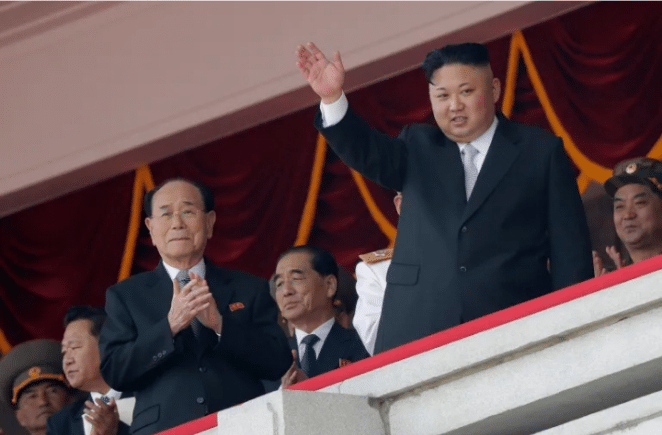
When Kim Il Sung died in 1994, Kim Yong Nam read the official state elegy and later formally nominated Kim Jong Il to lead the National Defence Commission following the mourning period.
In February 2018, he traveled with Kim Yo Jong to South Korea for the Pyeongchang Winter Olympics, marking the highest-level North Korean official visit to the South since 2014.
During the Olympics, Kim Nam and Kim Yo Jong were seated near then-US Vice President Mike Pence, symbolizing temporary diplomatic engagement despite no formal contact between delegations.
North Korea’s limited engagement with the United States peaked during 2018–2019 summits with Donald Trump, though Kim Yong Nam did not attend, and his influence declined due to age and generational shifts.
In April 2019, Choe Ryong Hae replaced Kim Yong Nam as head of parliament, reflecting Kim Jong Un’s consolidation of power and the transition to younger officials within North Korea’s political system.
A native of Pyongyang, Kim Nam studied at Kim Il Sung University and Moscow State University, preparing him for decades of diplomatic and political service representing North Korea abroad.
Throughout his career, Kim Nam became internationally recognized as a symbol of continuity, projecting stability and loyalty while representing the North Korean regime in diplomatic settings.
Kim Yong Nam witnessed leadership transitions from Kim Il Sung to Kim Jong Il and finally to Kim Jong Un, skillfully navigating North Korea’s hierarchical political structure with steadfast loyalty.
State media praised Kim Yong Nam as “an old-generation revolutionary who left extraordinary achievements in the development history of our party and country,” emphasizing his role in the regime’s narrative.
His funeral was scheduled for Thursday, following North Korea’s strict protocols for honoring senior officials, with top government and party leaders expected to participate in the ceremonial proceedings.
Even in his later years, Nam maintained a presence in North Korean diplomacy, attending summits, welcoming dignitaries, and embodying the ceremonial authority of the state internationally.
Observers noted that, despite declining political power, Kim Yong Nam remained respected domestically and abroad, reinforcing North Korea’s perception of disciplined, loyal, and experienced leadership.
Kim Yong Nam’s career highlights the balance between ceremonial prominence and limited real authority, showing how loyalty to the Kim dynasty was central to survival in Pyongyang’s political hierarchy.
From reading state elegies to representing North Korea at Olympic events, Kim Yong Nam consistently projected continuity and stability while the ruling family retained ultimate control of power.
His passing marks a key moment in North Korean diplomacy, as future ceremonial roles will be assumed by younger officials under the direct supervision of Kim Jong Un.
Kim Yong Nam’s long public career underscored the symbolic importance of loyal officials, demonstrating how ceremonial authority sustained international recognition of North Korea despite isolation and criticism.
Over decades, he acted as a bridge between the revolutionary generation and the modern political landscape, preserving North Korea’s ideological continuity across leadership transitions.
The death of Kim Yong Nam is historically significant, removing a figure who embodied loyalty, diplomacy, and ceremonial representation for the North Korean regime across two generations.
As North Korea moves forward, ceremonial functions continue, but no official may match the historical weight, diplomatic experience, and international recognition Kim Yong Nam achieved during his lifetime.
Kim Yong Nam leaves behind a legacy of loyalty, diplomacy, and enduring ceremonial leadership, representing the continuity of North Korea’s political system and the Kim dynasty’s long-standing rule.
His decades-long service illustrates how ceremonial heads maintain the image of stability while the ruling family directs all political power, a pattern central to North Korean governance.
North Korea’s media has emphasized Kim Yong Nam’s life as a model of devotion to the party and state, ensuring that his contributions are remembered as emblematic of regime loyalty.
By serving as North Korea’s diplomatic envoy, Kim Yong Nam bridged ideological loyalty and international representation, embodying the regime’s messaging while navigating decades of global scrutiny.
His influence may have waned in later years, but Kim Yong Nam’s presence at key events symbolized continuity, reinforcing the North Korean narrative of orderly governance and unbroken leadership.
The former head of state’s passing underscores the challenges of succession for ceremonial roles, as younger officials must now assume responsibilities once held by a veteran diplomat of extraordinary experience.
Kim Yong Nam’s life story highlights the centrality of loyalty, diplomacy, and public service in North Korea, marking him as one of the country’s most enduring and visible political figures.

About The Author