Africa’s technology ecosystem is undergoing a quiet but profound transformation.
As traditional Western venture capital firms retreat amid global economic uncertainty, a new coalition of investors from Japan and the Gulf states is stepping decisively into the gap, reshaping how innovation on the continent is financed, scaled, and sustained.
What is emerging is not merely a substitution of capital sources but a structural recalibration of Africa’s tech economy—one that favours patience, strategic alignment, and long-term value creation over the fast-growth, high-burn playbook that once defined Silicon Valley–driven investment cycles.
Recent data from a 2025 analysis by Briter Intelligence paints a picture of an ecosystem in transition rather than decline.
While headline equity deals have moderated compared to the 2021 boom years, total capital flowing into African tech rebounded to about $3.8 billion in 2025, up from roughly $2.2 billion in 2024.
The difference lies in how that capital is structured.
From Equity Frenzy to “Depth Financing”
Africa’s startup funding model is expanding beyond pure equity into what analysts now describe as depth financing—a blend of equity, debt, guarantees, and structured instruments that reward operational maturity and predictable revenue.
This evolution reflects a growing investor preference for startups that can demonstrate resilience, unit economics, and clear paths to profitability rather than rapid user growth alone.
“Depth financing has become a significant pillar of startup capital,” said Tidjane Deme, general partner at Partech.
“It reflects the fact that many African startups have matured to a point where they can responsibly access non-dilutive capital.”
This shift is particularly attractive to long-horizon investors, including Japan’s development-linked institutions and Gulf sovereign wealth funds, whose mandates extend beyond quick exits to strategic economic positioning.
The Quiet Backbone: DFIs and Concessional Capital
Supporting this transition is a powerful, often underappreciated layer of development finance institutions (DFIs) and philanthropic foundations.
Organisations such as the IFC, British International Investment, FMO, Proparco, Norfund, KfW, the European Investment Bank, and the U.S. International Development Finance Corporation continue to anchor Africa-focused funds with first-loss capital and risk-mitigation structures.
Foundations including Gates, Botnar, Elea, and Shell Foundation further stabilise the ecosystem by backing sectors where commercial and social returns intersect—fintech, health, climate, agriculture, and SME enablement.
Rather than crowding out private investors, this quasi-public capital increasingly acts as a catalyst, enabling larger pools of commercial money to flow into African technology with reduced risk exposure.
Japan, Gulf Investors Storm Africa’s Tech Frontier as Western Equity Fades
Perhaps the most striking development in 2025 is the waning dominance of Western equity investors.
While U.S. and European firms remain influential, their participation has softened, constrained by higher interest rates, global portfolio rebalancing, and a post-2022 correction in venture markets.
In contrast, Japan and the Gulf states are advancing with deliberate intent.
Japan’s Long Game in African Tech
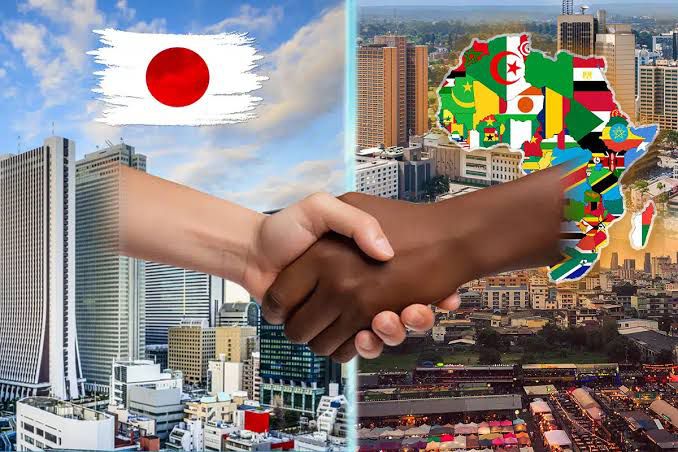
Japan has quietly assembled one of the most diverse and deeply integrated investment footprints across Africa’s tech landscape.
With over 60 active Japanese funders and nearly 200 investments across more than 30 sectors, its presence now rivals that of long-established Western players.
The Japanese approach is distinctive. It blends public agencies such as JICA, JBIC, and JETRO with corporate heavyweights like Mitsubishi, Mitsui, Toyota Tsusho, Sony, and Sumitomo.
Major banks including MUFG and SMBC operate alongside venture platforms like Samurai Incubate, Kepple Africa Ventures, Global Brain, and SoftBank’s Vision Fund.
Rather than chasing fast exits, Japanese capital emphasises supply-chain integration, technology transfer, alternative financing structures, and long-term partnerships.
“Japanese investors have moved from observation to deliberate engagement,” said Riki Yamauchi of Novastar Ventures.
“What they bring is not just funding, but access to markets, industrial expertise, and patient capital.”
Recent moves—including SMBC’s participation as a limited partner in Africa-focused venture funds and the launch of a $20 million Uncovered Fund–Monex Ventures vehicle targeting Africa and MENA—highlight Japan’s deepening commitment.
Gulf Sovereign Wealth Steps In
Running parallel to Japan’s advance is a surge of capital from the Gulf Cooperation Council (GCC), led by the UAE and Saudi Arabia.
Sovereign wealth funds and regional venture firms are deploying capital aligned with national diversification strategies such as Saudi Vision 2030 and the UAE’s post-oil economic agenda.
Funds and platforms including Mubadala, ADQ, PIF, QIA, Shoroog, Flat6Labs, Global Ventures, and Wamda are backing African startups in logistics, fintech, food systems, energy, mobility, and infrastructure.
These investments often take the form of co-investments and corridor-based strategies that link African markets with the Middle East, facilitating trade, talent mobility, and capital recycling.
Africa’s Own Capital Finds Its Voice
Crucially, this realignment is not happening in isolation from local players. African investors now account for roughly 40 percent of active participation in recent funding cycles, a sign of growing domestic confidence and institutional capacity.
Local capital tends to be less cyclical and more embedded in the realities of African markets, providing stability during global downturns and reducing overreliance on external sentiment.
A More Resilient Tech Future
The combined rise of Japanese and Gulf investors, supported by DFIs and strengthened local participation, signals a geopolitical and financial diversification that could fundamentally improve the resilience of Africa’s tech ecosystem.
Rather than being at the mercy of Western venture cycles, African startups increasingly attract partners aligned with long-term growth, infrastructure building, and economic transformation.
As depth financing becomes mainstream and non-Western investment corridors deepen, Africa’s innovation economy is entering a more mature phase—one defined not by hype, but by sustainability, scale, and strategic relevance.
In hindsight, 2025 may be remembered as the year Africa’s tech story stopped being a speculative frontier and became a globally integrated investment destination built to endure.
About The Author