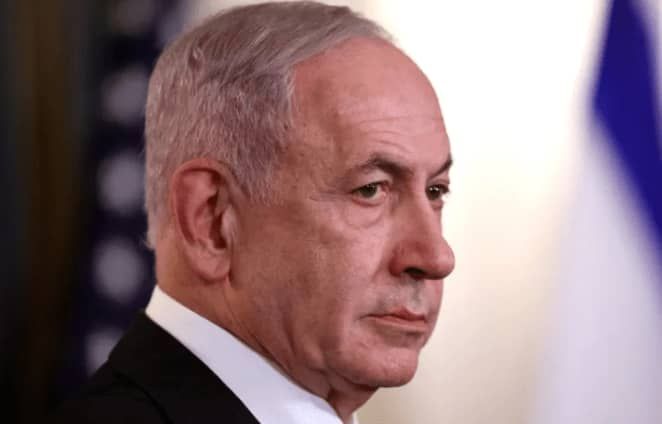
As Netanyahu seeks pardon on fraud cases, thousands of Israelis filled Tel Aviv streets, demanding accountability and warning that bypassing judicial due process threatens national stability and democratic integrity.
Crowds marched toward President Isaac Herzog’s residence, chanting slogans condemning political manipulation of justice, insisting the presidential office safeguard legal independence rather than facilitate controversial requests made during persisting political crises.
Protest leaders declared that Tel Aviv protests intensify significantly, fuelled by frustrations over growing institutional distrust and what many view as an unprecedented attempt to escape corruption scrutiny through executive intervention.
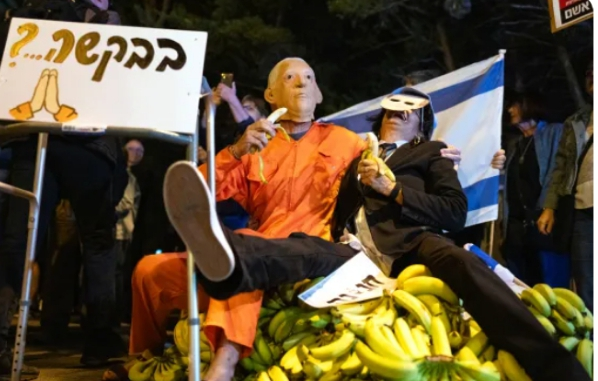
A prominent demonstration banner reading “Pardon = Banana Republic” illustrated a deepening belief that Israel faces governance decay, challenging citizens’ confidence amid longstanding legal accusations against current national leadership.
Protesters staged symbolic performances featuring Netanyahu caricatures atop banana piles, mocking political theatrics and stressing concerns that democratic processes erode during intensified national disputes and moral uncertainty.
Opposition lawmaker Naama Lazimi addressed supporters passionately, arguing that presidential authority must not become a refuge for embattled officials, especially when Israel’s institutional credibility already suffers sustained public criticism.
Lazimi warned that granting clemency prematurely risks damaging judicial resilience permanently, reinforcing perceptions that powerful individuals can override legal constraints through political pressure instead of accountable lawful conduct.
Activist Shikma Bressler criticised Netanyahu’s petition, saying he seeks “escape without responsibility,” arguing democratic institutions weaken whenever leaders pursue personal protection over transparent legal proceedings fundamental to state legitimacy.
Bressler emphasised citizens increasingly understand the stakes, describing the moment as pivotal for national identity, institutional trust, and civic unity amid widening political divisions and contentious leadership controversies.
Netanyahu’s corruption cases remain deeply polarising, forming the core of persistent concerns surrounding the broader corruption allegations against Netanyahu that have shaken Israel’s political landscape for several consecutive years.
One allegation involves Netanyahu and his wife accepting luxury gifts exceeding $260,000, including cigars, champagne, and jewellery, allegedly exchanged for political favours benefiting wealthy and influential associates.
Another case focuses on accusations Netanyahu negotiated favourable media coverage, intensifying debates around press independence and reinforcing concerns regarding undue influence across Israel’s most prominent communication platforms.
Netanyahu’s legal team submitted an extensive document arguing the prime minister still expects full acquittal, insisting proceedings became overly politicised and harmful to Israel’s long-term strategic and societal interests.
In a recorded speech, Netanyahu argued the trial “tears us apart,” framing his pardon request as an effort to ease internal tensions rather than avoid judicial evaluation entirely.
The prime minister claimed ongoing hearings deepen national fractures, suggesting resolution through clemency may restore unity, although critics dismiss such assertions as attempts to obscure accountability obligations.
Herzog’s office confirmed receipt of the petition, labelling it “extraordinary,” noting it carries serious constitutional implications and requires a careful, responsible review aligned with Israel’s legal principles.
Yet Herzog under pressure from legal experts, opposition figures, and citizens urging him to preserve judicial independence and resist political interference that risks undermining Israel’s constitutional framework.
The situation is further complicated by an International Criminal Court warrant related to alleged war crimes in Gaza, raising questions about Netanyahu’s global legitimacy during mounting scrutiny.
Israel’s Gaza campaign resulted in devastating casualties, intensifying international criticism and energising domestic movements calling for stronger accountability mechanisms, transparent governance, and ethical leadership practices.
Former United States President Donald Trump publicly encouraged pardoning Netanyahu, calling the prosecution “unjustified,” a declaration that triggered additional controversy within Israel’s already fragmented political landscape.
Historically, Israeli pardons occur post-conviction with expressed remorse, making Netanyahu’s request exceptional and prompting concerns about setting damaging precedents capable of weakening enforcement norms.
Opposition leader Yair Lapid argued Netanyahu should admit guilt, show remorse, and retire from political life before any clemency is considered, reinforcing commitment to equal legal standards.
Former deputy military chief Yair Golan demanded Netanyahu resign immediately, stating “only the guilty seek pardon,” sparking renewed national discourse around leadership accountability and ethical governance expectations.
Civil society organisations criticised the request, warning that pardoning a sitting prime minister accused of serious corruption risks signalling some citizens enjoy immunity from legal consequences.
Outside Herzog’s home, demonstrator Ami Dror asserted the president must protect Israeli democracy crisis concerns, emphasising that eroding law and order threatens the nation’s democratic foundations irreversibly.
Coalition allies defended Netanyahu, with National Security Minister Itamar Ben-Gvir and Finance Minister Bezalel Smotrich claiming judicial institutions fabricated political cases targeting the prime minister unfairly over time.
Smotrich insisted Netanyahu faced years of persecution, while Defence Minister Israel Katz argued a pardon could end societal divisions lingering for nearly a decade across various political factions.
Al Jazeera analyst Marwan Bishara described Netanyahu as a “liability for Israel,” asserting prolonged legal battles and confrontational politics weaken institutions central to maintaining liberal democratic continuity.
Bishara said Netanyahu’s efforts targeting Israel’s judiciary before the Gaza conflict undermined trust in core institutions, prompting widespread protests and damaging national cohesion significantly.
He highlighted the ICC proceedings and ongoing international cases, arguing Netanyahu’s global standing deteriorates further while domestic governance credibility declines under intensifying scrutiny and political unrest.
According to Bishara, Israel’s economic recovery, social healing, and wartime decisions remain hindered as long as Netanyahu remains in power amid unresolved legal accusations and leadership controversies.
Bishara concluded Netanyahu remains constrained by “his criminal past,” suggesting continued governance under such conditions restricts Israel’s ability to stabilise domestic and international challenges effectively.
Protesters expressed fears that institutional respect declines when leaders attempt unilateral judicial circumvention, deepening civic frustration and threatening longstanding public trust in democratic processes.
Activists insisted Herzog must reinforce judicial independence by rejecting the request, affirming Israel’s commitment to integrity over political loyalty or temporary partisan alignments.
Many participants emphasised this moment defines Israel’s direction, determining whether political leaders remain accountable or whether elite figures can override judicial processes through executive privilege.
International observers watch closely, noting implications for global perceptions of Israel’s democratic strength, legal consistency, and ability to maintain transparent governance amid complex geopolitical pressures.
As demonstrations grow, analysts warn that unresolved conflicts surrounding leadership ethics could fuel extended instability, complicating diplomatic relationships and weakening domestic institutional capacity further.
Groups organising the protests vowed continued mobilisation, insisting public pressure must remain strong to ensure democratic norms outlast political crises and controversy surrounding Netanyahu’s ongoing legal struggles.
Several demonstrators said they feared long-term damage if pardon procedures deviate from established norms, arguing Israel must avoid any precedent enabling political escape from lawful accountability.
Observers say the confrontation between institutional protection and political loyalty could become a defining test for Israel’s democratic integrity, shaping future expectations for transparency and leadership conduct.
Throughout Tel Aviv, banners reading “No one above the law” underscored widespread determination to defend civic principles and resist actions perceived as harmful to national institutional credibility.
Activists plan further gatherings, declaring Israel’s democratic trajectory relies on justice prevailing over political convenience and ensuring citizens retain confidence in judicial processes despite mounting turbulence.
About The Author