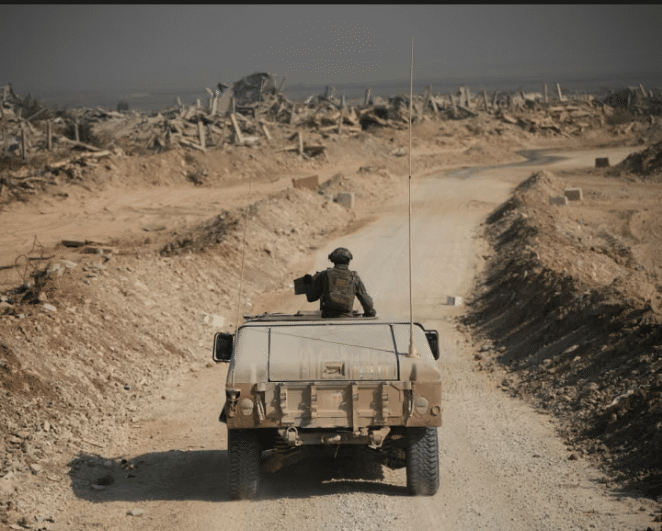
Israeli soldiers breaking ranks have come forward to expose shocking realities in Gaza, claiming Gaza civilians were systematically used as human shields while unprovoked killings occurred at the discretion of commanders.
In a documentary titled Breaking Ranks: Inside Israel’s War, soldiers detail a chaotic environment where adherence to the official code of conduct evaporated, allowing arbitrary decisions over who constituted a legitimate target.
Daniel, a tank unit commander, told the programme, “If you want to shoot without restraint, you can,” highlighting the lack of oversight and the erosion of established rules governing civilian protection.
Other soldiers, some speaking on record and others anonymously, corroborated the claim that the Israel Defense Forces routinely used civilians as human shields, despite official denials from military authorities.
Capt Yotam Vilk explained, “In Gaza, there’s no concept of ‘means, intent, and ability.’ Any suspicion, even as minor as walking at the wrong speed, can make someone a target.”
Eli, another soldier, said, “Life and death aren’t determined by regulations. It’s the conscience of the commander on the ground that decides, often arbitrarily, who lives and who dies.”
In one documented incident, a man hanging laundry on a rooftop was mistakenly identified as a Hamas spotter. A tank fired, demolishing the building and killing several civilians, a soldier recounted.
The soldiers’ testimonies confirm reports of human shields being forced into dangerous situations, known informally as the “mosquito protocol,” where civilians mapped tunnels while carrying GPS-enabled devices under threat.
A contractor named Sam, working at humanitarian food distribution sites, described seeing soldiers pursue and shoot unarmed civilians rushing for aid, emphasizing that many deaths occurred in moments of panic and confusion.
UN figures indicate that at least 944 Palestinian civilians were killed while seeking aid at distribution sites, although both the IDF and humanitarian organizations deny targeting civilians deliberately during these operations.
Breaking Ranks also examines the influence of political and religious rhetoric on soldiers, showing how leaders’ statements after the October 7 Hamas attacks encouraged viewing all Palestinians as legitimate targets.
Daniel noted that military orders became intertwined with the belief that no Palestinian was innocent. “You hear that rhetoric constantly, and it seeps into how decisions are made on the battlefield,” he said.
Maj Neta Caspin revealed that religious figures embedded in military ranks explicitly instructed troops to seek revenge, extending violence to civilians, arguing it was justified by previous attacks against Israelis.
Rabbi Avraham Zarbiv, an extremist cleric, boasted about directing bulldozers for mass demolitions, claiming that his methods influenced IDF tactics, representing a blurring of religious justification and military strategy.
The documentary shows soldiers visibly strained, grappling with the morality of their actions, as Daniel admitted, “All my pride in being an Israeli and an IDF officer has been destroyed. All that remains is shame.”
Guardian analysis in August 2025 noted that IDF intelligence data suggested 83% of those killed in Gaza were civilians, marking one of the highest civilian death rates in modern conflicts, though the IDF disputed this finding.
Despite claims of compliance with international law, the IDF statement emphasized operational difficulties due to Hamas embedding itself within civilian areas, maintaining that precautions were taken to minimize civilian casualties.
Eli recounted arbitrary targeting procedures, explaining that even minor deviations from expected behavior—walking too fast or slow—were enough to label individuals as threats, resulting in unjustified fatalities.
The programme highlights repeated use of civilians in operational roles against their will, documenting how the practice spread rapidly across companies, effectively institutionalizing human shielding in field operations.
Soldiers described witnessing tanks destroy vehicles with entire families inside, emphasizing that targeting often lacked justification or recognition of civilians’ presence, amplifying psychological trauma among troops and witnesses alike.
The UN commission concluded in September 2025 that Israel committed genocide in Gaza, citing incitement from leaders, including President Isaac Herzog, who explicitly suggested collective responsibility for Palestinian civilians.
Daniel noted that soldiers often internalized such rhetoric, reinforcing a mindset that dismissed distinctions between combatants and non-combatants, creating an environment where arbitrary violence became routine.
Several soldiers also raised concern over internal accountability, reporting that investigations into civilian deaths were rarely effective, with almost no disciplinary actions taken despite repeated incidents and corroborated witness testimonies.
The programme sheds light on operational culture in Gaza, showing a stark contrast between official legal obligations and actual practice, where conscience and fear of retribution often guided decisions more than policy or ethics.
Sam, the contractor, described scenes where unarmed men were shot while retrieving food, underscoring a broader issue of impunity and lack of oversight during highly militarized aid operations in conflict zones.
Caspin and other soldiers highlighted how religious and political instruction framed violence as a moral imperative, creating ethical dilemmas and tension between individual conscience and institutional expectation in the IDF ranks.
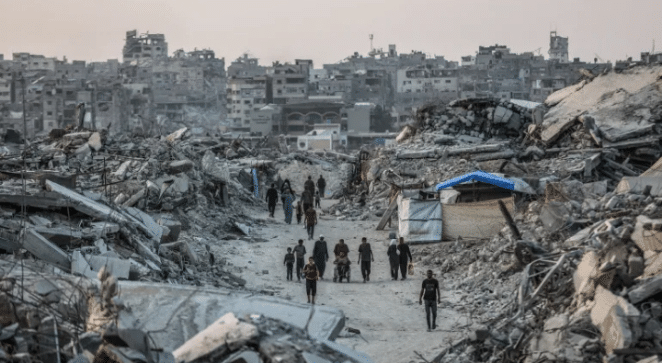
Breaking Ranks ultimately presents a critical look at the psychological impact on soldiers who witnessed or participated in these acts, showing deep moral injury and questioning the ethics of military strategy employed in densely populated civilian areas.
The documentary will air in the UK on ITV1, ITVX, STV, and STV Player at 10.45pm on Monday, November 10, promising to provide unprecedented firsthand accounts from soldiers on Gaza civilians.
Your article helped me a lot, is there any more related content? Thanks!
Thanks for sharing. I read many of your blog posts, cool, your blog is very good. https://www.binance.bh/register?ref=JW3W4Y3A