In what has been described as Israel truce breach, Israeli forces have killed eleven members of a single Palestinian family in Gaza, marking the deadliest since the eight-day ceasefire agreement with Hamas began.
The attack, which occurred Friday evening, struck a civilian vehicle in Gaza City’s Zeitoun neighborhood, according to Gaza’s civil defense officials. Seven children and three women were among the victims.
Witnesses said the family, known as the Abu Shaaban family, was returning home to inspect damage to their property when an Israeli tank shell hit their vehicle directly.
Civil defense spokesperson Mahmoud Basal described the Israeli truce breach as “a brutal massacre against innocents,” saying the family could have been warned or stopped without deadly force.
Basal said the Israeli military “remains thirsty for blood,” adding that the attack proves Israel’s disregard for civilian life and international humanitarian laws governing truce agreements.
The fragile Gaza ceasefire, brokered by mediators including the United States and Qatar, was already under strain before Friday’s Israeli military attack that killed the Palestinian family.
Hamas condemned the strike as a “premeditated massacre,” accusing Israel of exploiting the ceasefire to continue targeting civilians under the guise of enforcing security zones.
The group urged U.S. President Donald Trump and other mediators to intervene immediately to prevent a full collapse of the Gaza ceasefire and ensure accountability for Israel’s violations.
In response, the Israeli military claimed it had targeted individuals who allegedly crossed the “yellow line,” a designated demarcation zone established under the ceasefire deal with Hamas.
However, local sources said the victims were unaware of any restricted area, as communication and internet services across Gaza remain disrupted, making navigation extremely difficult.
Al Jazeera’s correspondent Hind Khoudary reported from Gaza that many residents have “no clear information on Israeli troop positions,” exposing families to accidental crossings into danger zones.
Israeli Defence Minister Israel Katz said on Saturday that “yellow lines will soon be physically marked” to help civilians understand restricted areas, but offered no timeline for implementation.
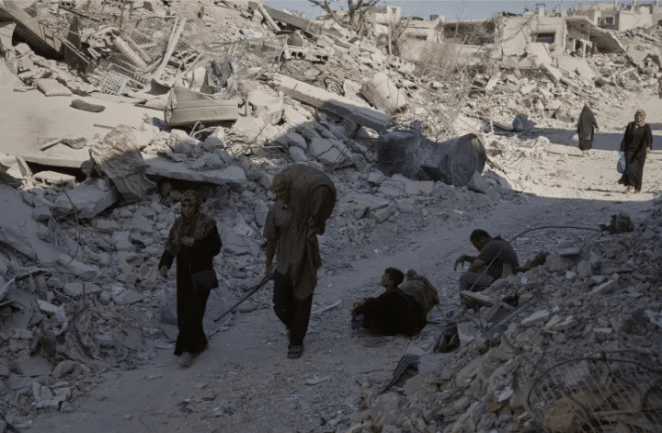
Despite the ceasefire, Israeli forces reportedly still control more than half of the Gaza Strip, maintaining military posts around several densely populated neighborhoods, according to field reports.
Since the truce took effect eight days ago, at least twenty-eight Palestinians have been killed in separate incidents, raising fears that the Israel truce breach could escalate into renewed conflict.
On October 14, Israeli troops also killed five Palestinians in Gaza City’s Shujayea district, prompting widespread condemnation from local leaders and humanitarian organizations.
Residents accuse the Israeli army of continuing to use live fire in areas that should have been vacated under the ceasefire terms agreed upon between Hamas and Israel.
Hamas maintains that it remains committed to the ceasefire, despite repeated Israeli attacks and continued restrictions on humanitarian aid entering the besieged Gaza enclave.
Israeli authorities have kept the Rafah crossing with Egypt closed and imposed strict controls on other border points, blocking large-scale aid deliveries and medical assistance.
The United Nations Office for the Coordination of Humanitarian Affairs (OCHA) said the humanitarian situation remains dire, warning that 49 percent of Gazans access less than six liters of drinking water daily.
The World Food Programme reported that it has managed to deliver an average of only 560 tonnes of food per day since the truce began — far below emergency requirements.
The U.N. added that without full border access, humanitarian agencies cannot reach famine-hit communities across Gaza, particularly in northern regions destroyed during previous Israeli air campaigns.
Gaza’s health ministry confirmed hospitals are still overwhelmed and operating on minimal power supplies. Critical units for maternity care and surgery have run out of fuel and essential medicines.
International monitors say Israel’s blockade of construction materials and heavy machinery has also hindered recovery operations to retrieve bodies trapped under debris from earlier bombardments.
Hamas said it needs excavation equipment to recover remains of Israeli captives under rubble, as part of the truce’s prisoner-exchange clause, but Israel continues to block their entry.
On Friday evening, Hamas handed over another Israeli captive’s body to the Red Cross, bringing the total to ten remains returned since the start of the ceasefire.
Reporting from Gaza, journalist Hani Mahmoud said, “Israel’s ban on heavy machinery is deliberately obstructing rescue and recovery efforts,” calling it a violation of humanitarian principles.
He explained that local residents and volunteers are attempting to dig through rubble manually, using shovels and makeshift tools, often risking their lives amid unstable ruins.
The latest Israeli truce breach comes amid growing political pressure on Prime Minister Benjamin Netanyahu, who faces criticism from both domestic and international fronts over ceasefire violations.
Analysts suggest Netanyahu is struggling to balance political demands from hardline coalition partners with mounting global pressure to sustain peace efforts and allow aid into Gaza.
The United States and European Union have both urged Israel to avoid actions that could undermine the fragile Gaza ceasefire and to facilitate humanitarian deliveries.
Qatar and Egypt, acting as primary mediators, have called for an independent investigation into Friday’s Israeli military attack that killed the Palestinian family.
Palestinian officials insist that the latest Gaza ceasefire violation proves Israel never intended to honor the truce, accusing the government of using the pause to reposition its troops.
Human rights organizations, including Amnesty International and Human Rights Watch, have described the Israeli attack as “a possible war crime” and called for international accountability.
Regional observers warn that continued Israel truce breaches may ignite a new round of hostilities, reversing recent diplomatic progress between Israel and neighboring Arab nations.
Meanwhile, thousands of displaced Palestinians are cautiously returning to Gaza City, hoping the ceasefire will hold long enough for reconstruction and family reunification efforts to begin.
The Gaza health authorities said more than 13,000 people remain missing, many presumed dead, since Israel’s earlier military campaign began months before the current truce.
Despite hopes for calm, frequent Israeli military attacks continue to shatter Gaza’s fragile recovery, leaving families grieving and communities trapped between fear and uncertainty.
Aid workers on the ground report that civilian morale is collapsing as people struggle to secure food, water, and medical care under the ongoing restrictions.
In a statement, the Palestinian foreign ministry condemned the killing of the Abu Shaaban family as “a massacre committed in cold blood,” urging the U.N. Security Council to intervene immediately.
Israel has yet to issue an apology or accept responsibility for the attack. Officials have instead defended military actions as “necessary for national security.”
However, international law experts note that targeting a clearly marked civilian vehicle without warning violates both the Geneva Conventions and the ceasefire’s humanitarian provisions.
Across Gaza, residents held prayers for the slain family, describing them as “ordinary people trying to return home.” The funeral procession drew hundreds despite fears of renewed attacks.
Palestinian leaders say the incident has reinforced public anger against Israel’s occupation and raised doubts about the effectiveness of any future peace negotiations.
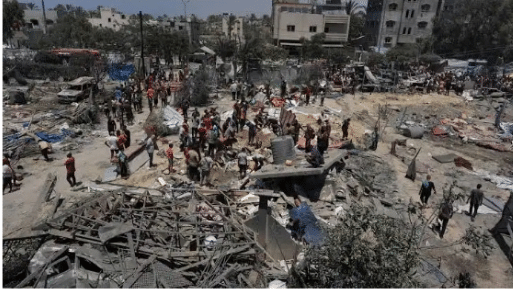
As Gaza reels from this deadliest truce breach, humanitarian agencies continue to urge all parties to return to dialogue and uphold commitments to protect civilians.
The Abu Shaaban family’s deaths have become a symbol of Gaza’s ongoing suffering — a stark reminder of how fragile peace remains under Israeli military pressure.
International voices, including from the United Nations and Red Cross, emphasize that a lasting ceasefire must include accountability, transparency, and guaranteed access to humanitarian relief.
Without these safeguards, observers warn, Gaza risks sliding back into another catastrophic conflict, with civilians once again bearing the heaviest toll of regional instability.
About The Author