
Israel advances fatal settlement plan for occupied East Jerusalem, triggering renewed warnings from Palestinian officials and international observers about irreversible damage to prospects for statehood.
The Israeli government is moving forward with two controversial settlement initiatives widely described as illegal under international law and devastating for Palestinian territorial continuity.
Central to the plan is the construction of approximately 9,000 settlement units on the ruins of the former Qalandiya airport, also known as Atarot.
A second project targets Sheikh Jarrah, a historic Palestinian neighbourhood, where dozens of families face forced displacement under Israeli court-backed settlement claims.
Palestinian leaders argue these measures represent a decisive step toward severing East Jerusalem from the occupied West Bank permanently and systematically.
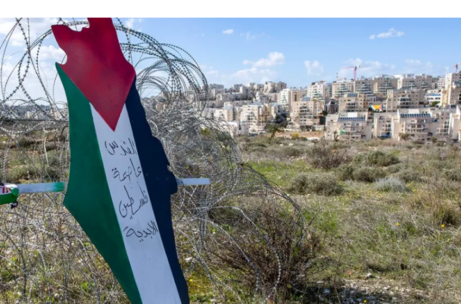
The Jerusalem governorate announced that Israeli planning authorities would formally discuss approval of both projects despite widespread international criticism.
Analysts say the developments mark one of the most aggressive settlement pushes in occupied East Jerusalem in recent years.
According to political analyst Suhail Khalilieh, the timing reflects shifting geopolitical realities following renewed diplomatic alignment between Israel and the United States.
Khalilieh links the revived settlement push directly to recent high-level meetings between Israeli Prime Minister Benjamin Netanyahu and US President Donald Trump.
He argues those talks effectively signaled reduced American resistance to settlement expansion, especially in Jerusalem, long considered a final-status issue.
The Atarot airport settlement project had been temporarily shelved in late 2025 amid international pressure but has now returned decisively to the agenda.
Khalilieh explains that Israeli authorities view the current global climate as permissive, with criticism largely limited to rhetorical condemnation.
Beyond housing, the Atarot plan carries deep strategic implications for Palestinian movement, geography, and political aspirations.
The settlement would physically link East Jerusalem to the Givat Zeev settlement bloc, cutting off Ramallah from Jerusalem entirely.
This northern axis is one of three settlement corridors forming the backbone of Israel’s long-standing Greater Jerusalem settlement strategy.
To the east, the controversial E1 settlement corridor aims to connect East Jerusalem with the Maale Adumim settlement bloc.
In the south, expansions around Har Gilo and the planned Nahal Heletz settlement link Jerusalem to the Gush Etzion bloc.
Together, these projects encircle Palestinian communities and fragment the West Bank into disconnected territorial islands.
Khalilieh notes that the combined effect would dramatically expand Jerusalem’s municipal boundaries under Israeli control.
He estimates the Greater Jerusalem area would increase to approximately 246 square kilometers, encompassing a significant portion of the West Bank.
East Jerusalem, under Israel’s current definition, measures about 71 square kilometers, highlighting the scale of proposed expansion.
Such territorial changes, analysts warn, would eliminate any realistic possibility of East Jerusalem serving as a Palestinian capital.
The Sheikh Jarrah plan compounds these concerns by targeting the sensitive “Holy Basin” surrounding Jerusalem’s Old City.
This area holds profound religious, cultural, and political significance for Palestinians and remains central to final-status negotiations.
Settlement activity there would complete a ring of Israeli-controlled areas around the Old City, isolating Palestinian neighborhoods further.
Communities such as Silwan, Sheikh Jarrah, and the Mount of Olives risk becoming isolated enclaves surrounded by settlements.
Khalilieh describes this approach as a gradual strategy designed to erode Palestinian presence without mass expulsions.
He refers to the process as “silent transfer,” driven by planning policies, demolitions, and economic pressure rather than overt force.
Israeli authorities frequently justify demolitions by citing lack of building permits, which Palestinians struggle to obtain legally.
In 2025 alone, more than 300 Palestinian homes were demolished in East Jerusalem under such administrative pretexts.
Simultaneously, Israeli authorities have unified municipal property taxes, known as Arnona, across Jewish and Palestinian areas.
Palestinian neighborhoods, often underserved and neglected, are now required to pay the same high tax rates as affluent Israeli districts.
Critics argue this policy deliberately increases economic hardship, pushing residents to abandon their homes voluntarily.
The cumulative pressure, Khalilieh says, amounts to forced displacement without the visibility of traditional population transfers.
International law experts emphasize that settlement construction in occupied territory violates the Fourth Geneva Convention.
Despite repeated United Nations resolutions condemning Israeli settlements, enforcement mechanisms remain largely ineffective.
Khalilieh argues that once construction begins, reversing settlement projects becomes politically and practically impossible.
He urges immediate diplomatic and legal action before ground-breaking commences at both Atarot and Sheikh Jarrah.
Suggested measures include provisional rulings from the International Court of Justice and sanctions against companies involved.
Read also: Albanese recalls parliament for hate speech and gun law reforms after Bondi attack
Targeting international firms, he says, could deter participation in projects that entrench illegal settlement expansion.
However, Khalilieh stresses that the crisis is ultimately political rather than legal in nature.
Without meaningful international pressure, he warns, Israeli settlement expansion will continue unchecked across occupied East Jerusalem.
As Israel advances fatal settlement plan for occupied East Jerusalem, Palestinians fear the final collapse of hopes for territorial contiguity.
Observers caution that the current moment may determine whether a negotiated two-state solution remains viable or becomes permanently unattainable.
About The Author