


Iran protest crackdown – Demonstrations have continued across Iran as thousands of protesters defied an expanding security crackdown, pouring into streets despite threats, arrests, and a sweeping communications blackout imposed by authorities.
Videos emerging intermittently from inside the country showed crowds gathering overnight in Tehran, chanting slogans against the leadership and expressing open defiance of the Islamic Republic’s rule.
Security agencies imposed a near-total shutdown of internet and mobile services, limiting real-time reporting while forcing protesters to rely on satellite connections and fragmented digital pathways.
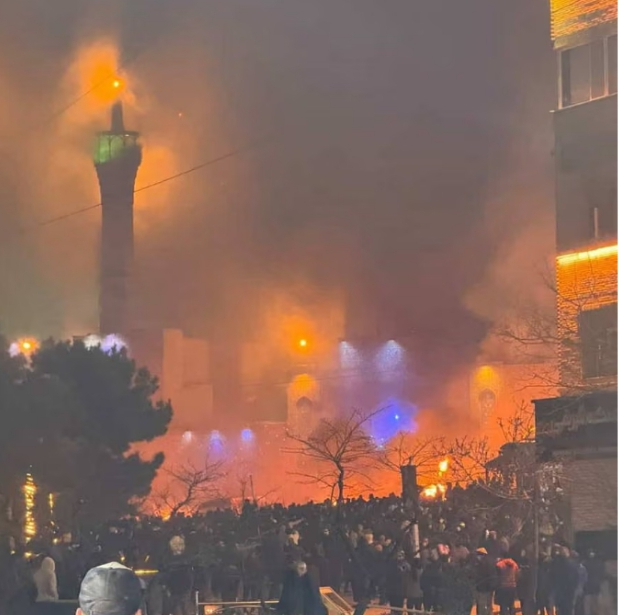
Footage circulating online depicted fireworks exploding over central districts of Tehran as demonstrators banged pots, shouted slogans, and waved pre-revolution symbols linked to Iran’s former monarchy.
New demonstrations were also reported in northern Tehran districts, where crowds assembled late into the night before dispersing amid heavy security presence and warnings from state officials.
Protesters marched through streets in Mashhad, the hometown of Supreme Leader Ayatollah Ali Khamenei, with fires burning nearby as crowds voiced anger at political and economic conditions.
Iranian authorities described the protesters as vandals and foreign-backed agitators, accusing the United States of encouraging unrest and attempting to destabilise the country.
Rights monitors reported that more than 570 protests had erupted across all 31 Iranian provinces, underscoring the geographic scale and persistence of the unrest.
International concern intensified as reports emerged of live ammunition being used against demonstrators, alongside mass arrests and allegations of forced confessions aired on state media.
United States President Donald Trump issued repeated warnings to Tehran, stating that Iranian authorities would face consequences if protesters were killed during security operations.
In social media posts, Trump said the United States was prepared to support Iranian protesters, framing the unrest as a historic push for freedom and political change.
Iran’s parliamentary leadership responded sharply, warning that American military assets and Israel could become legitimate targets if foreign intervention occurred.
Inside Iran’s parliament, lawmakers shouted anti-American slogans as senior officials accused Washington of direct involvement in the protest movement.
Authorities escalated rhetoric at home, with Iran’s attorney general warning that participation in protests could result in charges carrying the death penalty.
State television later clarified that individuals assisting protesters could also face severe punishment, intensifying fear among families and activists.
Despite the threats, calls for continued demonstrations spread through encrypted channels and satellite connections, with activists urging sustained street pressure over the weekend.
Reza Pahlavi, the exiled son of Iran’s last shah, called on protesters to seize control of city centres and display pre-1979 national symbols.
Pahlavi said the movement’s objective had shifted from symbolic protest to direct local control, promising he would return to Iran when conditions allowed.
The internet blackout has made independent verification difficult, but scattered videos and eyewitness testimony described a heavy-handed police response across major cities.
One protester communicating via satellite described sniper positions in affluent Tehran neighbourhoods and widespread gunfire directed toward crowds.
Human rights groups said they could not independently confirm all claims but reported patterns consistent with previous crackdowns by Iranian security forces.
A US-based human rights organisation said at least 116 people had been killed and more than 2,600 detained since the protests intensified.
Iranian authorities acknowledged casualties among security personnel, blaming violence on what they described as foreign-backed saboteurs.
Nobel peace prize laureate Shirin Ebadi warned that the communications blackout could conceal mass abuses, including indiscriminate shootings and systematic repression.
She said reports from Tehran hospitals suggested unusually high numbers of eye injuries, often associated with crowd-control weapons.
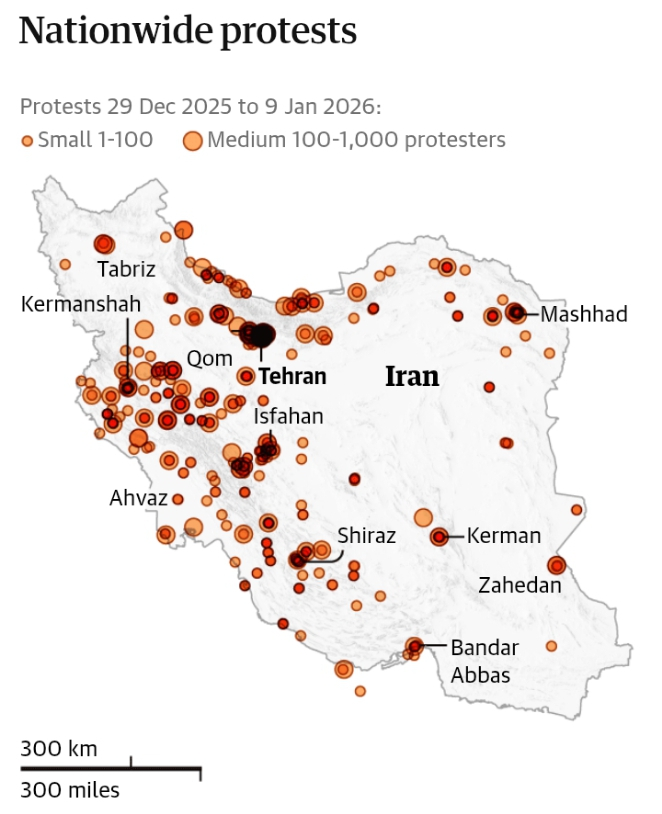
The protests were initially triggered by worsening economic conditions, including inflation, unemployment, and currency depreciation affecting daily life.
They quickly evolved into broader political demonstrations, with chants demanding systemic reform and an end to clerical rule.
Analysts say Iran’s leadership appears more vulnerable following recent regional setbacks and military losses involving allied forces.
State media attempted to project calm, describing protests as isolated incidents and warning parents to prevent children from joining demonstrations.
A television anchor cautioned that anyone injured during protests would bear personal responsibility, a statement that drew condemnation from rights advocates.
Western governments and European officials issued statements supporting Iranian protesters, calling for restraint and respect for human rights.
US Secretary of State Marco Rubio said Washington stood with what he described as the “brave people of Iran” demanding accountability.
Iranian officials pursued a dual strategy, distinguishing between economic protesters and political “rioters” allegedly supported by foreign powers.
While authorities claimed dialogue with legitimate protesters, rights groups reported increasing indiscriminate force used against crowds nationwide.
Video verified by human rights organisations showed families searching through hospital morgues for missing relatives believed killed during demonstrations.
Footage aired by pro-government outlets displayed apparent forced confessions, a practice activists warn is often used to justify harsh sentences.
The blackout has complicated documentation efforts, prompting activists to urge sustained international media attention on events inside Iran.
Despite uncertainty over protest numbers, the persistence of demonstrations has posed one of the most serious challenges to Iran’s leadership in years.
As night-time protests continue and security forces remain deployed nationwide, the standoff between state power and public anger shows little sign of easing.
Read also: South Africa, Russia, China hold joint naval drills, says exercises are essential
About The Author
