Iran has announced that all remaining restrictions on its nuclear programme have officially ended following the expiration of the landmark 2015 nuclear deal with world powers.
Tehran declared that it no longer considers itself bound by any of the agreement’s limitations, while simultaneously reaffirming its commitment to diplomacy and peaceful engagement with the international community.
In a formal statement released on Saturday, Iran’s Foreign Ministry said that all provisions of the Joint Comprehensive Plan of Action, known as the JCPOA, were now “terminated.”
The ministry’s statement marked what officials called the “termination day” of the agreement, ten years after the adoption of United Nations Security Council Resolution 2231, which had endorsed the original deal.
Under the JCPOA, Iran had agreed to curtail uranium enrichment and open its facilities to international inspectors in exchange for relief from crippling economic sanctions.
The pact was initially signed by Iran, the United States, the United Kingdom, France, Germany, China, and Russia, with the UN Security Council overseeing its enforcement.
However, the deal began to unravel in 2018 when then-US President Donald Trump unilaterally withdrew Washington from the accord, reinstating wide-ranging sanctions on Tehran.
Following the US withdrawal, Iran gradually expanded its nuclear activities, arguing that the other signatories had failed to uphold their economic commitments under the deal.
Efforts to revive the agreement have repeatedly stalled, with European mediators unable to bridge the gap between Tehran and Washington over guarantees and verification measures.
In recent months, diplomatic tensions escalated further after the United Kingdom, France, and Germany—collectively known as the E3—triggered the so-called “snapback” mechanism in August.
That mechanism reimposed United Nations sanctions on Iran, effectively nullifying the practical benefits of any remaining JCPOA commitments and freezing diplomatic progress.
“The termination day is symbolic rather than substantive,” said Kelsey Davenport, director for non-proliferation policy at the Arms Control Association, speaking to international media.
She added that because of the reactivation of UN sanctions, the expiration of the deal’s timeline “does not change the current status of Iran’s nuclear or economic obligations.”
Ali Vaez, who heads the Iran project at the International Crisis Group, said the JCPOA had already been “lifeless for years,” and the recent developments had “formally buried” the agreement.
According to Vaez, the collapse of the accord continues to shape global security dynamics, with deep mistrust between Tehran and Western capitals limiting diplomatic engagement.
Western powers and Israel have long accused Iran of secretly pursuing the capability to produce nuclear weapons, a charge that Iranian authorities have consistently denied.
Tehran maintains that its nuclear programme is designed solely for civilian and energy purposes, asserting that weaponisation is against both its national doctrine and religious principles.
Neither the United States’ intelligence agencies nor the International Atomic Energy Agency, the IAEA, have presented conclusive evidence this year that Iran is developing a nuclear weapon.
However, Western diplomats insist that without international monitoring, it is impossible to verify the exact extent of Iran’s current nuclear activities and uranium stockpiles.
Iran’s relationship with the IAEA has grown increasingly strained since July, when President Masoud Pezeshkian suspended all cooperation with the UN nuclear watchdog.
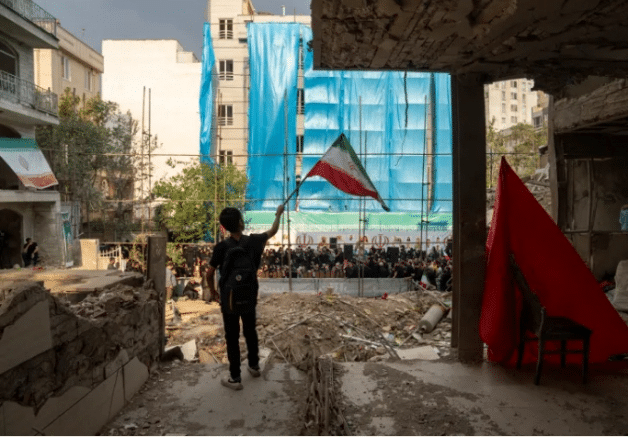
The move came after the agency refused to condemn Israeli strikes during a 12-day conflict in June that targeted several Iranian military and nuclear sites.
Those attacks killed more than 1,000 people, including hundreds of civilians, and caused extensive damage to key facilities across the country, according to Iranian officials.
Following the strikes, Tehran accused the IAEA of “double standards,” claiming the agency ignored what it called clear violations of international law by Israel and its allies.
The suspension of cooperation forced IAEA inspectors to leave the country, leaving the global nuclear watchdog unable to verify the scale of Iran’s enrichment programme.
In a recent report, the agency said its inability to monitor Iran’s activities was “a matter of serious concern,” as it could no longer confirm that the country’s stockpile remains peaceful.
European governments have called for renewed dialogue to prevent further escalation and restore a “comprehensive, durable and verifiable” framework for nuclear transparency.
Foreign ministers from the UK, France, and Germany issued a joint statement last week urging Iran to re-engage in talks aimed at preventing nuclear proliferation in the region.
However, Iranian Foreign Minister Abbas Araghchi dismissed the appeal, saying his government “does not see any reason to negotiate” with countries that reinstated sanctions.
He argued that the E3 had “eliminated the justification for talks” by activating the snapback mechanism, accusing them of bowing to American political pressure.
Diplomatic efforts between Tehran and Washington also remain at a standstill, despite occasional statements hinting at potential engagement.
Earlier this week, former US President Donald Trump said he wanted to reach a “peace deal” with Iran but insisted that “the ball is in Tehran’s court.”
Iranian officials responded cautiously, saying they remain open to diplomatic discussions only if the United States offers verifiable guarantees against future military action.
Relations between the two countries remain deeply fractured following direct military clashes earlier this year, when the United States joined Israel in coordinated strikes on Iranian targets.
That conflict, which lasted nearly two weeks, marked one of the most intense confrontations between the two nations in decades, reigniting fears of a wider regional war.
In the aftermath of those attacks, Iran intensified its domestic production of advanced centrifuges and enriched uranium to higher levels, citing the need for “defensive deterrence.”
Experts say the expiration of the JCPOA now leaves the international community without a formal mechanism to monitor or limit those activities.
With UN sanctions reinstated and diplomatic channels frozen, Iran’s nuclear programme now operates largely outside the framework of international oversight.
The United States and its allies have pledged to continue pursuing diplomatic solutions, though they acknowledge that trust with Tehran is at an all-time low.
Regional powers, including Saudi Arabia and Turkey, have also expressed concern that the end of the deal could trigger a renewed arms race in the Middle East.
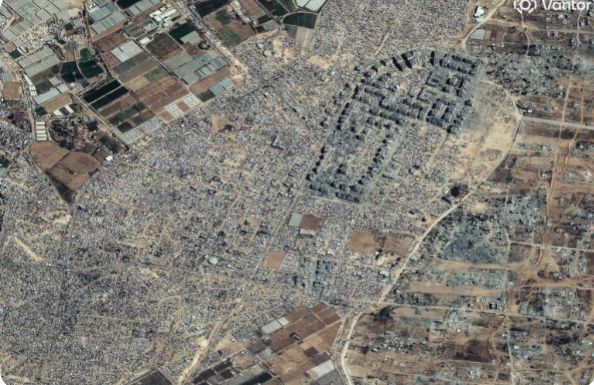
Analysts warn that the collapse of the agreement may further destabilize a region already facing multiple crises, from the Gaza conflict to escalating tensions in the Red Sea.
Iran’s leadership, however, insists that the country will not pursue nuclear weapons and will instead focus on scientific development and domestic energy independence.
In a televised address earlier this month, President Pezeshkian said Iran would continue to engage in diplomacy but would “not negotiate under threats or sanctions.”
He added that any future discussions must be based on “mutual respect and realistic commitments” from all parties, particularly the Western powers.
For now, the expiration of the 2015 nuclear deal formally ends one of the most significant diplomatic accords in recent Middle Eastern history.
Whether its demise marks the beginning of renewed confrontation or the start of a new phase of negotiations remains uncertain.
The coming months are expected to determine whether diplomacy can be revived or whether Iran’s nuclear ambitions will continue unchecked under tightening sanctions.
About The Author