Salman Shahid, a frequent traveller between Srinagar and New Delhi, says the India flight price surge has made commuting for work and family increasingly unaffordable.
Before the pandemic, a one-way flight from Srinagar to New Delhi cost around 3,300 rupees ($37.20). Today, prices routinely exceed 5,000 rupees ($56), marking a dramatic escalation.
“This surge has forced me to cut travel drastically,” Shahid explained. “Earlier, I flew four round-trips monthly. Now, two trips feel like a luxury I can barely manage.”
Experts attribute the India flight price surge to rising aviation costs in India, which have steadily increased fuel prices, maintenance, and operational expenditures across carriers nationwide.
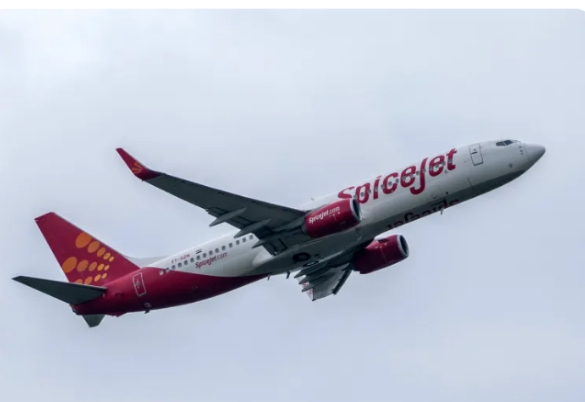
According to Airports Council International, domestic fares in India jumped 43 percent in the first half of 2024 compared with 2019, making it one of the steepest increases in Asia Pacific.
International flights also saw higher costs, with a 16 percent rise in airfares over the same period, reflecting global fuel market pressures and persistent demand fluctuations.
High aviation turbine fuel prices remain a key factor behind the India flight price surge, increasing from 68,050 rupees ($759) per kilolitre in 2019 to 93,766 rupees ($1,046) per kilolitre in 2025.
Vandana Singh, chairperson of the Aviation Cargo Federation of Aviation Industry, said the relentless fare increases make air travel increasingly inaccessible for middle and lower-income passengers.
“The India flight price surge risks excluding vast sections of society who were the intended beneficiaries of the UDAN scheme,” Singh warned, highlighting inequities in domestic aviation accessibility.
The UDAN scheme, launched in 2016, aimed to connect smaller cities and towns to major hubs, making flights affordable for common citizens, particularly in economically weaker regions.
Prime Minister Narendra Modi promoted the program with the slogan, “I want to see people who wear hawai chappals flying in a hawai jahaaz,” which inspired hopes for affordable air travel.
However, with the India flight price surge, experts like Singh argue that the slogan has become largely symbolic rather than reflective of everyday reality for most Indians.
Rohit Kumar, aviation economist at Rajiv Gandhi National Aviation University, said that while the number of passengers continues to grow, lower-income travelers are being quietly priced out of the skies.
“New airports and more routes maintain overall traffic, but rising airfare impact disproportionately affects the lower-middle class,” Kumar explained, illustrating the inequality caused by current pricing trends.
The India flight price surge is further exacerbated by shrinking airline competition, as several carriers have ceased operations or merged, reducing consumer choice and consolidating market power.
Go First’s bankruptcy in 2023 and Jet Airways’ halt in 2019 left large gaps in the market, while remaining carriers like Indigo and Air India gained dominant positions.
Indigo now controls approximately 61 percent of the domestic market, and together with Air India, they command 91 percent, creating opportunities to set prices with minimal competitive pressure.
Zuhaib Rashid, economics associate at the Isaac Centre for Public Policy, warned that privatisation of Air India and airline mergers have handed control of domestic aviation to a few private players.
“This concentration allows airlines to hike fares freely during peak travel periods or emergencies, contributing directly to the India flight price surge,” Rashid said, citing examples of crisis-driven price spikes.
After the April 2025 Pahalgam attack, one-way ticket prices from Srinagar to other parts of India rose from 5,000 rupees ($56) to nearly 12,000 rupees ($135), exemplifying profiteering during crises.
Similarly, during the Mahakumbh Mela earlier in the year, fares from Mumbai to Prayagraj soared to 50,000 rupees ($564), surpassing international flight prices to Europe, before government intervention partially curbed them.
High taxes on aviation also contribute significantly to the India flight price surge, with India imposing the highest levies in Asia on aviation turbine fuel, accounting for roughly 45 percent of ticket prices.
Additional charges such as user development fees, passenger service fees, aviation security fees, terminal fees, and regional connectivity charges further inflate overall travel costs.
Amjad Ali, a travel operator from New Delhi, said the combined effect of taxes and surcharges has made tickets increasingly unaffordable for regular travellers, especially students and lower-income passengers.
Airlines previously offered student discounts of up to 50 percent on domestic travel, but following privatisation, concessions were reduced to around 10 percent, further limiting access for young travellers.
Ali noted a noticeable decline in student passengers on domestic flights, with young people increasingly opting for trains or buses due to the high cost imposed by the India flight price surge.
Vandana Singh emphasized that without systemic changes in taxation and regulation, the domestic aviation sector will continue to exclude the very people the UDAN scheme was designed to serve.
“The India flight price surge is self-defeating for the industry,” Singh said. “Affordable air travel is essential to expand the market sustainably, but rising costs are keeping millions grounded.”
Beyond taxes, fuel price volatility and international market trends have intensified pressures on airlines, forcing carriers to pass costs onto passengers rather than absorb them.
Operational inefficiencies, safety compliance costs, and fleet maintenance have compounded the India flight price surge, leaving airlines struggling to maintain profitability without raising fares.
The reliance on a small, affluent passenger base creates structural inequalities, with air travel becoming a luxury for the upper-middle class while the majority remains grounded.
Despite overall growth in passenger numbers, the benefits of expanding routes and airports have not reached the lower-income population, contradicting the original goals of national aviation policy.
Singh noted that rising airfare impact also harms tourism in smaller cities, as higher travel costs reduce inflows of visitors and constrain local economic development reliant on affordable connectivity.
Rashid argued that partial government intervention could mitigate fare spikes, particularly during crises, but full privatisation of Air India removed much of the state’s ability to regulate pricing effectively.
India’s aviation landscape now risks long-term structural inequality, with shrinking airline competition, high taxes, and escalating operating costs all combining to sustain the India flight price surge.
Without corrective measures, lower-income citizens will increasingly be excluded from domestic air travel, defeating the original promise of accessibility under the UDAN scheme.
Singh concluded, “The dream of seeing common citizens in the skies is fading. Unless taxes are reduced and competition strengthened, flying will remain a privilege, not a right.”
For millions like Shahid, the India flight price surge has transformed convenient air travel into a luxury, forcing difficult trade-offs between work, family, and personal mobility across vast distances.
The government faces mounting pressure to address the systemic causes of soaring fares, including taxation, market concentration, and infrastructure costs, to prevent further exclusion of the population.
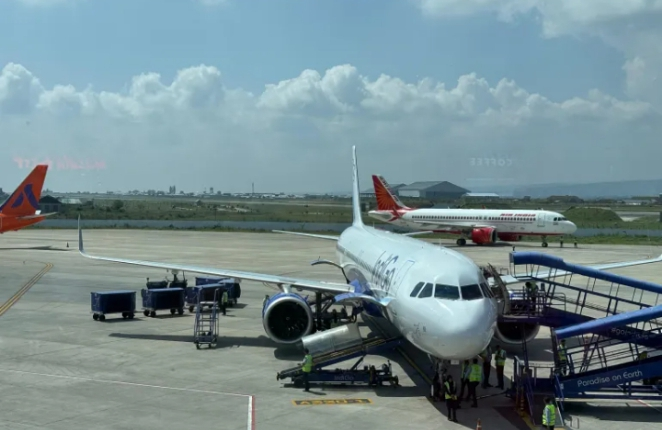
Airlines argue that rising operational costs, fuel prices, and maintenance challenges necessitate higher fares, but critics maintain that monopolistic trends exacerbate the problem and limit consumer choice.
India’s 1.4 billion people face a stark reality: air travel is increasingly unaffordable for the majority, leaving only a small segment able to benefit from the modernised domestic aviation network.
Until these structural issues are addressed, the India flight price surge will continue to constrain travel opportunities, undermine economic mobility, and contradict the vision of affordable skies for all.
About The Author