Minister Adelabu offers ₦25 million aid to residents affected by the Ibadan Circular Road project, ensuring relief and protection for displaced families.
The Ibadan Circular Road project, initiated by the Oyo State Government, has significantly impacted residents living along the 113-kilometre corridor.
In response to the growing humanitarian concern, the Minister of Power, Chief Adebayo Adelabu, has stepped in to provide financial and moral support to affected families.
This intervention aims to alleviate the challenges faced by those whose properties were demolished or marked for demolition as part of the ongoing road expansion.
Speaking directly with residents in Ibadan, Minister Adelabu emphasized that his involvement is purely humanitarian and not politically motivated.
“We are one family in Ibadan. I am a Minister of the Federal Republic of Nigeria, representing Oyo State. This is not about politics; it is about restoring hope and easing the pain of our people,” he declared.
His words have offered reassurance to communities struggling with displacement and uncertainty.
As part of the initial phase of assistance, the Minister announced a donation of ₦25 million to help affected residents secure temporary housing.
“For this first phase, I am donating ₦25 million so that some of you can rent temporary apartments. This will provide immediate relief while longer-term solutions are explored,” Adelabu explained.
This action underscores the government’s commitment to ensuring that infrastructure development does not come at the expense of human welfare.
The Ibadan Circular Road project has been controversial due to the demolition of properties within a 500-metre buffer zone on both sides of the corridor.
Property owners have voiced concerns over the loss of land and homes, prompting public outcry and calls for a more compassionate approach.
Residents like Mrs. Modinat have shared emotional accounts of losing their homes, urging federal intervention to protect their rights and dignity.
Minister Adelabu expressed deep sympathy for all residents affected by the demolitions, particularly those who suffered injuries or lost their lives during the exercise.
“We all desire development that brings progress to Ibadan and Oyo State. However, development must never compromise human lives or welfare.
“Every infrastructure project should have a human face. Progress that disregards people’s well-being ceases to be true development,” he remarked. His comments highlight the importance of balancing urban growth with social responsibility.
The Minister also warned against arbitrary demolitions that leave families homeless. “Government exists to serve the people, not to inflict pain on them. Roads and infrastructure can be built, but it must be done responsibly and with compassion,” he added.
This statement reflects a growing demand for ethical governance and a people-centered approach to state development.
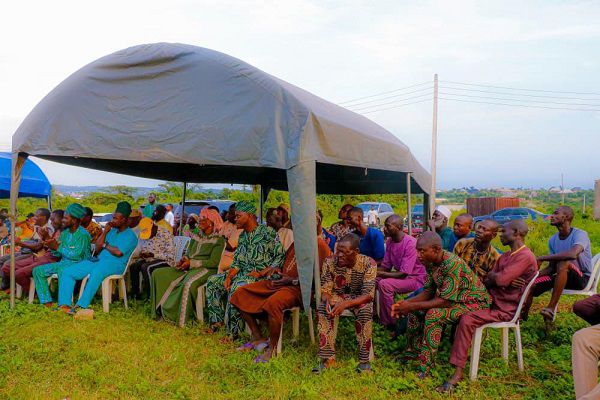
Chief Sule Asanke, the Baale of Asanke Village, appealed to Minister Adelabu to engage directly with Governor Seyi Makinde to halt further demolitions.
“We are deeply hurt that our land has been taken from us, allegedly for sale to private individuals,” he lamented. Community leaders like Chief Asanke are urging collaboration between federal and state authorities to ensure fair treatment of residents.
In response, Minister Adelabu pledged to leverage all available channels at both federal and state levels to ensure fairness and justice.
He emphasized that he would communicate with Governor Makinde, whom he described as a “friend and brother,” to explore a balanced resolution.
Adelabu’s commitment signals a proactive effort to mediate between development priorities and the welfare of local communities.
The Minister also urged residents to remain law-abiding and peaceful in their protests. “Do not take the law into your hands. All demonstrations must be peaceful and within the bounds of the law.
While government authority is supreme, it must always operate with empathy and respect for human dignity,” he cautioned.
His guidance encourages constructive engagement rather than conflict during large-scale infrastructure projects.
The residents’ compensation and humanitarian intervention introduced by Minister Adelabu highlight the need for ethical urban planning in Oyo State.
As cities expand, development must incorporate strategies that protect vulnerable populations, ensuring that growth benefits everyone, not just infrastructure investors or government agencies.
Analysts have noted that the Ibadan Circular Road project represents both a significant opportunity and challenge for Oyo State. On one hand, the road promises to improve connectivity, reduce traffic congestion, and boost economic activity.
On the other, it raises pressing questions about residents’ rights, adequate compensation, and the social costs of rapid urban development. Humanitarian measures, like those provided by Minister Adelabu, serve as a model for balancing progress with compassion.
Local residents have expressed cautious optimism that the Minister’s intervention will prevent further displacement and provide relief for those already affected.
By addressing immediate needs through temporary housing support and engaging state authorities for long-term solutions, the initiative aims to create a more humane approach to development in Ibadan.
The Ibadan Circular Road project thus serves as a critical test of governance, demonstrating how infrastructure ambitions can be aligned with ethical responsibility.
Minister Adelabu’s efforts show that federal involvement, when guided by compassion, can mitigate negative impacts and foster trust between citizens and authorities.
As the project continues, ongoing dialogue between the government and affected communities will be essential.
Residents have been encouraged to remain united and proactive, seeking solutions through legal and peaceful channels. This approach not only safeguards their rights but also ensures that the benefits of urban development are shared equitably.
The Ibadan Circular Road project represents more than just a physical transformation of the city—it is a reflection of how infrastructure development can coexist with humanitarian principles.
Minister Adelabu’s donation of ₦25 million, his advocacy for residents, and his emphasis on peaceful engagement highlight a model of development that places human welfare at the forefront.
Residents and government authorities alike are being reminded that true progress must never come at the expense of dignity and compassion.
More news at ireport247news
About The Author