Hillary Clinton Epstein testimony returned forcefully to the center of American politics as Congress escalated its investigation into elite connections surrounding the disgraced financier.
The scheduled appearance of Hillary Clinton before lawmakers marked a pivotal moment in the long-running Epstein controversy.
Hillary Clinton Epstein testimony will take place behind closed doors, though proceedings are recorded, reviving memories of past political scandals and public distrust.
The inquiry is being led by the House Oversight Committee, now under Republican control and eager to expand its scope.
Lawmakers say the Hillary Clinton Epstein testimony aims to clarify social links, travel records, and political access surrounding Epstein’s powerful circle.
Epstein, whose crimes shocked the world, died in federal custody in 2019 while awaiting trial, a death that continues to fuel speculation.
The committee’s focus extends beyond Hillary Clinton Epstein testimony to include her husband, former president Bill Clinton.
Bill Clinton is scheduled to answer questions separately, with investigators examining his acknowledged flights aboard Epstein’s private aircraft.
He has repeatedly denied wrongdoing, insisting that political opponents are weaponizing associations rather than evidence.
Republicans argue the Hillary Clinton Epstein testimony is essential to “restore confidence” in public institutions long accused of shielding elites.
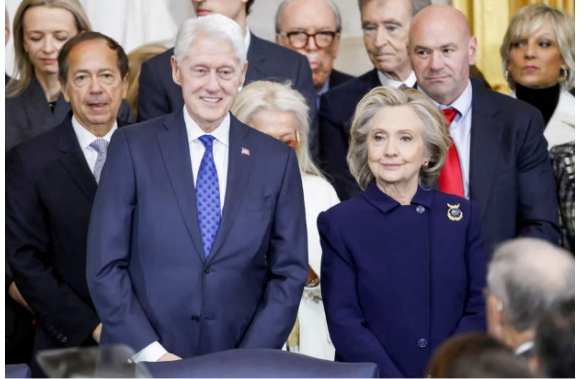
Democrats counter that the probe resembles a “kangaroo court,” warning it risks becoming partisan theatre rather than factual inquiry.
Bill Clinton described the closed-door format as “pure politics,” calling instead for open hearings visible to the American public.
Supporters of transparency argue secrecy undermines trust, especially given the scale of Epstein’s abuse network and unanswered questions.
Hillary Clinton Epstein testimony arrives amid renewed public anger following the release of additional Epstein-related documents.
Some materials include photographs, flight logs, and social records that reignited debate over accountability among the powerful.
Hillary Clinton maintains she never met Epstein, though she acknowledges brief contact with his associate, Ghislaine Maxwell.
Maxwell is now serving a lengthy prison sentence for her role in facilitating Epstein’s crimes.
The committee insists Hillary Clinton Epstein testimony is necessary to verify these statements under oath.
Republicans say accountability must apply “regardless of status, title, or political dynasty.”
Democrats accuse investigators of selectively targeting rivals while ignoring politically inconvenient facts.
That criticism centers on renewed attention to Donald Trump and his past interactions with Epstein.
For critics, highlighting Hillary Clinton Epstein testimony conveniently diverts attention from Trump’s documented social overlap with Epstein.
Trump has denied any involvement in Epstein’s criminal activities and claims he severed ties years before Epstein’s arrest.
Still, photos and statements continue to circulate, keeping Trump’s relationship with Epstein part of the public debate.
Political analysts note the Hillary Clinton Epstein testimony reflects deeper struggles over narrative control ahead of congressional elections.
Investigations into elite misconduct increasingly double as tools in partisan warfare.
Voters express frustration that justice appears delayed while political incentives dominate proceedings.
The Epstein scandal has become shorthand for elite impunity, secrecy, and systemic failure.
Hillary Clinton Epstein testimony thus carries symbolic weight far beyond individual culpability.
It represents a test of whether institutions can confront uncomfortable truths without collapsing into factional conflict.
Civil liberties advocates warn that closed hearings risk reinforcing perceptions of “rules for the powerful, secrecy for the rest.”
Committee leaders respond that confidentiality protects witnesses and preserves investigative integrity.
Footage from Hillary Clinton Epstein testimony is expected to be released later, though timelines remain unclear.
That delayed transparency mirrors historical precedents, including Clinton-era investigations during the 1990s.

Observers note the irony that recorded testimony may again shape public opinion long after political damage is done.
Media coverage has intensified, framing the Hillary Clinton Epstein testimony as a defining moment in modern accountability politics.
Public reaction remains sharply divided along partisan lines.
Some view the testimony as overdue scrutiny, others as orchestrated distraction.
Legal experts caution that congressional investigations differ from criminal proceedings, limiting prosecutorial outcomes.
Nevertheless, reputational consequences often prove lasting.
Hillary Clinton Epstein testimony underscores how association alone can redefine legacies in the digital age.
For the Clintons, the hearing revives decades-old controversies many believed settled.
For Republicans, it offers a platform to challenge Democratic moral authority.
For Democrats, it exposes risks of legitimizing investigations driven by political timing.
Beyond personalities, the case reflects broader anxieties about justice, power, and inequality.
The Epstein scandal continues to symbolize how wealth and influence can distort accountability.
Hillary Clinton Epstein testimony now becomes another chapter in that unresolved story.
Read also: Ancient stepwells revived to combat India’s day zero water crisis
Whether it delivers clarity or deepens cynicism remains uncertain.
What is clear is that America’s struggle with elite accountability is far from over.
About The Author