

The grooming gang inquiry has been plunged deeper into crisis after former police officer Jim Gamble abruptly withdrew his candidacy to chair the embattled national investigation.
The withdrawal of the last known frontrunner for the grooming gang inquiry chair position has exposed fresh turmoil, leaving the Keir Starmer government facing mounting criticism.
A Home Office spokesperson confirmed the setback, expressing “disappointment” over the withdrawal. “The grooming gang scandal was one of the darkest moments in this country’s history,” the spokesperson said pointedly.
They added: “This government remains committed to a full, statutory, national grooming gang inquiry to uncover the truth. It is the very least victims of these hideous crimes deserve.”
The spokesperson continued, “We are disappointed that candidates to chair that inquiry have withdrawn. This is an extremely sensitive topic, and we must appoint the best person suitable.”
They stressed the Home Office determination that “the home secretary has been clear: there will be no hiding place for those who abused the most vulnerable in our society.”
Mr Jim Gamble, a former head of Belfast’s Royal Ulster Constabulary Special Branch, and ex-chief of the National Crime Agency’s Child Exploitation Command, was widely seen as qualified.
However, Gamble’s withdrawal marks the latest blow for the grooming gang inquiry, following weeks of disarray and mounting resignations from the inquiry’s victims and survivors panel.
The scandal deepened after Annie Hudson, former director of children’s services in Lambeth, London, was reported to have also pulled out just a day earlier amid controversy.
Four survivors serving on the grooming gang inquiry panel resigned, citing what they described as a “toxic environment” and concerns about the police or social service links of candidates.
The resignations underscore fears that the grooming gang inquiry may be losing credibility and transparency, with survivors warning that their voices are being ignored and disrespected.
Some survivors alleged that potential chairs had professional links to institutions accused of past failures in handling child exploitation — sparking accusations of conflicts of interest.
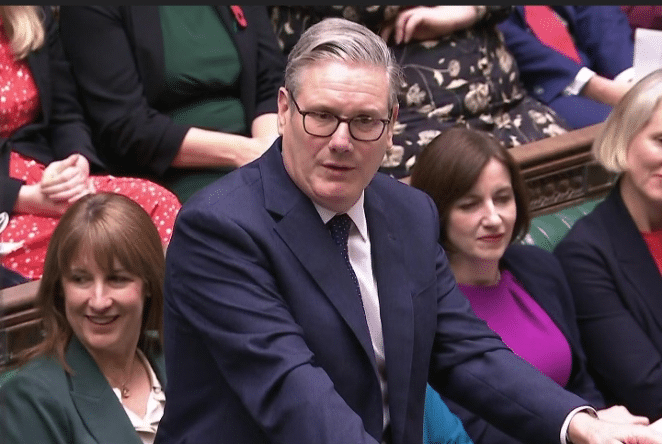
In Parliament, Keir Starmer attempted to stem the damage by announcing Baroness Louise Casey would step in to “support the work” of the struggling grooming gang inquiry.
Sir Keir Starmer told MPs: “Injustice will have no place to hide,” insisting that “the door will always be open” to survivors who quit the inquiry panel.
He declared, “The inquiry is not and will never be watered down. Its scope will not change,” responding to accusations it was being diluted.
Sir Keir added: “I can tell the House today, Dame Louise Casey will now support the work of the grooming gang inquiry and it will get to the truth.”
His comments, however, failed to quiet criticism that his Labour government has mishandled the process and alienated victims still waiting for accountability.
Baroness Louise Casey, a respected public servant, previously led a national audit on child sexual exploitation that highlighted systemic avoidance of discussing “ethnicity or cultural factors.”
Her June 2025 report concluded that many agencies shied away from confronting realities in grooming gang inquiry cases “for fear of appearing racist,” revealing uncomfortable truths about institutional failures.
The report’s findings prompted Keir Starmer to promise a national inquiry — yet the latest chaos casts doubt on whether that pledge can still be fulfilled credibly.
Critics now accuse the Home Office and Starmer’s administration of failing to secure a competent, trusted chair to lead one of the country’s most sensitive investigations.
One survivor who left the inquiry called the process “shambolic” and said victims “deserve honesty, not bureaucracy.” Another warned, “The government is playing politics with trauma.”
The grooming gang inquiry had been presented as a landmark effort to uncover decades of abuse in towns such as Rotherham, Rochdale, and Telford — but survivors now fear betrayal.
For years, campaigners have demanded accountability for what they describe as “institutional cowardice” that allowed child exploitation networks to thrive under the watch of public authorities.
The repeated resignations and leadership failures risk turning the grooming gang inquiry into another example of bureaucratic paralysis, leaving victims retraumatised and trust eroded.
Critics say the Home Office has been “too slow and indecisive,” allowing the process to collapse under political pressure and personal disagreements among those involved.
One former adviser close to the panel said, “Every time progress was made, internal rows pulled it apart again. Survivors have been left exhausted by the constant chaos.”
Opposition MPs accused Keir Starmer of losing grip over one of his government’s flagship justice commitments, questioning whether the inquiry could now regain public confidence.
Shadow ministers described the withdrawal of Jim Gamble as “another humiliation” for the grooming gang inquiry and a sign of deeper dysfunction within Starmer’s administration.
A cross-party group of MPs has since urged the Home Office to appoint an independent outsider “untainted by political or policing influence” to restore integrity to the probe.
Baroness Louise Casey’s involvement may bring expertise, but her role remains advisory. Without a confirmed chair, the grooming gang inquiry appears directionless and increasingly unstable.
Analysts argue that this collapse of leadership reflects a wider pattern of government mismanagement under Keir Starmer, raising concerns about his handling of complex social issues.
The grooming gang inquiry, initially billed as a turning point for justice, now risks being remembered as another failure of political will and institutional accountability.
A former civil servant told reporters: “The inquiry’s structure was flawed from the start. Too many agencies, too little trust — and now it’s spiralling into farce.”
Despite repeated assurances from the Home Office, the public remains sceptical that the grooming gang inquiry will ever deliver truth or closure for victims and families.
As political pressure mounts, victims’ advocates have warned that each delay “reopens wounds” and “sends the message that survivors’ pain still isn’t being taken seriously.”
Baroness Louise Casey has pledged to continue advising the government, stating she remains committed to ensuring “injustice will have no place to hide,” echoing Keir Starmer’s own words.
However, without decisive leadership, her presence alone may not salvage the grooming gang inquiry from an image of dysfunction and distrust that now shadows its mission.
The public frustration grows as officials scramble to reassure Parliament that the government remains serious about delivering justice after years of neglect and policy paralysis.
The repeated resignations have left survivors questioning whether the grooming gang inquiry will ever deliver accountability — or whether it will become yet another broken promise.
For Keir Starmer, the crisis deepens as faith in his administration’s competence to handle sensitive justice issues continues to erode amid growing political embarrassment.

The fallout from Jim Gamble’s exit is being viewed as symptomatic of a government overwhelmed by its own pledges and unprepared for the complexities of real accountability.
Unless drastic action is taken, the grooming gang inquiry may go down as one of the most mishandled investigations in modern British political history — a stain on Starmer.
About The Author


