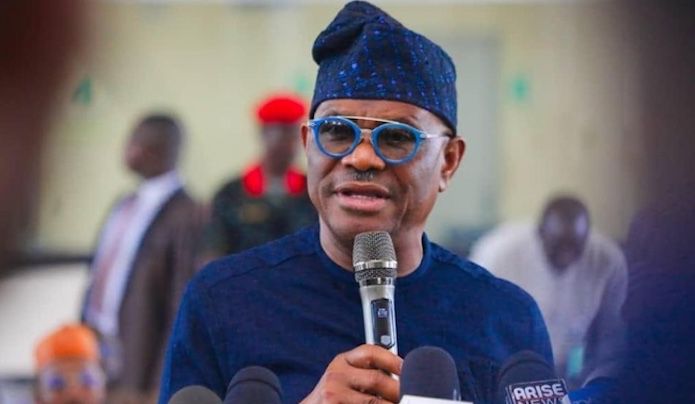
Governor Eno calls on Akwa Ibom residents to embrace forgiveness, reconciliation, and unity, stressing that lasting development is impossible without a spirit of peace and mutual respect.
Governor Umo Eno of Akwa Ibom State has urged residents to embrace genuine reconciliation and forgiveness as essential ingredients for progress.

The governor delivered this message during the Sunday Service commemorating the 24th Eket Field Annual Convention of The Apostolic Church, where he spoke extensively on the dangers of hatred and the urgent need for healing in the state’s socio-political space.
According to the governor, no community can experience meaningful growth when resentment and bitterness are allowed to shape public conduct.
He explained that progress flourishes where people deliberately choose dialogue over confrontation, empathy over hostility, and compassion over retaliation.
The governor emphasized that if humans expect the abundant grace and forgiveness of God, then they must equally be willing to forgive one another without hesitation.
He reminded the congregation that no individual is perfect, noting that human beings are inherently prone to mistakes, misjudgments, and weaknesses.
Because of this, he urged citizens to resist the temptation of holding grudges or expecting absolute perfection from political leaders, religious leaders, or fellow citizens.
Governor Eno explained that forgiveness is not a sign of weakness but a demonstration of maturity and spiritual understanding, especially for people who claim strong religious values.
The governor’s message comes against the backdrop of widening ethno-political divides in Akwa Ibom State, a trend that analysts say intensified following his defection from the Peoples Democratic Party (PDP) to the All Progressives Congress (APC) at the federal level in June 2025.
This political shift created tension among supporters who felt betrayed or unsettled by the realignment.
However, the governor insisted that true leadership demands courage to make decisions that enhance long-term stability rather than short-term approval.
Despite the criticisms that accompanied his political move, Governor Eno maintained that forgiveness remains the best path forward for communities seeking sustainable peace.
He explained that holding on to political grudges only fuels division, encourages misinformation, and threatens the social harmony for which Akwa Ibom is widely admired.
The governor urged residents to approach political differences with understanding rather than hostility, stressing that the state belongs to everyone, not to any single political group.
During his address, he shared personal reflections on how he handles conflicts.
According to him, he chooses to learn from the past, forgive, and move forward with optimism—yet he refuses to allow those past mistakes to recur.
He described forgiveness as “a cardinal virtue” that has helped him overcome major challenges in both his private and public life.
The governor encouraged the people to cultivate this virtue as well, arguing that communities anchored on bitterness cannot prosper or remain stable for long.
He cautioned strongly against the philosophy of retaliation often captured in the phrase “an eye for an eye,” warning that such a mindset ultimately leads to collective destruction.
He echoed the famous metaphor that a society driven by revenge risks having everyone “go blind” because no one benefits when vengeance becomes the norm.
Instead, he recommended a culture where kindness is extended even to those who may have acted unjustly in the past.
Addressing leaders, he spoke directly about the dangers of pride and the misuse of authority.
He emphasized that when God elevates a person, it is not an invitation to oppress or insult others but rather a responsibility to uplift the people and build bridges across perceived divides.
He urged political actors, traditional institutions, and community leaders to prioritize reconciliation efforts within their jurisdictions, noting that peace remains the most rewarding legacy any leadership can leave behind.
Governor Eno further expressed profound gratitude to The Apostolic Church for its consistent prayers and unwavering support during his administration and particularly during his 2023 election campaign.
He acknowledged the significant role the church continues to play in the spiritual direction of the state, highlighting how religious institutions contribute to moral stability and community resilience.
He added that the partnership between government and faith-based organizations has made it possible to tackle social challenges with greater effectiveness.
The governor also used the platform to appeal to youths and political stakeholders to refrain from spreading animosity, misinformation, or divisive narratives that escalate tension during sensitive political seasons.
He urged young people in particular to see themselves as ambassadors of peace whose actions and online engagements can either strengthen or weaken community cohesion.
He emphasized the need for mutual respect across political affiliations, ethnic backgrounds, and economic classes, insisting that political competition should never degenerate into personal hostility.
Instead, he called for issue-based engagements that prioritize the well-being of Akwa Ibom citizens.
While addressing the congregation, the governor reassured the public that his administration remains committed to policies that promote inclusiveness, fairness, and development across all local government areas.
He emphasized that no section of the state will be neglected due to political differences, noting that governance must be anchored on justice and equity.
Ireport247news
About The Author