

An international campaign is gaining momentum to free Marwan Barghouti, jailed in Israel since 2002, with over 200 celebrities, writers, and activists publicly supporting his release.
The open letter accompanying the campaign called on the United Nations and governments worldwide to act, condemning Barghouti’s mistreatment and prolonged imprisonment without access to fair legal rights.
High-profile supporters include authors, actors, musicians, and activists who have long advocated for Palestinian rights, now rallying around the “Free Marwan” campaign launched by Barghouti’s family.
Barghouti, a senior Fatah leader, is often compared to Nelson Mandela due to his unifying role in Palestinian politics and significant influence across multiple Palestinian factions.
He is serving five life sentences for alleged involvement in attacks during the Second Intifada, a period of intense Israeli-Palestinian conflict that lasted from 2000 to 2005.
Earlier this year, Barghouti was publicly taunted by far-right Israeli officials while suffering from exhaustion, hunger, and visible physical injuries sustained during years of imprisonment.
Reports from his family indicate severe beatings during prison transfers, leaving him with broken ribs, head trauma, and other serious injuries, heightening fears for his life in custody.
The “Free Marwan” campaign has organized international advocacy events in countries such as the United Kingdom, France, and elsewhere, calling attention to Barghouti’s treatment and political significance.
Barghouti is widely regarded as a critical figure for any potential Palestinian state, capable of uniting diverse political factions and promoting national reconciliation across the West Bank and Gaza.
Recent polling indicates that if Palestinian elections were held today, Barghouti would likely secure a commanding lead, with Hamas in second place and Mahmoud Abbas’s administration trailing in third.
Abbas’s leadership is widely criticized as ineffective and seen by many Palestinians as cooperating with Israeli authorities, particularly amid ongoing military operations and settler violence in the West Bank.
The Palestinian Authority seeks a role in Gaza’s post-war governance under Donald Trump’s 20-point UN-endorsed plan, promising legislative and presidential elections within a year after hostilities end.
Skepticism remains high among Palestinians, with surveys showing 60 percent doubt elections will happen, reflecting frustration over decades of stalled political reforms and limited government accountability.
Barghouti’s imprisonment and ongoing mistreatment have galvanized activists, international observers, and human rights organizations, highlighting broader concerns about Palestinian rights, humanitarian conditions, and prospects for peace.
Human rights groups emphasize that Barghouti’s treatment violates international norms, citing denial of medical care, harassment by prison authorities, and restricted contact with family members over many years.
Earlier footage from Ganot Prison, broadcast in August, shocked family members and the public alike, showing Barghouti in visibly weakened condition after prolonged hunger, exhaustion, and repeated assaults.
During a September prison transfer, Barghouti was reportedly beaten by guards, resulting in multiple broken ribs, head injuries, and other trauma, intensifying concerns for his physical safety and long-term health.
The campaign emphasizes that freeing Barghouti would not only save his life but also serve as a catalyst for political reform and Palestinian unity, strengthening prospects for meaningful reconciliation.
Many Palestinians view Barghouti as a symbol of resistance, resilience, and pragmatic leadership, making his release a potential turning point in the Palestinian political landscape.
The campaign’s global events include rallies, media appearances, and advocacy efforts, encouraging public engagement and diplomatic pressure on Israel to improve prisoner conditions and consider Barghouti’s release.
Analysts argue that Barghouti’s release could reshape Palestinian politics, potentially uniting divided factions, reinvigorating civil governance, and strengthening international confidence in Palestinian leadership.
Barghouti’s role as a unifying figure extends beyond politics; he is seen as an embodiment of the Palestinian struggle for justice, rights, and self-determination amid ongoing occupation.
The campaign also underscores broader issues facing Palestinian detainees in Israeli prisons, including systemic abuses, lack of fair trials, and prolonged incarceration without prospects for early release.
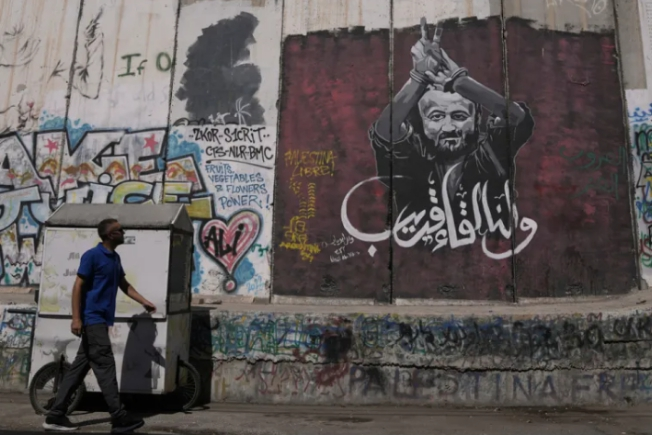
International attention on Barghouti’s case has increased pressure on governments and organizations to take meaningful action, highlighting the intersection of human rights advocacy and global diplomacy in the region.
Supporters argue that releasing Barghouti would honor principles of justice, encourage political engagement, and contribute to the long-term stability and viability of Palestinian governance structures.
Ultimately, the “Free Marwan” campaign represents both a personal struggle for one man and a wider effort to advance Palestinian political unity, human rights, and international recognition.
Observers note that sustained awareness, advocacy, and diplomatic efforts will be essential to achieving meaningful results, emphasizing the importance of continued global attention and pressure.
Barghouti’s supporters stress that his freedom is crucial not only for his well-being but also for advancing the broader Palestinian cause, promoting democracy, and reducing internal political divisions.
With the campaign growing in prominence, its organizers hope to inspire renewed dialogue, international engagement, and coordinated efforts toward ending ongoing violations against Palestinian detainees.
For many Palestinians, Marwan Barghouti embodies hope, resilience, and the enduring pursuit of justice, making his release a key milestone in the broader struggle for national and political rights.
About The Author


