

Global Air Cargo Demand Climbs 4.3% as Trade Lanes Realign in 2026
Global air cargo demand recorded a 4.3 per cent year-on-year increase at the start of 2026, signalling sustained resilience in international freight markets despite uneven global trade conditions.
Fresh industry data show that the expansion in global air cargo demand has been driven largely by performance along specific trade corridors, rather than by a broad-based rebound in worldwide merchandise trade.

The figures reflect a freight environment increasingly shaped by regional supply chain adjustments, targeted export growth, and cautious capacity deployment by carriers.
According to the latest industry assessment, air freight volumes measured in cargo tonne-kilometres (CTK) rose 4.3 per cent compared to the same period last year. International operations outperformed domestic segments, with international CTKs climbing 5.5 per cent year-on-year.
Asia Pacific and Africa Lead Growth
A closer look at regional performance shows that Asia Pacific and Africa were the primary engines behind the expansion in global air cargo demand. Asia Pacific carriers posted a 10.7 per cent year-on-year surge in December, underpinned by robust electronics exports, e-commerce shipments, and manufacturing activity across key export hubs.
Africa followed closely with 10.1 per cent growth, making it the only other region to achieve double-digit expansion. Industry analysts attribute Africa’s performance to increased intra-African trade flows, gradual improvements in air connectivity, and rising export volumes of perishables and high-value commodities.
In contrast, the Americas experienced a contraction over the same period, reflecting softer consumer demand and inventory adjustments in parts of North and South America. European markets recorded moderate, single-digit growth, largely tied to pharmaceutical shipments and specialised industrial cargo.
The divergence underscores that the rise in global air cargo demand is concentrated along high-performing trade lanes, particularly Asia–Europe, Asia–Africa, and select Middle East corridors. These routes have benefited from supply chain diversification strategies and shifting manufacturing footprints.
Capacity Expands, Load Factors Stable
On the supply side, Available Cargo Tonne-Kilometres (ACTK) increased by 4.5 per cent year-on-year. The near-parallel movement between demand and capacity indicates that airlines are deploying additional lift cautiously, avoiding the overcapacity scenarios that previously pressured yields.
Cargo load factor held steady at 47.1 per cent, suggesting that available space is being absorbed without major distortions in pricing power. Analysts note that stable load factors amid rising volumes point to disciplined fleet management and measured route expansion.
Freighter aircraft utilisation remains strategically aligned with high-yield markets, while belly cargo capacity has gradually increased in line with the continued recovery in passenger traffic on international routes.
Jet Fuel Relief Eases Cost Pressures
Operating conditions for carriers have also been shaped by energy market developments. Jet fuel prices declined 3.1 per cent year-on-year, marking the first annual drop in four months and the ninth month of year-on-year declines recorded in 2025.
The Brent–jet fuel crack spread narrowed sharply to $23.90, providing incremental relief for airlines facing margin compression from softer yields. Lower fuel costs have helped offset some of the revenue pressures associated with moderating freight rates.
While energy price stability offers short-term support, executives caution that geopolitical volatility and crude oil fluctuations remain key variables influencing cost structures in the global air cargo demand cycle.
Yields Continue Gradual Correction
Cargo yields declined 2.6 per cent year-on-year, extending an eight-month downward trend. However, on a month-on-month basis, rates contracted marginally by just 0.4 per cent, suggesting that pricing has stabilised after sharper corrections earlier in the year.
Market observers interpret the yield softening as a normalisation from pandemic-era peaks rather than a structural weakness. The moderation reflects improved supply availability and more predictable shipping patterns, as emergency logistics demand has subsided.
Despite the annual dip, freight rates remain above pre-2020 averages on several long-haul routes, reinforcing the view that structural demand drivers—such as e-commerce, pharmaceuticals, and time-sensitive industrial components—continue to underpin global air cargo demand.
Trade Shifts Shape Freight Geography
The current freight landscape reflects broader structural changes in global trade. Manufacturers are diversifying sourcing strategies to mitigate geopolitical and supply chain risks, resulting in the reconfiguration of established shipping lanes.
Nearshoring and friend-shoring trends have created new cargo corridors, particularly linking Asia with emerging African markets and select Middle Eastern logistics hubs. These shifts have supported concentrated growth in specific regions while dampening volumes in others.
Industry stakeholders note that air freight’s role has evolved from purely emergency logistics to a strategic enabler of supply chain resilience. High-value goods, medical supplies, semiconductors, and temperature-sensitive cargo continue to depend on reliable air transport networks.
Looking ahead, analysts expect moderate but sustained expansion in global air cargo demand throughout 2026, provided macroeconomic conditions remain stable. The trajectory will depend on currency movements, consumer spending trends, and manufacturing output in major export economies.
The gradual easing of inflation in key markets could stimulate retail restocking cycles, potentially lifting air freight volumes in the second half of the year. At the same time, trade policy developments and geopolitical tensions remain potential disruptors.
Airlines are likely to maintain disciplined capacity strategies, balancing fleet utilisation with profitability targets. The interplay between stable load factors, moderated yields, and manageable fuel costs will determine margin performance.
Strategic Implications for Airlines
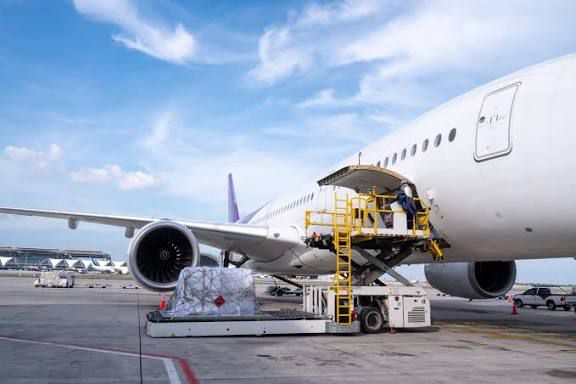
For carriers, the 4.3 per cent rise in global air cargo demand reinforces the sector’s structural importance within diversified airline revenue models. Many airlines have integrated cargo operations more deeply into their strategic planning since the pandemic, investing in freighter fleets and digital booking platforms.
Logistics providers are also adapting by enhancing data analytics capabilities to forecast demand patterns more accurately and optimise route networks. Digitalisation, including real-time cargo tracking and predictive capacity management, is becoming central to competitiveness.
In emerging markets such as Africa, sustained double-digit growth could incentivise further infrastructure investment in airport cargo terminals, cold-chain facilities, and customs processing systems.
A Targeted Recovery, Not a Broad Surge
While the headline growth figure suggests steady progress, the data make clear that the recovery in global air cargo demand is selective rather than universal. Growth is concentrated in resilient trade corridors and sectors with strong structural drivers.
The absence of a broad-based trade upswing indicates that airlines and logistics operators must continue to navigate a complex operating environment marked by regional disparities and shifting demand centres.
Nonetheless, the ability of global air cargo demand to expand amid uneven economic conditions highlights the sector’s adaptability and strategic relevance in an evolving global trade architecture.
About The Author