Fulani leaders in Southwest Nigeria vow to enforce grazing bans, revive nomadic education, and support security agencies against banditry.
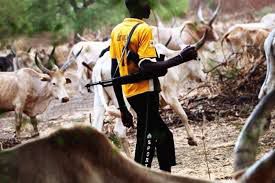
The Council of Fulani Chiefs of Southwest Nigeria has reiterated its unwavering commitment to peacebuilding in the region, reaffirming a ban on night grazing, the use of underage children for cattle rearing, and the possession of firearms by herders.
The resolution, according to the council, is part of wider efforts to address the long-standing crisis between herders and farmers, while ensuring that members of the Fulani community live harmoniously within their host environments.
Addressing journalists in Lagos, Mohammed Bambado, the Sarki Fulani of Lagos and Chairman of the Council, underscored that the Fulani have enjoyed more than two centuries of cordial coexistence with communities in the Southwest.
He stressed that this legacy of peace must be protected at all costs and passed on to future generations.
“The Council of Fulani Chiefs of Southwest Nigeria categorically affirms its commitment to sustaining the peaceful relationship that has existed with our host communities for over 200 years.
“We are firm, committed, and determined to safeguard this legacy for generations yet unborn,” Bambado declared.
The council strongly condemned banditry, kidnapping, farmland destruction, and farmer–herder conflicts that have recently strained relations in parts of the country.
It insisted that such criminal activities are alien to Fulani cultural values and must be curtailed.
To this end, the chiefs called on the Office of the National Security Adviser and other security agencies to arrest and prosecute offenders without bias.
Bambado noted that decisive government action is crucial to deterring criminals who hide under the cover of cattle rearing to perpetrate violence.
In a bid to bolster safety across the Southwest, the council revealed plans to deepen collaboration with the Development Agenda for Western Nigeria (DAWN Commission).
According to the chiefs, this partnership will focus on information sharing, joint security coordination, and community sensitisation aimed at building mutual trust between herders and their host states.
The council further urged the inclusion of Kwara State in security coordination efforts, pointing out that its porous borders with Oyo, Ekiti, and even neighbouring Benin Republic make it a vulnerable corridor for trans-border crimes and illegal movements.
Recognising the role of education in curbing insecurity, the Fulani chiefs advocated the revival of nomadic education centres across Fulani settlements in the Southwest.
They argued that illiteracy remains one of the biggest drivers of social unrest, as many young herders lack awareness of modern livestock management practices and legal obligations within host communities.
In addition, the council announced plans to embark on a sensitisation tour of the region, designed to educate herders on global best practices in cattle rearing, the need for respect for state laws, and the benefits of peaceful coexistence.
To ensure better planning and accountability, the council disclosed that it will soon roll out a “Cattle Farmers Data Collection” initiative across the Southwest.
The project will register herders and their cattle, providing reliable documentation for development purposes and helping authorities identify legitimate cattle farmers.
The chiefs also announced a ban on violent Fulani cultural festivals or carnivals that frequently result in injuries and deaths.
“These are mere cultural practices that do not align with the present security realities of Nigeria.
“We cannot continue to indulge traditions that bring harm to our people and host communities,” the council stated.
The Council of Fulani Chiefs concluded its resolutions by appealing to all Fulani herders in the Southwest to embrace discipline, abide by local laws, and reject criminality in every form.
According to the chiefs, safeguarding peace is not only a duty to host communities but also an obligation to the Fulani’s own heritage of dignity and honour.
By reaffirming these commitments, the Fulani leadership seeks to rebuild trust, promote stability, and contribute meaningfully to regional development in Southwest Nigeria.
About The Author