

Prakazrel “Pras” Michel, a Grammy-winning member of the 1990s hip-hop group the Fugees, received a 14-year federal prison sentence for funneling illegal funds into Barack Obama’s campaign.
The sentencing occurred at the U.S. District Court in Washington, DC, before Judge Colleen Kollar-Kotelly, who emphasized the severity and impact of Michel’s criminal actions on American democracy.
Michel declined to address the court, maintaining silence as prosecutors detailed his involvement in illegally transferring millions of dollars through straw donors from fugitive Malaysian financier Low Taek Jho.
Low Taek Jho, commonly called Jho Low, embezzled billions from Malaysia’s 1MDB fund, one of the largest financial frauds in modern history, connecting international finance to Michel’s crimes.
Court documents show Michel illegally channeled more than $120 million into Obama’s 2012 re-election campaign, violating U.S. laws prohibiting foreign contributions and obscuring the source of illicit funds through intermediaries.
Prosecutors described Michel as lying repeatedly to advance the scheme, attempting to halt Justice Department investigations into Low and the 1MDB scandal, and even tampering with witnesses during trial proceedings.
Testimonies during the trial included former Attorney General Jeff Sessions and actor Leonardo DiCaprio, illustrating the extraordinary intersections of celebrity, politics, and international financial manipulation tied to Low.
Michel’s lawyers argued Low’s motives were personal, not political, claiming he only sought photographs with former President Obama, attempting to minimize Michel’s responsibility for channeling the foreign funds.
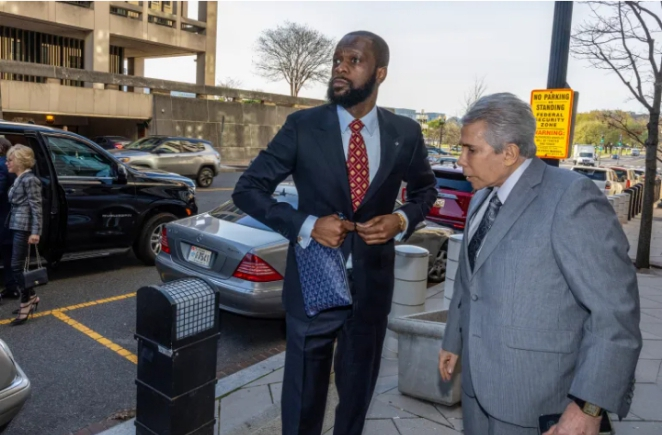
Defense attorney Peter Zeidenberg called the 14-year sentence “completely disproportionate” and announced plans to appeal, noting sentences of such length are typically reserved for terrorists or organized crime leaders.
The Justice Department emphasized Michel’s betrayal of his country, stating he “funnelled millions of dollars in prohibited foreign contributions into a United States presidential election for personal gain.”
Born in Brooklyn to Haitian immigrant parents, Michel rose to fame as a founding Fugees member alongside Lauryn Hill and Wyclef Jean, achieving international acclaim and winning multiple Grammy Awards.
The case exposes vulnerabilities in U.S. campaign finance laws, highlighting how celebrities’ access to political and financial elites can be exploited by foreign actors for illicit purposes.
Financial crime experts note the prosecution signals a warning: involvement in foreign-funded schemes carries severe consequences, regardless of an individual’s fame, influence, or contributions to culture and society.
Jho Low remains a fugitive, claiming innocence, while Malaysia continues prosecuting individuals involved in the 1MDB scandal, illustrating the global scope and legal repercussions of this massive financial fraud.
The trial demonstrates how foreign influence can infiltrate U.S. elections, reinforcing the need for transparency, stricter enforcement, and rigorous vetting of campaign contributions from all sources.
Michel’s prosecution also reignited debate about celebrity endorsements, showing that high-profile political support can inadvertently create channels for illegal foreign interference in American political campaigns.
Dr. Samantha Reid, a political law scholar, commented, “The case should serve as a wake-up call to monitor celebrity-driven campaign contributions and prevent foreign exploitation of U.S. electoral systems.”
Cultural commentators argue Michel’s fall is a cautionary tale for public figures, emphasizing ethical responsibilities and the dangers of being complicit in illegal financial schemes, regardless of fame.
The sentencing highlights proportionality issues in federal cases; while prosecutors recommended life imprisonment, Michel’s term of 14 years remains among the harshest for non-violent financial crimes in recent history.
Public reaction has been divided, with some criticizing the severity and others viewing the punishment as a necessary deterrent to foreign interference and celebrity complicity in politics.

Michel’s appeal will likely draw significant attention, challenging both procedural rulings and the severity of the sentence, potentially influencing future cases involving high-profile figures and foreign campaign contributions.
The Fugees’ legacy, once defined by music and cultural impact, is now intertwined with this scandal, complicating the public’s perception of Michel and the ethical responsibilities of artists.
In conclusion, the sentencing of Pras Michel reflects the intersection of celebrity, politics, and global financial crime, emphasizing accountability, transparency, and the legal consequences of violating U.S. election laws.

