

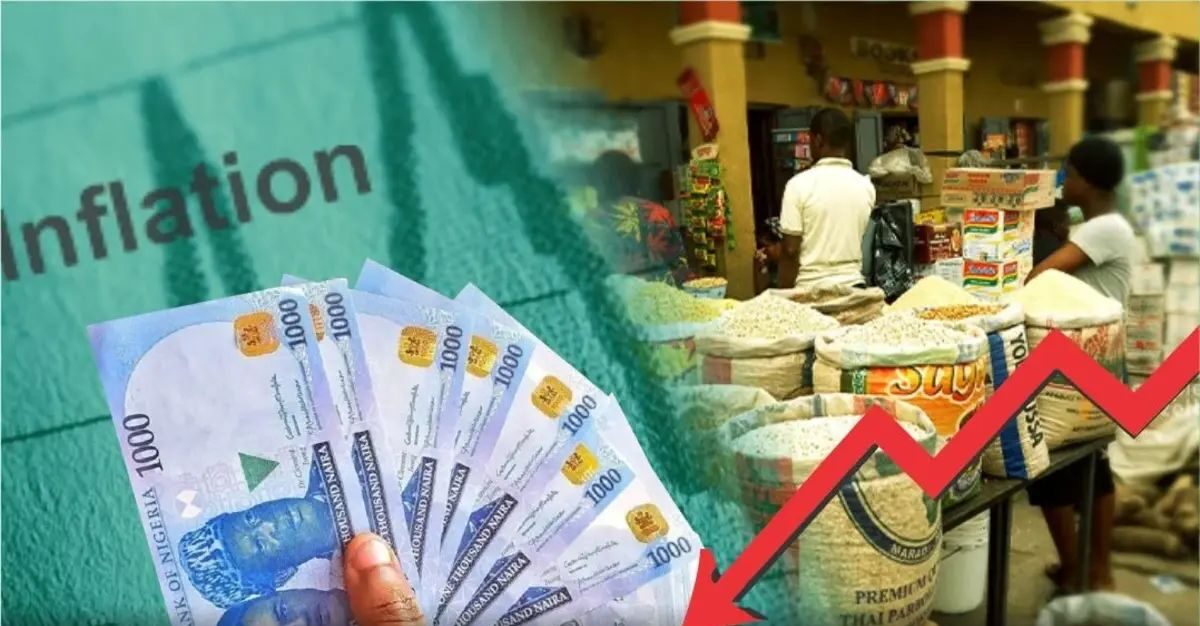
Nigeria’s economy is currently sending mixed signals that are difficult to ignore.
On paper, the naira has shown periods of stability, the stock market has recorded strong gains, and policy interventions from the Central Bank appear to be restoring short-term confidence.
But beneath these headline improvements lies a more uncomfortable reality—rising fuel costs, persistent foreign exchange and inflation pressure that continues to erode household income.
The contradiction is becoming sharper: macroeconomic stability is improving in charts, while everyday costs are worsening on the streets.
From Lagos transport fares to food prices in northern markets, Nigerians are feeling a different economy from the one reflected in financial dashboards.
Fuel Pricing War Sets the Foundation for Inflation Pressure
At the centre of Nigeria’s economic tension is the ongoing fuel pricing debate, particularly the gap between locally refined supply and imported petrol pricing benchmarks.

The expansion of domestic refining capacity, led by the Dangote Refinery, was expected to reduce reliance on imports and stabilize fuel prices.
Instead, the market has entered a complex pricing phase where import parity comparisons are triggering fresh controversy.
In some pricing scenarios, imported petrol appears cheaper than locally supplied fuel, creating a policy dilemma that is now feeding directly into inflation expectations.
This is not just a technical pricing issue—it is a cost transmission mechanism.
Transport operators adjust fares almost immediately when fuel prices shift. Food distributors respond by increasing logistics costs.
Manufacturers pass on higher energy expenses to consumers.
The result is a fast-moving inflation channel rooted in fuel economics.
FX Volatility: The Hidden Driver Behind Rising Costs
While fuel dominates public attention, foreign exchange instability remains the deeper structural force shaping Nigeria’s price environment.
The Central Bank of Nigeria has relied heavily on liquidity management tools such as Open Market Operations (OMO) to stabilise the naira and attract short-term inflows. These interventions by the Central Bank of Nigeria have delivered periodic currency gains.
However, these gains are increasingly described by analysts as “policy-supported stability rather than market equilibrium.”
The underlying pressure remains unchanged:
- High import dependency
- Strong demand for foreign exchange
- External reserve depletion
- Capital flow sensitivity
As a result, even when the naira strengthens temporarily, import costs remain elevated and inflationary pressure persists.
FX instability therefore acts as a silent multiplier of domestic price shocks.
Inflation: Where Policy Success and Economic Reality Collide
Inflation is where Nigeria’s economic contradictions become most visible.
Despite occasional improvements in macroeconomic indicators, inflation continues to affect households through rising food prices, transportation costs, and basic consumption goods.
Related: NGX market capitalisation hits N131.6tn after N443bn surge—but rally may not last
Nigerian Army clears air on corporal Ude Jude death in Katsina, rejects sabotage claims
The combination of fuel pricing volatility and FX pressure means inflation is no longer driven by a single factor—it is now a dual-input system.
When fuel rises, logistics costs increase. When FX weakens, imported goods become more expensive. When both move simultaneously, inflation accelerates sharply.
This is why inflation in Nigeria has remained sticky even during periods of monetary tightening and currency recovery.

A key concern among economists is that inflation expectations are becoming entrenched, meaning consumers and businesses now assume prices will continue rising—regardless of short-term policy adjustments.
NGX Market Rally: Why Financial Gains Don’t Reflect Real Economy Stress
The Nigerian equities market has recorded notable gains, with market capitalisation rising significantly on the back of investor interest in large-cap and defensive stocks.
The Nigerian Exchange Limited reflects financial sentiment, not household conditions. This is why market performance can rise even while living costs increase.
Investors are responding to liquidity conditions, earnings expectations, and inflation hedging strategies. Meanwhile, households are responding to transport fares, food inflation, and income pressure.
This divergence explains why Nigeria is experiencing what analysts describe as a “dual-speed economy.”
One economy is financial. The other is lived.
They are currently moving in opposite directions.
The Economic Pressure Loop: How Everything Reinforces Everything
Nigeria’s current challenge is not isolated instability—it is a reinforcing economic loop.
Fuel pricing increases transport and production costs
- FX volatility raises import and input costs
- Inflation spreads across sectors
- Market reactions reflect liquidity and policy response
- Policy tightening affects FX liquidity again
Each factor reinforces the next.
This creates a self-sustaining cycle of pressure that cannot be resolved through isolated interventions.
Breaking one link in the chain is not enough—the entire loop must be structurally addressed.
Policy Challenge: Stability vs Structural Reform
Authorities are currently balancing two competing objectives:
- Short-term stability through intervention
- Long-term stability through reform
Monetary tightening measures improve currency stability but can reduce credit flow. Fuel pricing reforms improve efficiency but can increase short-term inflation. FX controls stabilize markets but may discourage capital inflows.
Institutions such as the World Bank have consistently emphasized the need for market-driven pricing mechanisms combined with targeted social protection systems to cushion vulnerable groups.
However, implementation remains politically and structurally complex.
Outlook: A Fragile Equilibrium, Not Stability
Nigeria’s economy is not unstable in collapse terms—but it is operating in a fragile equilibrium phase.
Short-term improvements in currency performance and market activity are real.
However, they are continuously offset by structural pressures in fuel, FX, and inflation channels.
The most likely trajectory in the near term is continued fluctuation:
- Periods of stability
- Followed by renewed pressure
- Driven by external shocks or domestic cost adjustments
Until structural reforms in energy pricing, FX liquidity, and supply efficiency take hold, stability will remain conditional rather than permanent.
The Real Story Is the Connection, Not the Indicators
The biggest misunderstanding in Nigeria’s current economic narrative is focusing on individual indicators in isolation.

Fuel prices matter. FX stability matters. Inflation matters. Market performance matters.
But the real issue is how all four interact.
Nigeria is currently operating inside a tightly connected pressure system where improvements in one area often trigger strain in another.
Until that connection is structurally stabilised, the economy will continue to show a familiar pattern:
headline strength, underlying pressure, and persistent cost escalation for households.
Read more at ireport247news