Iranian Embassy in London– An Iranian protester briefly removed the national flag from Iran’s embassy in central London, replacing it with a historic opposition symbol during a demonstration against Tehran’s ruling authorities.
The dramatic incident occurred as hundreds of demonstrators gathered outside the embassy, voicing solidarity with protesters inside Iran challenging political repression and worsening economic conditions nationwide.
Video footage circulating online showed a man climbing onto the embassy balcony before pulling down the Islamic Republic flag and displaying the pre-1979 lion and sun emblem.
The lion and sun flag, associated with Iran’s former monarchy, has become a prominent symbol among opposition groups opposing the current political system governing the country.

Police later confirmed the flag was restored after embassy officials intervened, sharing images online to assert that Iran’s national symbol was once again flying prominently.
London’s Metropolitan Police said between 500 and 1,000 people attended the protest at its peak, making it one of the largest Iran-related demonstrations recently held in the city.
Officers maintained a visible presence throughout the afternoon, monitoring the situation closely while ensuring the continued security of diplomatic premises in the Kensington area.
Authorities reported two arrests connected to the protest, including charges of aggravated trespass and assault on an emergency worker during the crowded demonstration.
A third individual was being sought for alleged trespass, though police emphasized the overall protest remained largely peaceful without widespread disorder or property damage reported.
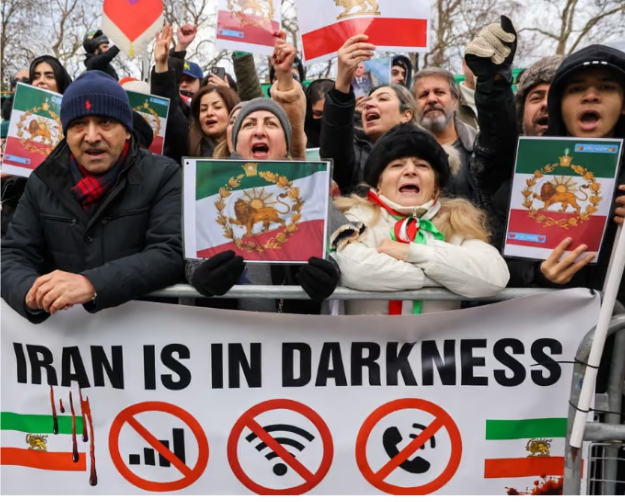
Demonstrators waved banners, chanted slogans against Iran’s leadership, and displayed portraits of opposition figures as they condemned the government’s handling of dissent and economic decline.
Similar protests have unfolded outside Iranian embassies in cities across Europe, North America, and parts of Asia in recent days.
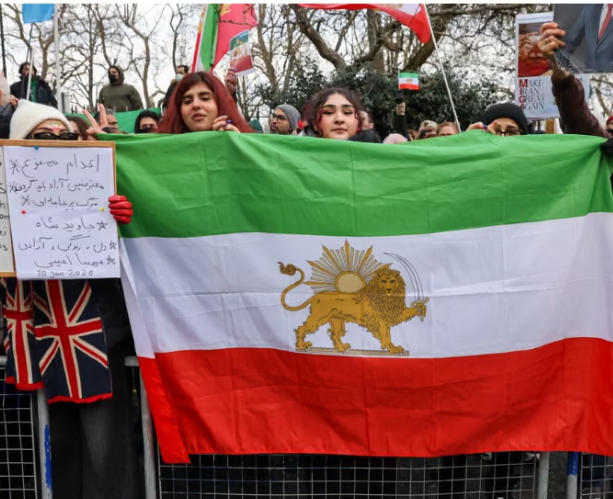
In Berlin, hundreds of protesters marched through the German capital carrying lion and sun flags and images of exiled crown prince Reza Pahlavi.
The demonstrations abroad mirror escalating unrest within Iran, where protests erupted late December following rising frustration over inflation, unemployment, and alleged government corruption.
What began as economically driven demonstrations has expanded into broader political dissent, presenting the most significant challenge to Iran’s leadership in several years.
Security forces inside Iran have responded with arrests, forceful crowd dispersal, and sweeping restrictions on communications, including widespread internet blackouts across multiple regions.
Human rights groups report dozens of deaths and thousands of detentions since the protests began, raising international concern over the scale of the government response.
Several Western governments have publicly criticized Tehran, urging restraint and respect for the right to peaceful assembly amid the ongoing crackdown.
Britain’s foreign secretary praised the courage of Iranian protesters, particularly women and young people, for speaking out despite threats of violence and reprisals.
She emphasized that freedom of expression and peaceful protest are fundamental rights that should never be met with intimidation or lethal force.
The United Kingdom, alongside France and Germany, issued a joint statement calling on Iranian authorities to listen to public grievances rather than suppress dissent.
Prime Minister Keir Starmer also condemned reported killings of protesters, urging Iranian leaders to de-escalate tensions and avoid further bloodshed.
A UK government spokesperson said officials were closely monitoring developments and remained deeply concerned by continued reports of violence against civilians.
Exiled opposition figures have sought to capitalize on the unrest, encouraging demonstrators to maintain pressure through coordinated protests and symbolic acts.
Reza Pahlavi, speaking from the United States, urged Iranians to reclaim public spaces and hoist the pre-revolutionary flag as a unifying national symbol.
He described the protests as a historic opportunity, calling for sustained civil resistance aimed at weakening the foundations of the Islamic Republic.
Inside Iran, authorities have accused foreign powers of inciting unrest, a claim repeatedly denied by protesters and international observers.
State media continues to frame demonstrations as isolated disturbances, despite evidence of nationwide participation across major cities and rural areas.
The internet shutdown has made independent verification difficult, though eyewitness accounts and leaked videos continue to emerge through social media networks.
Cultural figures, filmmakers, and artists have condemned the blackout, describing it as a deliberate tool of repression designed to silence dissenting voices.
Back in London, protesters said the embassy demonstration was intended to draw global attention to the situation unfolding inside Iran.
Many participants were members of the Iranian diaspora, some of whom said they feared for relatives still living under tightening security conditions.
Demonstrators described the removal of the embassy flag as a symbolic act, reflecting anger toward a government they believe no longer represents the people.
Police said officers would remain stationed in the area following the protest to ensure safety and prevent any further incidents.
Diplomatic premises are afforded special protections under international law, making embassy-related protests closely monitored by host country authorities.
Despite the heightened emotions, organizers said they aimed to keep demonstrations peaceful while amplifying calls for political change.
As protests continue worldwide, pressure is mounting on Tehran to address economic hardship and political grievances fueling public anger.
Observers say the coming weeks may prove decisive in determining whether the movement sustains momentum or faces intensified suppression.
For many protesters abroad, demonstrations remain one of the few ways to influence events unfolding inside Iran’s tightly controlled borders.
Read also:
Americans on the run as US warns of paramilitary threats in Venezuela
The London embassy incident underscored how international cities have become focal points for global expressions of solidarity with Iranian demonstrators.
With tensions rising, governments and rights groups alike are watching closely for signs of dialogue or further escalation in the crisis.
About The Author