In the next few days, before the end of August, we are going to reach out to 2.2 million households
Minister of State for Humanitarian Affairs and Poverty Reduction, Dr. Tanko Sununu, has reaffirmed the federal government’s determination to tackle poverty and protect the most vulnerable citizens from the deepening economic hardship across the country.
Speaking as a guest on Channels Television’s Sunrise Daily programme yesterday, Sununu disclosed that more than two million poor households have already been identified and enrolled in the government’s social safety net, with plans underway to commence fresh disbursements of conditional cash transfers.
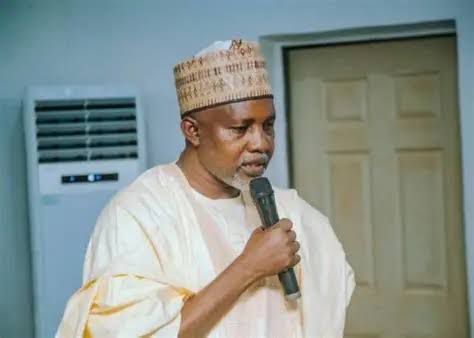
“In the next few days, before the end of August, we are going to reach out to 2.2 million households,” the minister revealed.
“The process is being coordinated by the National Social Safety-Net Coordinating Office (NASSCO), which is responsible for harvesting data of vulnerable Nigerians from the lowest cadre of the national social register.”
The minister explained that the current administration had already rolled out several interventions under the National Social Investment Programme (NSIP) to alleviate poverty.
He noted that under the Conditional Cash Transfer scheme, over ₦419 billion has been disbursed to about five million Nigerians, with 71 percent of the support going to the northern region and 21 percent to the southern part of the country.
Sununu further clarified that the programme is structured as a rapid conditional cash transfer designed to provide immediate relief to the poor and vulnerable.
According to him, these interventions demonstrate the government’s resolve to ensure that Nigerians maintain dignity of life despite economic challenges.
Beyond cash transfers, the minister revealed that the government was also using the Government Enterprise and Empowerment Programme (GEEP) to support smallholder farmers who have been hit by recurrent flooding and drought.
Under this scheme, beneficiaries have received interest-free loans of up to ₦300,000 each to help restore lost livelihoods and strengthen resilience.
At a separate function in Abuja, during the inauguration of the House of Representatives Ad Hoc Committee on Flood Management and Response, Sununu raised concerns about Nigeria’s worsening humanitarian crisis.
He lamented that more than three million people remain internally displaced as a result of insecurity, flooding, and other natural disasters, while millions more face the risk of sliding deeper into hunger and malnutrition.
“Globally, humanitarian funding is shrinking, and Nigeria is not exempted,” he warned.
“Just a few days ago, the World Food Programme suspended some of its critical activities, which had been providing emergency transfers to over 1.2 million Nigerians in the North-East.
“This development leaves more than 300,000 children at risk of severe malnutrition, while over 200,000 are already receiving treatment.”
Sununu emphasized that poverty in Nigeria is not evenly distributed. He noted that about 65 percent of the nation’s poor population reside in the northern region, with over 70 percent of them being smallholder farmers.
Many of these farmers, he added, have lost their farmlands and sources of livelihood due to natural disasters.
He concluded by assuring Nigerians that the federal government, under President Bola Tinubu, will continue to expand social protection programmes and restore livelihoods in collaboration with the National Assembly.
“With the support of the House of Representatives, we will intensify efforts to protect vulnerable households and ensure that millions of Nigerians are not left behind in the face of hardship,” he stated.
About The Author