


FG plans a 360km/h Lagos-Maiduguri rail line while expanding freight rail, light rail, smart transport data and modern bus terminals nationwide.
The Federal Government has announced plans to develop a high-speed railway linking Lagos with Maiduguri as part of its long-term strategy to transform Nigeria’s transportation system and reduce pressure on the nation’s roads.
The proposed rail line is expected to support train operations of up to 360 kilometres per hour, making it one of the government’s most ambitious railway projects as it seeks to expand rail transportation across the country.
The Permanent Secretary of the Ministry of Transportation, Olufunso Adebiyi, disclosed the plan on Monday in Abuja while declaring open the 19th National Council on Transportation.
The four-day event, which has the theme, “Developing an Effective Transport System for Nigeria: The Role of Integrated Transportation,” is focused on finding ways to improve the country’s transport infrastructure and strengthen coordination among the various modes of transportation.
Adebiyi said the proposed Lagos-Maiduguri high-speed rail project was part of a wider government plan aimed at creating a more balanced transportation system in which rail, road, air and waterways complement one another.
According to him, Nigeria cannot continue to depend largely on roads for the movement of people and goods, particularly as the country’s population and economic activities continue to expand.
He explained that the government was therefore investing in different areas of transportation to provide Nigerians with more efficient alternatives for travelling and moving cargo across the country.
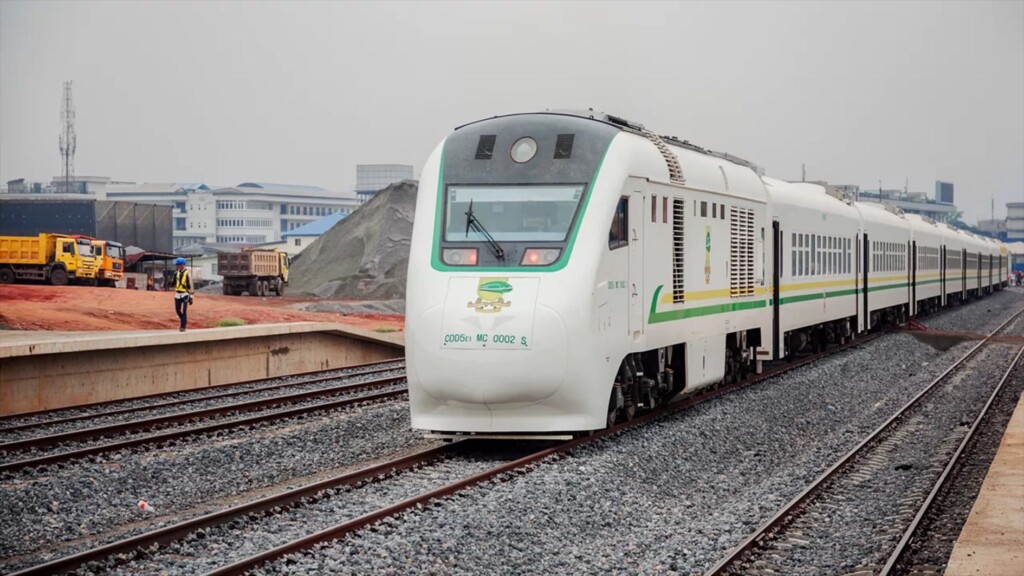
Speaking on developments in the railway sector, Adebiyi described the ongoing expansion as a “rebirth,” pointing to several rail corridors that have already been completed and put into operation.
Among the operational routes he mentioned are the Port Harcourt-Aba, Warri-Itakpe, Lagos-Ibadan and Abuja-Kaduna railway lines.
He said several other projects were at different stages of completion, noting that the government was working to ensure that more parts of the country become connected by rail.
“The Kaduna–Zaria–Kano line is nearing completion and should open by December. The Kaduna–Daura–Katsina line is progressing, the Katsina–Jibia–Maradi link is targeted for next year, and work continues on Kano–Dutse,” Adebiyi said.
The permanent secretary also disclosed that the Federal Government had approved light rail projects for Lagos and Kano.
He said the plan was not limited to the two states, as the government was considering the extension of similar urban rail systems to other state capitals to improve transportation within major cities.
Another area receiving attention, according to Adebiyi, is rail freight.
He said the government was encouraging the movement of more goods by rail as a way of reducing the number of heavy trucks operating on Nigerian roads.
The initiative, he explained, would be supported by the expansion of dry ports, which would allow containers to be moved closer to their final destinations without depending entirely on road transportation.
Adebiyi said this would have several benefits, including reducing congestion, limiting road accidents and slowing the rate at which major highways deteriorate under the weight of heavy-duty vehicles.
Beyond physical infrastructure, the government is also planning to introduce technology into the management of the transportation sector.
Adebiyi revealed that the Federal Executive Council had approved the establishment of a smart national transport data bank under a design-build-finance-operate-and-transfer model.
The proposed platform is expected to bring together important information on drivers, vehicles, number plates and transport operators in a centralised system.
He said the initiative would also introduce standardised manifests at motor parks, allowing authorities to have access to details of vehicles, drivers, passengers and destinations.
“It will also introduce standardised manifests at motor parks to record vehicle, driver, passenger and destination details,” he said.
The system, according to the permanent secretary, would improve the ability of relevant authorities to respond to road crashes and monitor traffic violations.
He explained that where an accident occurs, officials would be able to use the information contained in the manifest to establish the identities of passengers travelling in the vehicle and the purpose of their journey.
“This means that anytime a vehicle has an accident anywhere, you can pick the manifest and know who is inside and for what purpose, and computerised plate numbers will also make it easier to track traffic violations,” Adebiyi said.
The government is also seeking to improve the condition and standard of motor parks and bus terminals across the country.
Adebiyi disclosed that six standardised bus terminals had been approved as a pilot project.
The terminals are expected to provide facilities such as passenger waiting areas, information systems, police posts, vehicle inspection bays, mechanic workshops, restaurants and restrooms.
He added that operators using the facilities would be required to comply with relevant safety and regulatory standards, with sanctions awaiting those who violate the requirements.
Attention is also being given to the maritime sector, where reconstruction and automation projects are ongoing at Nigerian ports.
According to Adebiyi, the interventions are intended to improve the efficiency of cargo handling, ease congestion at the ports and ultimately bring down the cost of transporting goods.
The investments in the transport sector are also generating employment opportunities, particularly for young Nigerians.
The permanent secretary said about 9,000 youths were currently engaged across two major projects, with around 4,000 working on one project and another 5,000 involved in a separate project.
He further pointed to the Federal University of Transportation as part of efforts to address the need for specialised manpower in the sector.
Adebiyi said the institution would contribute to the development of professionals with the technical knowledge required to support Nigeria’s growing transportation industry.
He stressed that the government’s broader objective was to develop a seamless national transport network where passengers and goods could move efficiently from one mode of transportation to another.
Such integration, he noted, would help reduce logistics costs, improve road and passenger safety, minimise the environmental impact associated with transportation and enhance productivity across the economy.
The government’s transportation agenda therefore goes beyond the construction of new railway lines, with emphasis also being placed on freight movement, urban mobility, digital data management, modern bus terminals and improved port operations.
If successfully implemented, the initiatives are expected to provide Nigerians with more transportation options while strengthening the movement of goods and people across different regions of the country.
About The Author
