Eyo Festival: Colourful Processions Illuminate Lagos Cultural Heritage
The historic Eyo Festival returned to the streets of Lagos on Saturday with grand processions, rhythmic chants, and symbolic performances that drew residents, tourists, and cultural enthusiasts to the iconic Tafawa Balewa Square for the 2025 edition of the revered celebration.
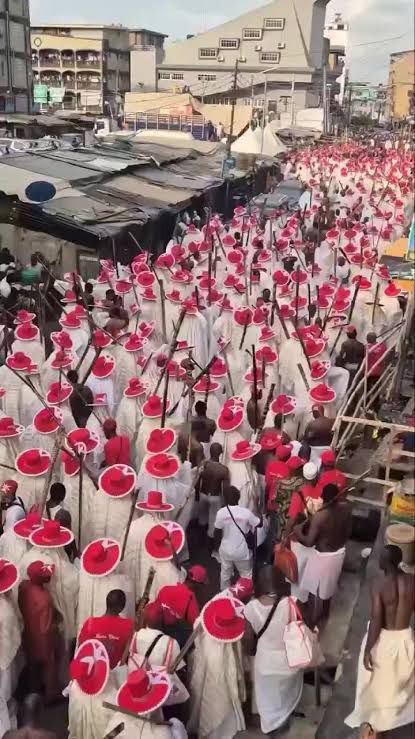
Widely regarded as one of Nigeria’s most recognisable traditional ceremonies, the Eyo Festival — also known as the Adamu Orisha Play — once again reinforced Lagos’ identity as a city deeply rooted in Yoruba heritage and cultural continuity.
The 2025 celebration of the Eyo Festival marks the first full-scale hosting of the event since 2017, heightening anticipation across the state and among cultural custodians.
The festival is distinguished by its white-clad masquerades, tall flowing hats, staff-bearing performers, and choreographed movement, all of which embody spiritual, ancestral, and historical symbolism within Yoruba tradition.
High-profile guests were expected at this year’s outing, including President Bola Ahmed Tinubu and the First Lady, Senator Oluremi Tinubu.
Lagos State Governor Babajide Sanwo-Olu and his deputy, Dr. Obafemi Kadri Hamzat, were also billed to attend the ceremony, underscoring the cultural significance the Eyo Festival holds for Lagos as both a political capital and a heritage centre.
Renewed Spotlight on Lagos Cultural Tourism
Beyond its visual display and ceremonial grandeur, the Eyo Festival represents an important pillar of Lagos’ cultural tourism economy.
The event attracts local and international audiences, stimulates hospitality activities, and strengthens interest in indigenous art forms, traditional governance, and communal identity.
In a move that aligns with the festival’s revival, Governor Sanwo-Olu on Friday inaugurated the newly-installed Eyo Monument at the John Randle Centre for Yoruba Culture and History in Onikan, Lagos Island.
The structure is positioned as a symbolic tribute to the enduring legacy of the Eyo Festival, while also serving as an educational, tourism-driven, and economic development asset for the state.
The monument, according to the state government, is not only a commemorative landmark but also a strategic cultural resource intended to enhance visitor engagement, support heritage preservation, and promote Lagos as a leading destination for cultural tourism in Nigeria and across West Africa.
Through initiatives such as the John Randle Centre and the continuous staging of the Eyo Festival, Lagos is positioning culture as a viable contributor to social cohesion and urban development.
A Cultural Tradition Deeply Embedded in Yoruba History
The Eyo Festival has, over the decades, evolved from a sacred ancestral rite into a major communal spectacle, while still retaining its spiritual foundation.

Traditionally staged to honour departed monarchs or prominent custodians of culture, the festival symbolises transition, reverence, and communal solidarity within the Lagos cultural space.
The procession features the Eyo masquerades — known for their distinctive white regalia and elaborate hats — who move in coordinated formations, accompanied by chants, drumming, and rituals that draw from age-long Yoruba cosmology.
Each appearance of the Eyo represents historical continuity, reinforcing the role of the festival as both a cultural performance and a spiritual homage.
For many Lagos residents, the Eyo Festival is more than an event; it is a collective memory that links the modern city to its pre-colonial heritage. Its symbolism, pageantry, and carefully preserved customs continue to distinguish it as one of Nigeria’s most iconic cultural exports.
Economic, Educational, and Heritage Impact
The return of the Eyo Festival in 2025 is expected to stimulate renewed attention to Lagos’ creative economy, hospitality sector, and cultural research ecosystem.
Hotels, transportation services, local artisans, tourist guides, and creative vendors all benefit significantly from the influx of visitors that accompany the festivities.
Cultural scholars and historians also leverage the festival as a reference point for research, documentation, and intergenerational knowledge transfer.
Through structured programming, exhibitions, and guided tours linked to the John Randle Centre, the Eyo Festival now extends beyond a ceremonial display into an institutional learning platform.
Stakeholders have emphasised that sustained investment in cultural preservation and heritage-driven tourism will support job creation, enhance community pride, and strengthen Lagos’ profile as a global megacity grounded in history and identity.
The revival of the Eyo Festival is therefore seen as both a cultural milestone and an economic enabler.
A Festival of Colour, Identity, and Continuity
As spectators thronged Tafawa Balewa Square to witness the spectacle of the Eyo Festival, the atmosphere was characterised by excitement, nostalgia, and renewed cultural consciousness.

The synchronised movement of the masquerades, the energy of the chants, and the symbolic gestures of the performers collectively reaffirmed the festival’s place as a living cultural institution.
With the presence of dignitaries, traditional leaders, and cultural enthusiasts, the 2025 edition of the Eyo Festival represents a reaffirmation of Lagos’ heritage values, as well as a demonstration of the state’s commitment to preserving and promoting indigenous identity for future generations.
The festival’s return not only reinforces Lagos’ cultural narrative but also strengthens its position as a city where modern development coexists harmoniously with tradition, symbolism, and historical pride.