The Nigerian Legion is set for reform as government launches committee to enhance veterans’ welfare, secure ungoverned spaces, and boost national security.
The Federal Government has inaugurated an 18-member committee with a strategic mandate to reclaim Nigeria’s ungoverned spaces and reposition the Nigerian Legion Corps of Commissionaires and Veterans for enhanced national relevance.
The initiative reflects a renewed commitment to national security and veterans’ welfare, ensuring that retired service members remain active contributors to the country’s socio-economic development.
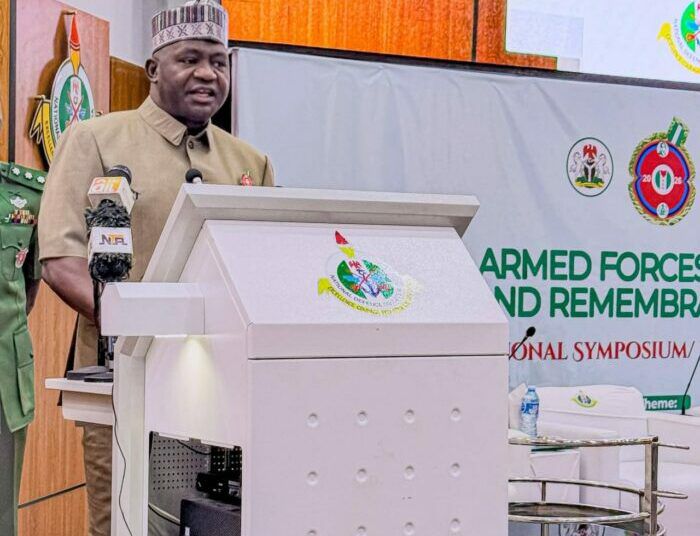
The Minister of Defence, General Christopher Musa (retd.), described the Nigerian Legion as a vital institution with a proud history of service, patriotism, and sacrifice.
Speaking during the committee’s inauguration on Tuesday, he highlighted the importance of the Legion in supporting national security efforts and veterans’ affairs.
“The Legion has historically played critical roles in ensuring national stability, and it is now imperative that we reform and reposition it for contemporary challenges,” Musa said.
Represented by the Permanent Secretary of the Ministry of Defence, Mr. Richard Pheelangwa, the minister emphasized that the committee’s formation is part of a broader effort to strengthen the welfare of military veterans.
This reform, he explained, will ensure veterans can meaningfully participate in security operations and national development initiatives.
“Veterans are an underutilized national resource. By properly integrating them into security and socio-economic programs, we can harness their expertise for the benefit of communities across Nigeria,” Musa added.
A statement released by the Deputy Director of Information and Public Relations, Ministry of Defence, Enderline Chukwu, clarified that repositioning the Nigerian Legion is a deliberate government policy aimed at empowering veterans to live dignified and productive lives after service.
The initiative also seeks to tackle structural and operational challenges that have historically limited the defence community’s contribution to national growth.
Musa stressed that achieving lasting national security requires a shift from an over-reliance on conventional military operations to a more inclusive and sustainable approach.
While military action remains indispensable, addressing the socio-economic conditions that allow insecurity to thrive is essential.
“Enduring peace and stability can only be achieved if we simultaneously strengthen community development and integrate veterans into programs that secure and uplift ungoverned spaces,” the minister noted.
The committee has been tasked with three key objectives: first, to reposition the veteran community, including the Nigerian Legion, to support national economic development; second, to deploy veterans strategically to secure ungoverned spaces, ensuring these areas are brought under effective governance and oversight; and third, to strengthen the operational effectiveness of the Nigerian Legion, facilitate veterans’ reintegration into society, and promote their ongoing contribution to national security.
Minister Musa called on committee members to adopt innovative, practical, and forward-looking approaches.
He emphasized that deliberate integration of veterans into security and development programs would enhance local ownership, improve intelligence gathering, and foster trust between communities and the state.
“The Nigerian Legion is not just a ceremonial institution; it is a potential catalyst for community stability and economic revitalization if deployed strategically,” he said.
The minister expressed confidence that the committee would produce actionable recommendations capable of informing a holistic national strategy.
He noted that securing ungoverned spaces is critical not only for national security but also for promoting inclusive economic growth and sustainable peace.
By effectively leveraging the expertise of military veterans, Nigeria can strengthen its security architecture while also fostering development in previously neglected areas.
Membership of the committee was drawn from a wide array of defence and security institutions, including the Joint Services Department of the Ministry of Defence, the Nigerian Legion, Defence Headquarters, the Defence Intelligence Agency, the Nigerian Army, Navy, and Air Force, as well as representatives from the offices of the Minister of Defence and the Minister of State for Defence.
This multidisciplinary composition, Musa explained, ensures that the committee’s recommendations will be both practical and comprehensive.
The Nigerian Legion has a long-standing history of contributing to national service and community development.
Its members, who are retired military personnel, bring unique experience and discipline to efforts aimed at stabilizing ungoverned regions, providing security, and fostering economic growth.
The government’s decision to reposition the Legion is thus seen as a strategic move to not only address security gaps but also empower veterans as active participants in nation-building.
Ireport247news
About The Author