Egypt walloped Super Eagles in a fiercely contested international friendly at Cairo International Stadium, where tactical discipline, sharper transitions, and clinical moments decided a narrow but revealing contest.
Egypt walloped Super Eagles from the opening minutes, asserting dominance through possession, compact pressing, and structured buildup that immediately unsettled Nigeria’s experimental midfield setup.
Within the eighth minute, Egypt played the Super Eagles by forcing early turnovers, pinning Nigeria deep and signaling intent through sustained pressure across both flanks.
By the fifteenth minute, Egypt pressured Super Eagles again, circulating the ball patiently as Nigeria struggled to connect midfield lines, conceding territory and inviting pressure.
The breakthrough arrived in the twenty-eighth minute, as Egypt walloped Super Eagles through incisive wing play, exploiting defensive hesitation to convert sustained dominance into a deserved opener.
Nigeria attempted recovery, but Egypt walloped Super Eagles approaching halftime, controlling tempo and limiting attacking lanes with intelligent positional discipline and compact defensive spacing.
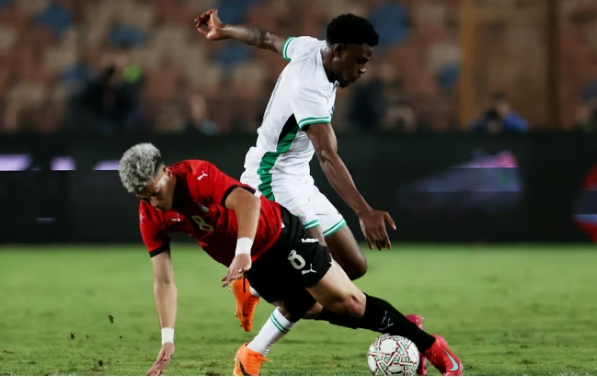
Just before the interval, Egypt walloped Super Eagles once more in stoppage time, capitalizing on poor marking to extend their advantage before halftime whistle.
Nigeria regrouped after the break, adjusting shape, and Egypt walloped Super Eagles less frequently, as the visitors showed improved structure and urgency.
The Super Eagles pulled one back in the fifty-third minute, briefly shifting momentum and proving Egypt walloped Super Eagles earlier through lapses rather than total superiority.
However, Egypt walloped Super Eagles again in the fifty-fifth minute spell, slowing the game intelligently and disrupting Nigeria’s rhythm through controlled possession and tactical fouling.
Egypt’s midfield trio dictated play, and Egypt walloped Super Eagles by completing eighty-six percent passing accuracy, compared to Nigeria’s seventy-nine percent under sustained pressure.
Shot statistics reinforced the narrative, as Egypt walloped Super Eagles with sixteen total attempts against Nigeria’s nine, consistently testing goalkeeping resilience.
Eight Egyptian shots hit target, while Nigeria managed only three, showing how Egypt walloped Super Eagles through superior chance creation and finishing efficiency.
Corner kicks reflected territorial dominance, with Egypt earning seven corners, while Nigeria managed four, often defending deep for prolonged periods.
Nigeria’s goalkeeper produced five saves, compared to Egypt’s three, highlighting how Egypt walloped Super Eagles by forcing defensive reactions throughout the encounter.
Offside numbers showed sharper Egyptian movement, with Egypt caught twice compared to Nigeria’s four, further evidence Egypt walloped Super Eagles tactically.
The seventy-ninth minute substitutions maintained Egyptian structure, as Egypt played tactically Super Eagles by seamlessly integrating replacements without sacrificing balance or intensity.
Nigeria pushed late, but Egypt resisted the Super Eagles through calm defensive management, blocking central routes and forcing low-percentage wide deliveries.
Five minutes of added time were announced, yet Egypt defeated Super Eagles by controlling tempo, denying momentum, and protecting their slim advantage intelligently.
At full time, the match ended 2-1, concluding a match that balanced competitiveness with clear lessons for Nigeria’s evolving squad.
An Egyptian analyst remarked, “Egypt walloped Super Eagles because structure always beats raw talent when preparation levels differ.”
A Nigerian official admitted, “Egypt defeated Super Eagles in moments, and at this level, moments decide matches.”
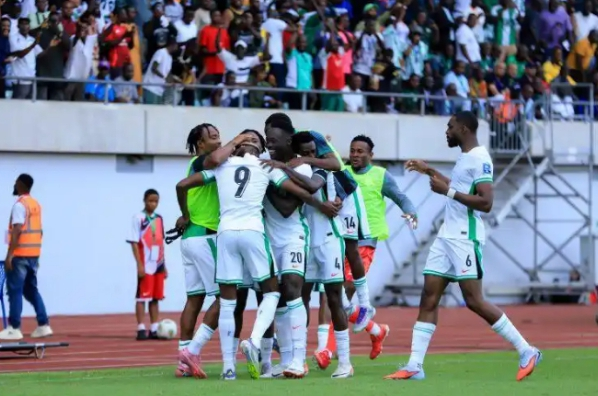
Despite defeat, Nigeria gained clarity, while Egypt walloped Super Eagles in a way that underscored tournament readiness and tactical maturity.
Match Details
Venue: Cairo International Stadium
Date: December 16, 2025
Kick-off: 7:00 PM
Attendance: 5,000
Referee: Mahmoud Nagi
Final Score: Egypt 2–1 Nigeria
Match Formations
Egypt: 4-3-3
Nigeria: 4-1-3-2
Read also: Mikel Obi defends Mohamed Salah against Jamie Carragher’s criticisms
The friendly ultimately offered Nigeria clarity, exposing tactical shortcomings while providing a valuable benchmark against disciplined opposition ahead of demanding competitive continental fixtures.
As preparations continue, the result serves as a timely reminder that cohesion, structure, and decision-making must improve rapidly for Nigeria to compete consistently at elite levels.
About The Author