How Trade Drives Nigeria’s N40tn GDP Growth and Shapes Investment Confidence
Nigeria intensified its pitch to international investors at the G20 Investment Breakfast Dialogue in Johannesburg, with Finance Minister Wale Edun urging South African corporates and institutional investors to seize what he described as the most compelling economic reform moment in two decades.
His message was straightforward: Nigeria’s wide-ranging structural adjustments are beginning to deliver measurable outcomes, and the government wants stronger South Africa–Nigeria investment ties to sustain the momentum.
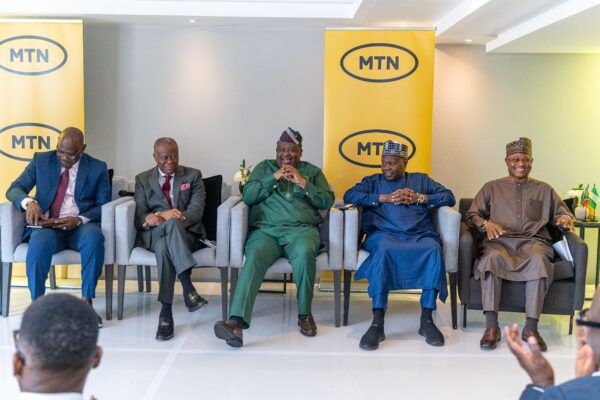
Speaking to executives from MTN Group, South African fund managers, development partners and senior policymakers from both countries, Edun said African economies must accelerate reforms to remain competitive in an increasingly unpredictable global economy.
He noted that developing regions were confronting a perfect storm of weak capital inflows, elevated global interest rates and rising sovereign debt pressures, with Africa projected to spend $163 billion servicing debt in 2024—significantly more than the sub-$100 billion it attracts in foreign direct investment.
With this imbalance widening, he emphasised that African governments “must scale bold reforms and deepen domestic resource mobilisation” to build resilient economies capable of withstanding global shocks.
According to him, Nigeria is already demonstrating that such reforms can generate early stabilisation signals when implemented decisively.
Nigeria’s Reform Blueprint Gains Traction
Edun told participants that President Bola Tinubu’s administration has, since May 2023, pursued one of the most ambitious reform packages in Nigeria’s recent history.
These include the removal of fuel subsidies, the liberalisation of the foreign-exchange market, tax and tariff overhaul programmes, improved coordination across power and energy sectors, and targeted interventions to revive manufacturing, logistics and industrial value chains.
The minister stressed that the overarching goal is to transition Nigeria toward a market-driven, private-sector-led economy anchored on macroeconomic stability and predictable policy direction.
He said the reform outcomes were beginning to reflect in Nigeria’s economic indicators, strengthening the government’s credibility with investors.
GDP growth rose to 4.23 percent in Q2 2025—its strongest expansion in more than four years—compared to 3.1 percent during the same period in 2024.
He added that inflation had decelerated for seven consecutive months, reaching 16.05 percent in October, while foreign reserves climbed to $46.3 billion, a sign that confidence in the FX market was gradually returning.
The minister attributed the expansion in output to improvements across multiple sectors, including telecoms, construction, electricity generation, rail network expansion and a major shift in refining activity as domestic refining capacity increased.
Trade Drives Nigeria’s N40tn GDP Growth and Boosts Investor Appetite
Edun pointed out that Nigeria’s revitalised trade sector is playing a critical role in the country’s economic resurgence.
The recent data showing that trade drives Nigeria’s N40tn GDP growth in the first half of 2025 reinforces the argument that the country’s reform agenda is altering economic fundamentals.
The expansion of non-oil exports, higher natural gas sales and the operational impact of local refineries have helped push trade to the centre of the growth story.
The increased availability of domestically refined products has eased FX pressure, reduced dependency on imports and enhanced efficiency in commercial activities nationwide.
As trade drives Nigeria’s N40tn GDP growth, Edun said investors were beginning to see clearer opportunities in sectors that previously appeared uncertain due to policy inconsistencies and macroeconomic volatility.
For South African corporates with large pan-African footprints, the minister argued that Nigeria’s trade momentum demonstrated the viability of the market, especially in telecoms, fintech, manufacturing inputs, energy distribution, agribusiness and logistics.
Executives at the meeting agreed that the scale of the Nigerian economy, combined with the current reforms, is reconfiguring investment opportunities, particularly for players with long-term Africa strategies.
The CEO of MTN Group, Ralph Mupita, described Nigeria as “a true African success story undergoing a structural reset that will unlock more investment and deeper digital integration.”
Similarly, the Executive Secretary of the Nigerian Investment Promotion Commission, Aisha Rimi, said that Nigeria’s reforms were “resetting the foundation for new capital flows” by removing structural bottlenecks that had deterred investors in the past.
She emphasised that as trade drives Nigeria’s N40tn GDP growth, the government expects increased dealmaking, especially with South African partners seeking scale in West Africa.
Protecting Citizens Amid Reform Pressures
Edun acknowledged that the reforms have imposed short-term pressures on households and businesses, particularly following subsidy removal and currency adjustments.
To mitigate these effects, the government expanded its direct cash-transfer programme to reach 15 million households, with 9 million already receiving assistance.
He noted that cushioning reforms while sustaining investor confidence was a delicate balance, but Nigeria had chosen transparency and targeted support rather than reversing economically necessary measures.
Nigeria–South Africa Investment Partnership as a Growth Anchor
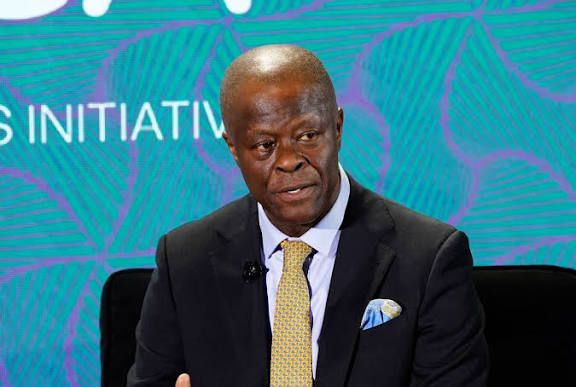
Edun maintained that stronger economic cooperation between Nigeria and South Africa—the continent’s two largest economies—is essential for Africa’s collective growth.
He urged South African corporates to leverage Nigeria’s reform environment, demographic strength and expanding trade performance to scale investments.
He reiterated that Nigeria had “laid the foundation for a modern, resilient economy” and was targeting medium-term growth of at least 7 percent, driven primarily by private investment and supported by reforms across energy, industrial production, tax administration and FX management.
With trade drives Nigeria’s N40tn GDP growth shaping investor sentiment, the minister said the country is better positioned to attract long-term capital, diversify exports and strengthen its overall macroeconomic stability.
As the G20 engagement closed, stakeholders agreed that deepening Nigeria–South Africa investment ties could provide a significant buffer for Africa amid global uncertainty.
For investors navigating volatile markets, Nigeria’s reform narrative—and its surging trade performance—may signal a strategic moment to reassess opportunities in Africa’s largest economy.
About The Author