Nigeria’s economic managers say the country’s recent growth performance may provide a buffer against potential shocks from global oil market instability triggered by rising geopolitical tensions in the Middle East.
Officials of the Federal Government said the country’s improved economic fundamentals, including stronger gross domestic product growth and coordinated macroeconomic policies, could help Nigeria withstand potential disruptions to global energy supply routes and financial markets.
The assurance comes amid concerns that escalating tensions involving the United States, Israel and Iran could affect crude oil prices, shipping routes and global capital flows.
Nigeria’s 4.07% GDP surge can shield it from oil crisis, says Edun
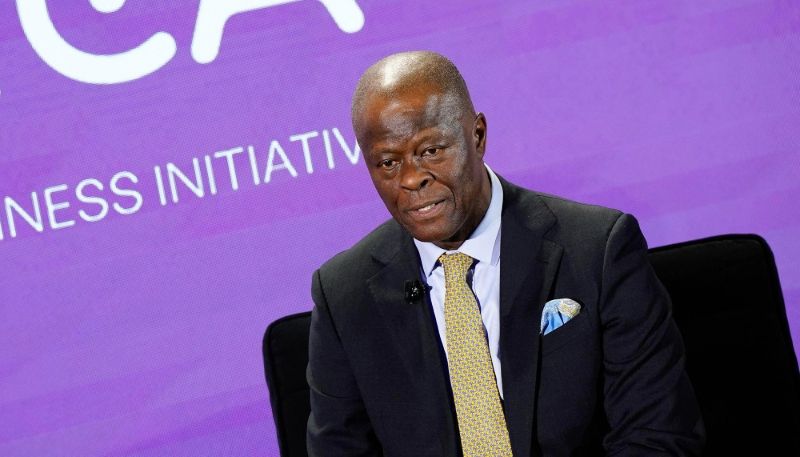
Minister of Finance and Coordinating Minister of the Economy, Wale Edun, said Nigeria’s recent economic performance places the country in a stronger position to absorb potential external shocks.
According to him, Nigeria’s 4.07% GDP surge can shield it from oil crisis, particularly if the geopolitical tensions in the Middle East escalate and disrupt global energy supply chains.
Edun made the remark after a meeting of the Economic Management Team (EMT), which he chairs. The meeting was convened to review possible implications of the growing standoff involving the United States, Israel and Iran on global energy markets and Nigeria’s economy.
Government officials are particularly concerned about the possibility of disruptions to strategic shipping routes such as the Strait of Hormuz, a major global transit point for crude oil shipments.
Any disruption to the narrow waterway could significantly affect the supply of oil to international markets, potentially driving up prices and creating volatility across financial markets.
In a statement issued by the Federal Ministry of Finance, the government said it had begun assessing the economic implications of the unfolding geopolitical tensions.
The statement, signed by the ministry’s Assistant Director of Information and Public Relations, Uloma Amadi, noted that the situation remains fluid and global markets are already responding to the uncertainty.
Economic analysts say oil-producing countries like Nigeria could benefit from higher oil prices in the short term, but prolonged instability in global markets may create broader economic challenges.
During the EMT meeting, ministers and economic advisers examined three key channels through which the crisis could affect Nigeria’s economy.
The first relates to fluctuations in crude oil and natural gas prices. Sharp increases in global energy prices could boost government revenue but also raise domestic fuel costs, particularly for diesel and cooking gas.
The second channel involves capital flows and financial market conditions. Increased geopolitical risk often leads global investors to move funds toward safer assets such as government bonds in developed economies, potentially reducing investment inflows to emerging markets.
The third risk identified by the government concerns disruptions to international logistics and shipping networks.
If tensions escalate in the Middle East, shipping routes could become more expensive or difficult to navigate, leading to higher freight costs for goods entering Nigeria.
Officials warned that such developments could exert additional pressure on domestic inflation and raise the cost of living for households.
Despite these concerns, the government believes Nigeria’s recent economic performance provides some resilience against potential shocks.
Recent data show that Nigeria recorded a real GDP growth rate of 4.07 per cent in the fourth quarter of 2025, one of the strongest quarterly performances recorded by the country in more than a decade.
Economic managers attribute the growth to a combination of policy reforms, improved fiscal coordination and increased activity in non-oil sectors of the economy.
Edun said the government intends to sustain this momentum by strengthening coordination between fiscal, monetary and energy policy institutions.
The EMT also reviewed developments related to the government’s Naira-for-Crude policy, which is designed to stabilise the foreign exchange market by allowing local refiners to purchase crude oil using the local currency.
Officials believe the initiative could reduce pressure on the foreign exchange market while encouraging domestic refining capacity.
Beyond immediate economic risks, the government acknowledged that prolonged geopolitical instability could intensify inflationary pressures globally.
Higher international commodity prices could affect domestic prices of fertiliser, fuel and transportation, with potential consequences for agriculture and food supply.
To mitigate these risks, the Economic Management Team said it will continue to monitor key economic indicators such as crude oil prices, exchange rate movements and capital flows.
The government is also tracking developments in global financial markets and assessing their potential impact on Nigeria’s fiscal position and external reserves.
Edun emphasised that policy flexibility would remain central to the government’s economic response.
According to him, careful policy calibration will be necessary to ensure that Nigeria’s economic gains are preserved despite uncertainty in global markets.
He added that the government remains committed to protecting recent progress in economic stabilisation and revenue mobilisation.
Analysts say Nigeria’s ability to withstand external shocks will depend not only on global oil prices but also on the country’s success in diversifying its economy and maintaining macroeconomic discipline.
For now, officials remain cautiously optimistic that Nigeria’s 4.07% GDP surge can shield it from oil crisis, even as authorities continue to closely monitor developments in global energy markets.
About The Author