Drone attacks kill over 100 civilians in Sudan’s Kordofan, underscoring escalating violence as rival forces battle fiercely, deepening humanitarian collapse, displacement, disease outbreaks, and international alarm.
Drone attacks kill over 100 civilians in Sudan’s Kordofan amid renewed fighting between the Sudanese Armed Forces and the Rapid Support Forces across central regions.
At least one hundred and four civilians were reported killed during sustained drone strikes that began early December, striking towns, villages, hospitals, schools, and displacement areas.
Residents described constant aerial buzzing before explosions rocked neighbourhoods, leaving homes destroyed, families separated, and survivors struggling to find medical help amid worsening insecurity.
The central Kordofan region has become the main theatre of Sudan’s war, following months of heavy combat previously concentrated in Darfur’s western states.
Analysts say shifting frontlines reflect strategic competition for supply routes, oil installations, and administrative centres critical to sustaining prolonged military operations nationwide.
Fighting intensified after the Rapid Support Forces captured a significant army base in Babnusa following a week of clashes involving artillery, drones, and ground assaults.
Local authorities confirmed civilian casualties continued to rise as attacks persisted through Friday, overwhelming morgues and forcing communities to bury victims quickly under dangerous conditions.
The deadliest single incident occurred in Kalogi, South Kordofan, where drones struck a kindergarten and nearby hospital during daylight hours.
Eighty nine people were killed in Kalogi, including forty three children and eight women, according to medical staff and community leaders.
Survivors said classrooms were filled with children seeking shelter when explosions tore through buildings, causing panic, fires, and catastrophic structural collapse.
Medical workers described scenes of devastation, with operating rooms damaged, equipment destroyed, and wounded patients arriving faster than doctors could treat them.
United Nations human rights chief Volker Turk said he was alarmed by intensifying hostilities and warned targeting medical facilities violates international humanitarian law.
Turk emphasised that deliberate or reckless attacks on civilians, schools, and hospitals may constitute serious violations requiring accountability under international mechanisms.
The violence also struck United Nations peacekeepers stationed in Kadugli, South Kordofan’s capital, highlighting growing risks faced by international personnel.
Six Bangladeshi peacekeepers were killed on December thirteen when drones hit their base, according to UN officials investigating the incident.
UN Secretary General Antonio Guterres condemned what he described as horrific drone attacks and warned assaults on peacekeepers may constitute war crimes.
He called on all parties to respect international law, protect civilians, and allow humanitarian access to communities cut off by fighting.
A day after the peacekeeper deaths, Dilling Military Hospital was attacked, further crippling already fragile healthcare services across the region.
The Sudan Doctors Network reported nine deaths and seventeen injuries at Dilling, accusing perpetrators of systematically targeting health institutions.
United Nations officials later said six people were killed and twelve wounded, many of them medical staff providing emergency care.
Health workers said repeated strikes have forced facilities to close, leaving patients untreated and spreading fear among remaining medical personnel.
The government aligned Sudanese Armed Forces blamed the Rapid Support Forces for the attacks, accusations the paramilitary group has not publicly addressed.
Independent verification remains difficult as journalists and observers face severe access restrictions, insecurity, and communications outages across Kordofan.
Beyond immediate casualties, drone attacks kill over 100 civilians in Sudan’s Kordofan while accelerating a catastrophic humanitarian crisis.
North Kordofan’s Health Minister Iman Malik reported more than thirteen thousand cholera cases and hundreds of dengue infections recorded recently.
She said nearly thirty percent of health facilities are no longer functioning because of damage, looting, staff shortages, and insecurity.
Aid agencies warn disease outbreaks are spreading rapidly as clean water systems collapse and families crowd into makeshift shelters.
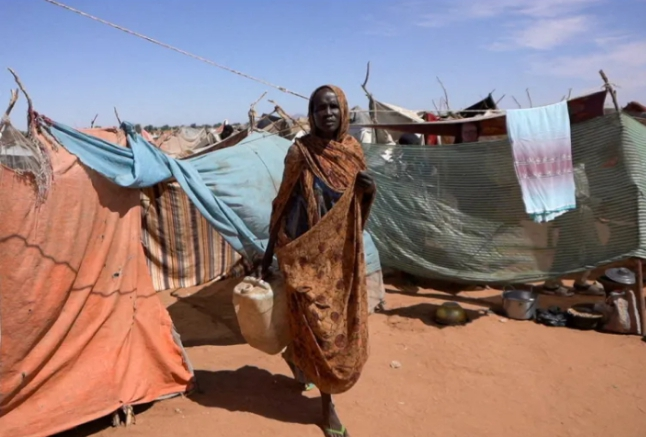
More than forty thousand people have fled North Kordofan alone, seeking safety in neighbouring states or informal camps with minimal services.
Civilians remaining in besieged cities like Kadugli and Dilling face shortages of food, medicine, fuel, and safe drinking water.
In nearby Heglig, nearly two thousand people were displaced after the Rapid Support Forces briefly captured the oil area before handing it over.
The handover followed a tripartite arrangement involving South Sudan’s army, highlighting regional complexities surrounding strategic infrastructure.
Observers say the Kordofan escalation marks a dangerous expansion following the Rapid Support Forces’ October seizure of el Fasher in Darfur.
Researchers from Yale’s Humanitarian Research Lab reported the RSF killed civilians attempting to flee el Fasher, then destroyed evidence.
Their findings detailed alleged burial, burning, and removal of bodies, raising serious concerns about war crimes and mass atrocities.
International diplomatic efforts have restarted as violence worsens, with regional and global powers urging renewed negotiations.
Sudanese Armed Forces chief Abdel Fattah al Burhan met Saudi Crown Prince Mohammed bin Salman on December fifteen to discuss peace.
Burhan expressed readiness to work with United States President Donald Trump on mediation aimed at ending the devastating conflict.
Read also:Trump broadens US travel ban, targeting Syria, Palestine, other countries
The following day, Egypt and the United States jointly rejected any attempts to divide Sudan and called for a comprehensive ceasefire.
Despite diplomatic statements, fighting continues unabated, leaving civilians trapped between rival forces with little protection or assistance.
Sudan has topped the International Rescue Committee’s Emergency Watchlist for three consecutive years due to relentless conflict.
The war began in April two thousand twenty three and has killed more than forty thousand people according to United Nations figures.
Aid groups believe the true death toll is far higher, citing underreporting, inaccessible areas, and widespread displacement.
More than fourteen million people have been displaced nationwide, making Sudan the world’s largest humanitarian crisis today.
As drone attacks kill over 100 civilians in Sudan’s Kordofan, calls grow for accountability, ceasefire enforcement, and urgent humanitarian access.
About The Author