The Nigerian Electricity Regulatory Commission (NERC) has reported that Electricity Distribution Companies (DisCos) installed a total of 228,614 meters in the third quarter of 2025, reflecting a modest increase over the previous quarter.
The commission disclosed this in its third-quarter report, which was posted on its official website on Tuesday.
This figure represents a 0.73 per cent increase compared to the 226,959 meters installed in Q2, 2025, highlighting ongoing efforts by DisCos to meet the rising demand for prepaid metering solutions across the country.
NERC’s report offers a breakdown of installations under various frameworks and reinforces the regulator’s commitment to ensuring transparency and fairness in electricity billing.
DisCos install meters under multiple frameworks
According to the report, of the 228,614 meters installed in Q3, 2025, the majority — 176,302 meters, or 77.12 per cent — were installed under the Meter Asset Provider (MAP) framework.
This system allows private investors to finance the provision of meters to customers, with the goal of accelerating the national metering rollout.
Additionally, 44,104 meters, representing 25.01 per cent of the total installations, were deployed through the Vendor Financed framework, while 7,902 meters or 3.46 per cent were installed under the Distribution Sector Recovery Programme (DSRP).
Other frameworks, including the Meter Acquisition Fund (MAF) and DisCo Financed schemes, accounted for smaller portions of the installations, at 0.08 per cent and 0.06 per cent respectively.
“This diversified approach ensures that all customers have access to metering solutions, regardless of the financing mechanism used,” the report stated.
Metering progress in Nigeria’s electricity supply industry
As of September 2025, NERC confirmed that out of 12,030,315 active registered customers in the Nigerian Electricity Supply Industry (NESI), 6,661,564 had been metered.
This indicates that just over half of all electricity consumers now have functional meters, a key milestone in the regulator’s goal of eliminating estimated billing and improving revenue collection efficiency.
The report also highlighted NERC’s continued efforts to safeguard unmetered customers from excessive charges.
The commission issues monthly energy caps for all feeders managed by each DisCo, setting the maximum amount of energy that may be billed to unmetered customers based on gross energy received and consumption by metered customers.
“These caps provide a critical consumer protection mechanism, ensuring that households without meters are not unfairly billed,” NERC said.
DisCos install meters: Implications for electricity billing and revenue
The recent meter installations are expected to have multiple benefits, including enhanced billing accuracy, reduction of estimated billing disputes, and increased revenue transparency.
By expanding the deployment of prepaid meters, DisCos can monitor consumption in real time, reduce losses, and improve operational efficiency.
Experts say that DisCos installing meters is vital for stabilising the electricity sector, especially as Nigeria continues to expand its grid to reach underserved areas.
Accurate metering not only empowers consumers to control their usage but also enables distribution companies to plan infrastructure investments more effectively.
Furthermore, the widespread deployment of meters supports the Federal Government’s ongoing initiatives to reform and modernise the electricity sector.
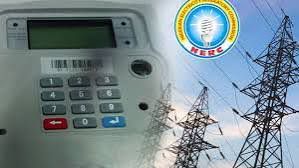
By consolidating customer data and integrating billing systems with meter readings, DisCos can reduce manual intervention and strengthen compliance with regulatory requirements.
Challenges and future outlook
Despite these gains, challenges remain in achieving universal metering coverage.
Funding constraints, logistical issues, and occasional resistance from communities can slow down meter installations.
However, NERC’s multi-pronged approach, which includes various financing frameworks and continuous monitoring, is helping to overcome these obstacles.
Looking ahead, the commission aims to accelerate meter deployment across all states, ensuring that more households and businesses benefit from accurate, prepaid electricity supply.
Stakeholders emphasize that the expansion of metering infrastructure will be critical in supporting Nigeria’s broader energy security and economic growth objectives.
“With continued commitment from DisCos and adherence to regulatory frameworks, the pace of meter installations is expected to increase, reducing reliance on estimated billing and improving customer satisfaction across the country,” the report concluded.
The installation of 228,614 meters in Q3, 2025 demonstrates measurable progress in the Nigerian electricity sector.
By leveraging multiple financing frameworks and focusing on consumer protection, DisCos are gradually modernising electricity distribution while ensuring fairness in billing.
NERC’s oversight and the commitment of distribution companies remain essential as Nigeria works toward full metering coverage and a more transparent electricity market.
As the sector evolves, ongoing monitoring and strategic investments in metering infrastructure will determine the pace at which Nigeria achieves universal metering, reduces revenue losses, and enhances service delivery for millions of electricity consumers nationwide.
About The Author