

DHQ confirms arrival of 100 US military personnel for counterterrorism support
The Defence Headquarters confirms arrival of 100 US military personnel for counterterrorism support, marking a renewed phase in bilateral defence cooperation between Nigeria and the United States aimed at strengthening intelligence capabilities, technical proficiency and operational readiness.
In an official statement released in Abuja, the Director of Defence Information, Brigadier General Samaila Uba, disclosed that approximately 100 United States military personnel, alongside associated equipment, have arrived at Bauchi Airfield.
The deployment, according to military authorities, follows high-level engagements between Nigerian defence officials and their American counterparts during a recent bilateral working group session.
The development comes amid persistent security challenges in parts of northern Nigeria, where extremist groups continue to test the resilience of national defence architecture.
According to the statement, the US personnel are technical specialists deployed strictly in advisory and training capacities. The Defence Headquarters confirms arrival of 100 US military personnel for counterterrorism support but emphasised that they are not operating as combat troops.
“All training activities will be conducted under the authority, direction and control of the Nigerian Government and in close coordination with the Armed Forces of Nigeria,” the statement noted.
Military officials underscored that the presence of foreign advisers does not constitute foreign operational command or direct engagement in combat operations.
Instead, the collaboration is structured around capacity building, tactical training modules, intelligence-sharing frameworks and specialised technical assistance.
Security analysts say the renewed cooperation reflects Nigeria’s pragmatic approach to confronting evolving asymmetric threats. Counterterrorism operations increasingly require advanced surveillance technology, intelligence fusion capabilities and specialised training that can benefit from external technical partnerships.
By confirming the deployment, the Defence Headquarters confirms arrival of 100 US military personnel for counterterrorism support as part of a broader strategy to upgrade institutional competence without ceding operational sovereignty.
Experts note that similar bilateral defence arrangements have historically focused on intelligence coordination, special forces training and logistics optimisation. The current initiative is expected to enhance situational awareness in conflict-prone regions and improve rapid response mechanisms.
Focus on intelligence and technical capabilities
One of the central pillars of the cooperation framework is intelligence enhancement. Modern counterterrorism relies heavily on real-time data analysis, signal intelligence and predictive threat assessment.
Under the arrangement, Nigerian troops will reportedly participate in joint training exercises designed to refine analytical capacity and tactical coordination. Intelligence-sharing protocols are also expected to be strengthened, enabling more precise targeting of extremist networks.
The Defence Headquarters confirms arrival of 100 US military personnel for counterterrorism support with the objective of bridging technical gaps and accelerating knowledge transfer in areas such as surveillance systems, reconnaissance operations and communications security.
In light of public sensitivities surrounding foreign troop presence, defence authorities were explicit in reiterating Nigeria’s sovereign control over all operations conducted on its territory.
The statement stressed that US advisers will function within clearly defined parameters agreed upon by both governments. Oversight mechanisms are expected to ensure compliance with Nigerian laws and established military protocols.
By clarifying these parameters, the Defence Headquarters confirms arrival of 100 US military personnel for counterterrorism support while seeking to pre-empt concerns about external interference or mission creep.
Defence officials also pledged to provide timely updates to maintain transparency and public trust regarding the scope and duration of the collaboration.
Nigeria’s security landscape has direct implications for West African stability. Insurgent activities, banditry and transnational criminal networks have increasingly exhibited cross-border dimensions.
Enhanced cooperation with the United States may bolster Nigeria’s capacity to coordinate with regional partners under multilateral security frameworks. Improved intelligence integration could contribute to more effective disruption of cross-border extremist financing and logistics channels.
The arrival of US advisers may also reinforce Nigeria’s role as a central security anchor within the subregion, particularly in intelligence-led counterterrorism initiatives.
Beyond intelligence, the collaboration is expected to improve operational readiness through advanced tactical drills, equipment handling and maintenance training. Technical assistance could extend to aviation support, communications infrastructure and specialised combat engineering.
Military analysts suggest that sustained professional development contributes not only to battlefield effectiveness but also to troop morale. Structured training engagements with international partners can enhance exposure to global best practices and operational doctrines.
As the Defence Headquarters confirms arrival of 100 US military personnel for counterterrorism support, emphasis is being placed on institutional strengthening rather than short-term tactical optics.
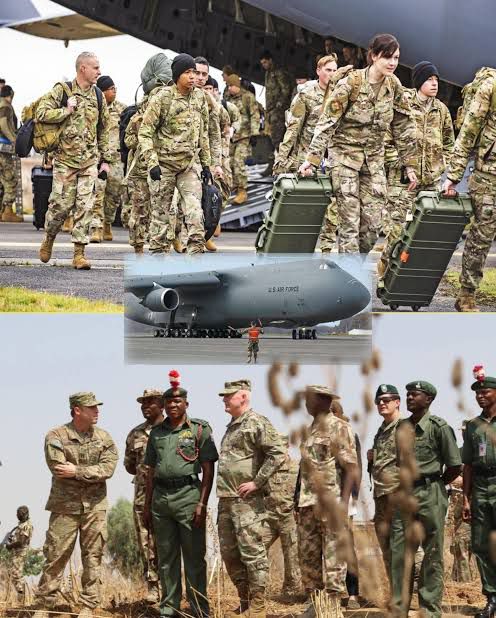
Nigeria and the United States have maintained intermittent security cooperation over the years, particularly in areas relating to counterterrorism and maritime security. While past engagements have fluctuated depending on geopolitical dynamics, current collaboration appears anchored in structured bilateral dialogue.
The recent working group meeting that preceded the deployment reportedly reviewed Nigeria’s specific training needs and identified areas where American technical support could yield measurable gains.
Defence observers argue that structured, needs-based cooperation—rather than open-ended deployments—offers a sustainable model for security partnerships.
While the exact timeline of the US personnel’s stay has not been publicly disclosed, the framework suggests a phased engagement tied to defined training objectives. Evaluation metrics are likely to determine the scope of future cooperation.
For Nigeria, the immediate goal is clear: enhance the capacity of its armed forces to identify, disrupt and neutralise terrorist threats more effectively. The long-term objective, analysts say, is to institutionalise capabilities that reduce reliance on external advisory support over time.
As security operations evolve, the Defence Headquarters confirms arrival of 100 US military personnel for counterterrorism support as a strategic move aimed at consolidating professional competence, intelligence depth and operational synergy.
Ultimately, the success of the initiative will depend on seamless coordination, disciplined execution and measurable outcomes on the ground.
For now, defence authorities insist that the partnership is structured, sovereign-led and firmly aligned with Nigeria’s national security priorities.
About The Author


