Denmark’s prime minister has issued a stark warning that any United States military action against Greenland would effectively bring the NATO alliance to an end entirely.
Mette Frederiksen’s comments reflect mounting anxiety in Europe following renewed statements by President Donald Trump about taking control of the Arctic territory from Denmark.
Her warning comes amid wider global unease after Washington’s recent military operation in Venezuela, which has already strained relations with allies and rivals alike.
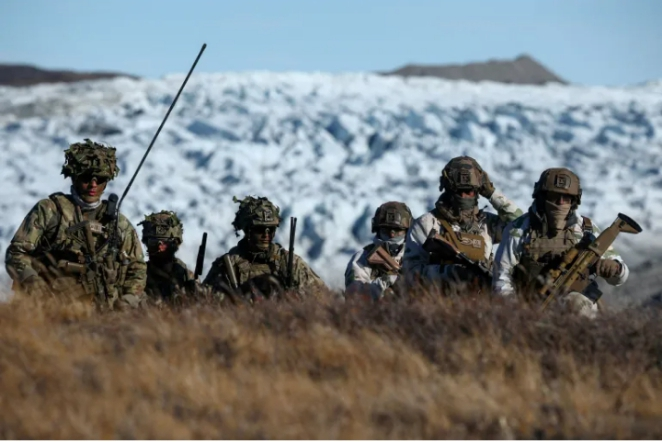
Greenland, though semi-autonomous, remains part of the Danish kingdom and is therefore covered by NATO’s collective defence commitments under international agreements.
Frederiksen argued that an attack by one NATO member on another would destroy the alliance’s core principle of mutual trust and shared security guarantees.
She stressed that NATO’s credibility depends on members respecting sovereignty, borders, and international law developed since the end of the Second World War.
Trump’s renewed focus on Greenland has revived an idea he previously floated, insisting the island is essential to American national security interests.
He has openly declined to rule out military force, a stance that has alarmed Danish officials and Greenlandic leaders across the political spectrum.
The controversy intensified after Trump suggested he would “talk about Greenland” within weeks, signalling that the issue remains active in his administration.
Denmark views these remarks through the lens of recent US actions abroad, particularly the shock abduction of Venezuela’s leader in a military operation.
That incident has reverberated through European capitals, raising concerns about precedent, unilateralism, and the erosion of long-standing alliance norms.
Frederiksen said plainly that if the United States attacks another NATO country, cooperation would immediately cease across defence and security structures.
Such a breakdown would mark an unprecedented collapse of the alliance that has underpinned transatlantic security for more than seventy years.
Greenland’s leaders have also responded, condemning symbolic gestures suggesting annexation and insisting that their territory is not for sale.
Greenlandic Prime Minister Jens-Frederik Nielsen described recent imagery shared by US political figures as disrespectful and dismissive of Greenland’s rights.
He emphasised that relations between nations must be built on mutual respect rather than provocative symbolism or social media statements.
At the same time, Nielsen sought to reassure residents, saying there was no immediate danger of a sudden takeover or military action.
Greenland’s strategic location between North America and Europe makes it central to missile defence systems and Arctic security planning.
The island also possesses significant mineral resources, which Washington views as important to reducing reliance on Chinese supply chains.
Trump has repeatedly claimed that Russian and Chinese vessels operate extensively around Greenland, framing the issue as an urgent security concern.
He has argued that Denmark lacks the capacity to adequately defend the territory, a claim Danish officials firmly reject.
European analysts note that such rhetoric undermines alliance cohesion at a time of heightened global instability and multiple overlapping crises.
NATO’s strength traditionally rests on consultation and consensus, not unilateral threats between allied states.
An internal conflict involving Greenland would challenge the alliance’s legal frameworks and operational foundations in profound ways.
Denmark has invested in Arctic defence cooperation with allies, including the United States, to manage shared security responsibilities.
Frederiksen’s warning therefore represents not hostility, but a red line drawn to protect alliance integrity and international norms.
Observers say the statement reflects deep frustration among European leaders over unpredictable US foreign policy under Trump’s leadership.
The situation also highlights Greenland’s growing geopolitical significance as climate change opens new Arctic shipping routes.
As ice melts, competition for influence, resources, and military positioning in the Arctic has intensified dramatically.
This makes stability and cooperation among NATO members even more critical to avoiding miscalculation or escalation.
Any attempt to alter Greenland’s status by force would likely trigger diplomatic, economic, and security repercussions far beyond Europe.
Smaller NATO members fear that tolerating such actions would leave them vulnerable to future coercion or intervention.
For Greenlanders, the debate has reignited conversations about self-determination, autonomy, and external pressures from major powers.
Local leaders continue to stress dialogue and cooperation while rejecting any narrative that treats the island as a strategic commodity.
The broader alliance now faces a test of credibility, unity, and adherence to the principles it was founded upon decades ago.
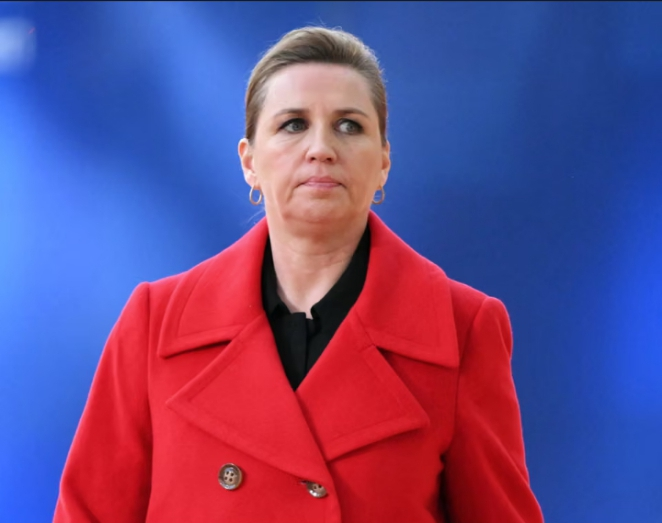
Frederiksen’s remarks serve as a warning that NATO cannot survive if its members threaten each other militarily.
Whether Washington moderates its rhetoric or doubles down may determine the future trajectory of transatlantic relations.
For now, Greenland stands at the centre of a debate exposing deep fractures within the world’s most powerful military alliance.
Read also: Maduro tells US court he was kidnapped after Venezuela raid