

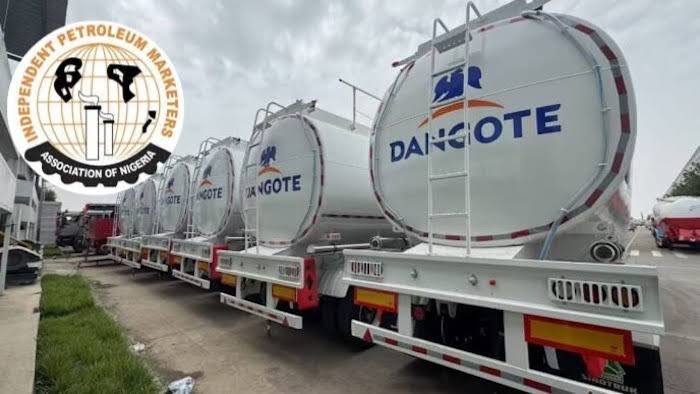
Nigeria’s downstream petroleum sector is witnessing a strategic realignment as industry players intensify collaboration to ensure stable fuel distribution amid global uncertainties and domestic supply dynamics.
With the operational capacity of a single mega refinery now dominating local production, stakeholders are increasingly focused on mitigating supply risks while strengthening market efficiency through coordinated distribution frameworks.
Dangote, marketers collaborate to strengthen fuel supply
Efforts to stabilise Nigeria’s fuel market have gained momentum as Dangote, marketers collaborate to strengthen fuel supply, a move widely seen as critical to ensuring nationwide availability and reducing overdependence on a single supply source.
The partnership involves the Dangote Petroleum Refinery working closely with members of the Major Energies Marketers Association of Nigeria to enhance distribution efficiency and address structural concerns within the downstream sector.
Speaking during an industry webinar, MEMAN Chairman, Hubb Stokman, emphasised that while Nigeria is fortunate to possess a large-scale refinery capable of meeting domestic fuel demand, concentration risk remains a significant concern.
According to him, the scale and capacity of the refinery—owned by industrialist Aliko Dangote—necessitate deliberate efforts to diversify supply channels and avoid systemic vulnerabilities.
Managing single-source supply risks
Industry experts note that the reality that Dangote, marketers collaborate to strengthen fuel supply is largely driven by the need to prevent a single point of failure in Nigeria’s fuel distribution architecture.
Stokman explained that relying heavily on one refining facility, regardless of its capacity, exposes the market to potential disruptions arising from operational issues, maintenance shutdowns, or external shocks.
To address this, the refinery has adopted a supply model that integrates major marketers into its distribution network, thereby decentralising access to refined petroleum products.
This approach is expected to improve logistics efficiency, reduce bottlenecks, and ensure that fuel reaches different parts of the country without delays.
Global volatility shapes local strategy
The collaboration comes against the backdrop of heightened volatility in the global oil market, particularly due to geopolitical tensions in the Middle East.
Analysts say such developments reinforce the urgency behind the strategy where Dangote, marketers collaborate to strengthen fuel supply, as global price shocks and supply disruptions can quickly impact domestic markets.
Stokman noted that the recent Middle East crisis triggered rapid changes in international oil prices, underscoring the need for flexibility and responsiveness within Nigeria’s fuel supply chain.
He stressed that the current arrangement has so far proven effective, with the market demonstrating resilience despite fluctuating global conditions.
However, he cautioned against rigid policy frameworks, urging stakeholders to remain agile in adapting to evolving market realities.
Role of regulators and market structure
The collaboration between the refinery and marketers is being implemented in alignment with regulatory oversight to ensure market stability and fairness.
The Nigerian Midstream and Downstream Petroleum Regulatory Authority has maintained a needs-based approach to fuel imports, ensuring that supply gaps are filled without distorting the market.
Data from regulators indicate that Nigeria currently maintains over 30 days of petrol stock, providing a buffer against potential supply shocks.
In addition, the Nigerian National Petroleum Company Limited continues to play its statutory role as a supplier of last resort, stepping in when necessary to stabilise supply across the country.
Stakeholders say these combined efforts are reinforcing confidence in the system, particularly as deregulation continues to shape pricing and distribution dynamics.
Competition and market discipline
Despite the benefits of local refining, experts have warned that maintaining competition remains essential to preventing market dominance.
Energy analyst Joe Nwakwue highlighted the importance of a “contestable market,” where multiple supply options exist to influence pricing behaviour.
He argued that allowing fuel imports alongside domestic refining ensures that no single player can dictate market conditions unilaterally.
According to him, the strategy where Dangote, marketers collaborate to strengthen fuel supply must be complemented by policies that encourage competition and transparency.
He added that Nigeria’s pricing framework still reflects international benchmarks, meaning domestic fuel prices remain sensitive to global crude oil movements.
Pricing pressures and economic implications
The interplay between local refining and global pricing continues to shape fuel costs in Nigeria.
Experts warn that while the collaboration improves supply stability, it does not completely shield the country from international price volatility.
Nwakwue noted that if petrol prices rise excessively—potentially reaching levels that could strain consumers and businesses—it may have adverse effects on economic growth.
He suggested that policymakers explore targeted and temporary interventions to cushion extreme price spikes without reverting to unsustainable subsidy regimes.
Such measures, he argued, should be carefully designed to maintain market efficiency while protecting vulnerable segments of the economy.
Policy clarity and investor confidence
Another key issue raised by stakeholders is the need for consistent and clear policy signals from regulators.
Uncertainty around import licences and regulatory decisions can undermine investor confidence and disrupt market planning.
Experts stress that as Dangote, marketers collaborate to strengthen fuel supply, clarity in policy direction will be crucial to sustaining momentum and attracting further investment into the sector.
A transparent and predictable regulatory environment, they say, will enable both local and international players to make informed decisions, ultimately strengthening Nigeria’s energy security.
Outlook for Nigeria’s fuel market
The emerging collaboration between the Dangote refinery and fuel marketers represents a pivotal moment in Nigeria’s downstream sector.
As Dangote, marketers collaborate to strengthen fuel supply, the focus is shifting toward building a resilient, competitive, and efficient fuel distribution system.
If effectively managed, the partnership could reduce dependence on imports, improve supply reliability, and support broader economic stability.
However, its success will depend on maintaining a delicate balance between market liberalisation, regulatory oversight, and strategic intervention.
Ultimately, stakeholders agree that Nigeria’s fuel market is entering a new phase—one defined by increased local capacity, evolving market structures, and the need for adaptive policy frameworks to navigate a rapidly changing global energy landscape.