
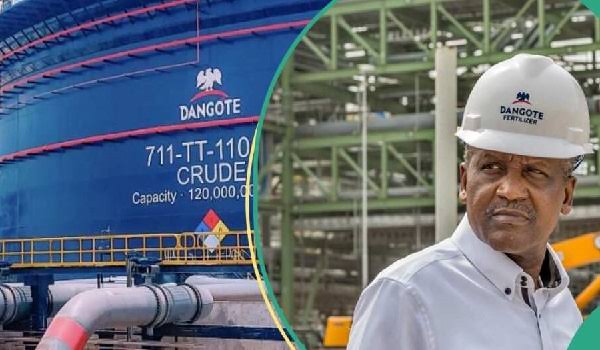

In a renewed push for industrial self-reliance, the President of Dangote Industries Limited, Aliko Dangote, and the Manufacturers Association of Nigeria (MAN) have called on the Federal Government to urgently amend and enforce the Public Procurement Act to fully embed the Nigeria First Policy and link budgetary releases to measurable local content performance.
The call was made during the 53rd Annual General Meeting of MAN held in Lagos, themed “Nigeria First: Prioritising Made-in-Nigeria.”
Dangote, delivering the keynote address, emphasised that the Public Procurement Act must be strengthened through legislative amendment to make the Nigeria First Policy a binding national law backed by enforceable sanctions for defaulting government agencies and contractors.
“The Public Procurement Act should be amended to embed the Nigeria First Policy and link budgetary releases to verified compliance levels.
All ministries, departments, and agencies (MDAs) must allocate at least 65 per cent of their procurement budgets to locally manufactured products,” Dangote stated.
Strengthening the Public Procurement Act for Industrial Growth
The industrialist noted that despite the introduction of Executive Orders 003 and 005, aimed at promoting local content, weak enforcement and policy inconsistency have continued to hinder Nigeria’s manufacturing progress.
According to him, a properly legislated and consistently enforced Public Procurement Act would strengthen the manufacturing sector, protect domestic industries from collapse, and create millions of jobs.
“The Nigeria First Policy is not just an economic slogan but a strategic blueprint for industrial survival and national prosperity,” he said.
Dangote warned against repeating the mistakes that led to the collapse of the textile industry, which cost Nigeria over 500,000 jobs due to unchecked importation and poor regulatory oversight.
He stressed that revitalising domestic industries requires a combination of protective legislation, infrastructure development, and targeted investments in skills and technology.
Policy Consistency and Local Content Enforcement
Outlining expectations from the Nigeria First framework, Dangote proposed the creation of an Independent Monitoring and Compliance Agency to audit procurement activities of all MDAs in real-time.
He said such a body should have powers to impose sanctions—including budgetary cuts and blacklisting of non-compliant agencies—to ensure adherence to the revised Public Procurement Act.
He also urged the government to develop a national supplier registry in collaboration with MAN, allowing verified Nigerian manufacturers to participate transparently in government contracts.
To encourage compliance, Dangote advocated tax incentives for manufacturers investing in backward integration, local sourcing, and research, alongside low-interest credit facilities for small and medium-scale suppliers serving the public sector.
Infrastructure and Energy Deficits Remain Barriers
Highlighting the persistent challenges facing local manufacturers, Dangote underscored the need for improved energy supply and transportation networks to meet the Nigeria First procurement goals.
“Without reliable power and efficient transport systems, local manufacturers cannot meet the demands of the Public Procurement Act and compete effectively,” he cautioned.
He reiterated that ensuring consistent electricity, efficient ports, and affordable logistics would enhance productivity and make Nigerian-made goods competitive globally.
MAN Backs Procurement Reform and Legislative Action
Earlier in his address, the President of the Manufacturers Association of Nigeria, Francis Meshioye, commended ongoing government efforts to reform the industrial sector through initiatives such as the Industrial Revolution Working Group and the Presidential Economic Coordination Council.
However, Meshioye stressed that the Public Procurement Act must be fully aligned with the Nigeria First Policy to ensure measurable impact on the manufacturing ecosystem.
“We are eager to see this policy move from advocacy to action. It holds immense potential to boost domestic production, create jobs, and improve citizens’ welfare,” he said.
He added that making the Nigeria First initiative legally binding would ensure sustained demand for Nigerian-made goods, foster economic resilience, and reduce the nation’s dependence on imports.
Government Commitment to Local Sourcing
In his remarks, the Minister of State for Industry, Senator John Enoh, reaffirmed the government’s commitment to advancing backward integration and promoting local sourcing.
He announced that by December 2025, the Ministry of Industry would issue new procurement documentation guidelines requiring MDAs to justify any preference for imported goods over certified local alternatives.
The minister also revealed that the Bank of Industry, the Small and Medium Enterprises Development Agency of Nigeria (SMEDAN), and MAN are collaborating to graduate 1,000 MSMEs into certified supplier chains by 2026.
He added that the ministries of Power and Transportation are developing dedicated energy and logistics infrastructure for industrial clusters in Lagos, Ogun, Kano, Kaduna, Aba, and Onitsha to support manufacturing growth under the Public Procurement Act framework.
A Call for Decisive National Action
In his closing remarks, Dangote reaffirmed that collaboration between the government and private sector was crucial to translating policy into tangible national growth.
“Every nation is in a race to improve the living conditions of its citizens. Nigeria must act decisively.
The Nigeria First Policy, when embedded into the Public Procurement Act, gives us a fighting chance to compete globally and strengthen our economy,” he said.
As Nigeria continues its industrialisation drive, experts say that embedding the Nigeria First Policy within the Public Procurement Act could mark a turning point in the nation’s economic transformation, helping it reduce import dependence, enhance self-sufficiency, and empower local manufacturers to thrive in the global market.


