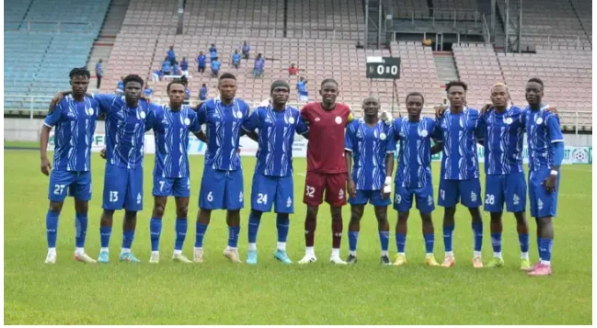
Curacao with population of 156,115 created history by qualifying for the 2026 FIFA World Cup after securing a 0-0 draw against Jamaica on Tuesday.
The Caribbean nation finished undefeated in the tournament, topping Group B with 12 points, ensuring their first-ever World Cup appearance and becoming the smallest country by population to qualify.
Coach Dick Advocaat, absent for the final match due to family matters in the Netherlands, had already instilled tactical discipline and confidence that guided the team to success.
Advocaat, 78, has managed the Netherlands, South Korea, Belgium, and Russia, bringing decades of experience that transformed Curacao into a competitive force despite its small population.
Curacao’s strategy combined homegrown players with diaspora talent from Dutch football academies, creating a balanced team capable of challenging larger nations with more resources and experience.
The Central Bureau of Statistics reports Curacao’s population is 156,115 as of January 2025, highlighting the remarkable achievement of qualifying for a tournament usually dominated by larger countries.
Previously, Iceland, with a population slightly over 350,000, was the smallest nation to qualify, but Curacao now sets a new record as the tiniest nation ever to reach a World Cup.

Tuesday’s match against Jamaica was a tactical showcase, as Curacao defended smartly, limited opponent chances, and controlled possession to secure the critical draw that guaranteed qualification.
Fans across the island erupted in celebration, acknowledging a milestone that goes beyond football, uniting citizens and inspiring national pride for a country of only 156,115 people.
Qualifying for the World Cup brings global recognition, economic opportunities, and the chance to inspire future generations, raising the island’s profile in football and international sports arenas.
Curacao’s players, many trained in Dutch football systems, showed composure, teamwork, and discipline, demonstrating how a small nation can compete with countries having much larger populations and infrastructure.
Advocaat’s absence did not hinder the team’s performance, showing the strong tactical foundation and morale instilled throughout the tournament, enabling Curacao to secure a historic World Cup berth.
The team’s qualification story resonates beyond sport, serving as a symbol of ambition, resilience, and unity, proving that population size is no barrier to achieving global sporting success.
Curacao’s rise challenges assumptions in football, demonstrating that even nations with fewer than 200,000 citizens can compete internationally with proper planning, talent development, and strategic coaching leadership.
The Caribbean nation joins other CONCACAF qualifiers, such as Panama and Haiti, showcasing the region’s growing competitiveness and emphasizing that smaller nations can make their mark in global football.
By contrast, Nigeria, Africa’s most populous nation with over 223 million citizens, failed to qualify for the 2026 FIFA World Cup, despite having a star-studded Super Eagles squad.
The Super Eagles’ failure stunned fans, given the roster included players competing at elite European clubs and performing at high international levels in recent years.
Nigeria’s inability to qualify highlights the difference between population size and effective team cohesion, tactical planning, and disciplined execution on the football field.
While Curacao leveraged careful preparation and strong teamwork, Nigeria’s talented squad could not translate individual brilliance into consistent results in qualifying matches.
Curacao’s achievement with only 156,115 citizens becomes even more remarkable when compared to Nigeria’s Super Eagles, underscoring how smaller nations can outperform giants with proper strategy.
Fans and analysts have noted that Nigeria’s reliance on star power, without integrating a cohesive tactical plan, contributed significantly to their failure in World Cup qualifying rounds.
Curacao, in contrast, demonstrated meticulous planning, unity, and adaptability, highlighting the effectiveness of blending local and diaspora talent to compete with bigger, traditionally stronger nations.
The historic qualification has sparked celebrations across Curacao, inspiring local youth academies, football programs, and aspiring players to aim for international competition despite the nation’s small population.
Diaspora communities, particularly in the Netherlands, have also celebrated Curacao’s accomplishment, showing that football can unify people across countries and bring pride to nations regardless of size.
Curacao with population of 156,115 now stands as a symbol for small nations, proving that dedication, tactical intelligence, and belief can overcome demographic limitations and achieve international sporting success.
Read also: NFF apologies for Super Eagles’ World Cup setback
The 2026 FIFA World Cup will now feature Curacao, giving the world an opportunity to witness football talent from a nation of fewer than 160,000 people performing on football’s biggest stage.
Curacao’s success emphasizes that size and resources are not always decisive in football, offering lessons to larger nations like Nigeria that population alone cannot guarantee qualification.
As football fans eagerly anticipate the 2026 FIFA World Cup, Curacao’s story remains one of inspiration, perseverance, and hope, redefining what small nations can achieve in global sports.
Curacao with population of 156,115 has rewritten football history, becoming the smallest nation ever to qualify for a World Cup, a monumental achievement for the island and its citizens.
About The Author