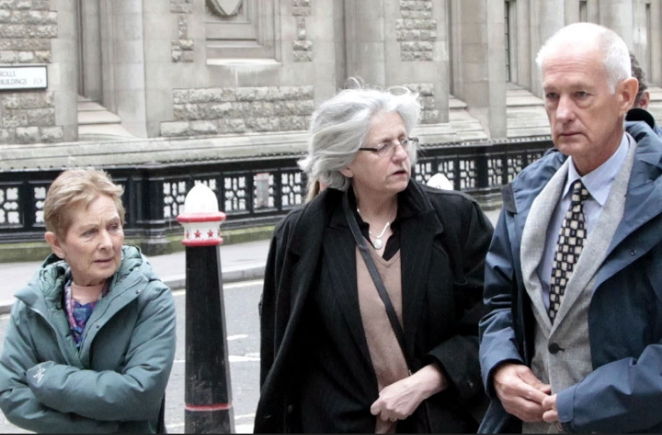
A retired London couple could now face a £3.7m court bill after challenging a tower blocking light to home. Stephen and Jennifer Powell claimed the 17-storey Arbor tower in the Bankside Yards development “substantially” reduced natural light in their 6th-floor flat.
The Bankside Yards development is planned to include eight towers, with some reaching 50 storeys. Arbor, the first completed tower in September 2021, prompted neighbours to seek legal action, arguing the building interfered with their natural light rights.

The Powells and 7th-floor neighbour Kevin Cooper initially sought an injunction to force changes or demolition of Arbor. Their barrister argued that light is not a mere “add on”, but essential for health, wellbeing, and productivity.
In his High Court ruling, Mr Justice Fancourt confirmed that the couple’s flats were “substantially affected” by blocked light. The court awarded £500,000 to the Powells and £350,000 to Mr Cooper as compensation.
However, the judge rejected their demand for an injunction, noting that demolition would waste over £200m and cause “massive associated environmental damage”. Without this remedy, developers could continue the project unhindered.
The developer, Ludgate House Ltd, argues the Powells and Mr Cooper should pay the £3.7m legal costs, claiming they were the overall winners since the court did not require tower alterations.
Lawyers for the couple dispute this. Tim Calland insisted the householders were successful, noting the damages awarded were “substantial” and aligned with precedent-setting rights-of-light cases.
The developer also claimed Mr Cooper failed to beat a pre-trial settlement offer, although his lawyers argue it included unrelated matters, making it invalid for costs purposes.
In 2025, when refusing the injunction, the judge acknowledged the Powells’ strong attachment to natural light, describing it as a significant “benefit directly from the sky”, but stressed the broader public interest.
Mr Justice Fancourt emphasized that demolition would be oppressive compared to the harm done, highlighting the complex financial and environmental implications for over £200m of development.
The ruling on who will cover legal costs is expected at a later date, leaving the Powells and Mr Cooper in a precarious financial position despite their partial victory in securing damages.
This case underscores the tension between property development ambitions and the legal protection of long-standing residential rights, particularly in high-density urban areas like London’s South Bank.
The Powells have lived in their flat for more than 20 years, while Mr Cooper only moved in 2021, yet both experienced dramatic reductions in natural light, which the court recognized as impacting ordinary use and enjoyment.
The High Court decision balances individual homeowner rights against the scale of modern city developments, highlighting the limits of legal remedies when financial and environmental stakes are extremely high.
Read also: US-Iran nuclear talks collapse as war threat intensifies
Despite being awarded damages, the couple’s inability to secure an injunction shows that winning a legal claim does not always equate to financial or practical success in property disputes.
The outcome may set a precedent for other residents facing tall, high-density towers in London, influencing future cases regarding light obstruction and compensation versus structural modification.
The Powells’ legal fight has drawn attention to how developers advertise “exceptional natural light” while proceeding in ways that significantly affect neighbouring properties.
Experts suggest this case could prompt reviews of urban planning policies, potentially strengthening homeowner protections or redefining remedies available when towers block light to home.
Neighbourhood advocates argue the legal system must balance development with community wellbeing, emphasizing that light is not only aesthetic but also linked to mental health and quality of life.
The court’s deliberations reflect the complexity of modern city living, where private property rights, commercial development, and environmental considerations intersect in high-profile disputes.
If the Powells and Mr Cooper are ordered to pay the legal costs, the case will serve as a warning to homeowners pursuing injunctions against multi-million-pound developments, even when partial victories are achieved.
Legal commentators note that the case illustrates how High Court rulings can award damages but still favor developers in terms of project continuation and financial implications.
The unfolding cost ruling will be closely watched by urban residents, lawyers, and developers, as it may influence future disputes over natural light rights across London and other cities.
About The Author