


Rising LPG costs highlight persistent energy market challenges even as domestic refining helps shield motorists from global oil shocks
Nigerians are payig as much as ₦2,000 per kilogram for cooking gas after prices surged by up to 66% in parts of the country over the past three weeks, adding fresh pressure on household budgets already strained by high inflation and rising living costs.
The increase comes even as petrol prices show signs of easing following expanded domestic supply from Dangote Refinery, highlighting the contrasting fortunes of Nigeria’s two major consumer fuel markets.
The surge comes as millions of Nigerians continue to struggle with elevated living costs, with inflation remaining among the highest in recent years and household purchasing power under pressure despite wage adjustments introduced by the federal government.
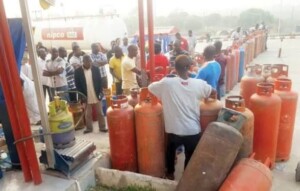
Industry stakeholders attribute the latest increase to a combination of seasonal demand growth, supply shortages and structural constraints within Nigeria’s domestic gas market.
“The rainy season traditionally leads to stronger demand for cooking gas because many households reduce their reliance on firewood and other alternative fuels,” said Chinedu Ukadike, spokesperson for the Oil and Gas Suppliers Association of Nigeria (NOGASA).
According to Ukadike, the increase in demand has coincided with supply limitations, creating upward pressure on prices across major consumption centres.
“Market forces will eventually stabilize prices, especially as additional suppliers enter the market and increase product availability,” he said.
Why Cooking Gas Prices Are Rising in Nigeria
The latest rise in cooking gas prices highlights a long-standing challenge within Nigeria’s energy sector.
Despite possessing some of Africa’s largest natural gas reserves, Nigeria continues to face periodic shortages and price volatility in the domestic LPG market due to infrastructure bottlenecks, logistics costs, storage limitations and supply-demand imbalances.
Taofeek Lawal, spokesperson for Nigerian Independent Petroleum Company Plc (NIPCO), said the current situation is largely the result of insufficient supply relative to growing consumer demand.
“It is fundamentally a supply issue. There are fewer available products serving a larger number of consumers. The solution is to improve supply and expand market participation,” Lawal said.
Energy analysts say rising LPG prices could slow Nigeria’s efforts to encourage households to transition away from traditional cooking fuels such as firewood and charcoal, a policy objective aimed at reducing environmental degradation and health risks associated with indoor air pollution.
Higher cooking gas costs also risk increasing household energy expenditures at a time when many Nigerians are already grappling with rising food, transportation and housing costs.
Official data showed headline inflation stood at 26.50% in April, while food inflation remained elevated at 16.09%, adding pressure on household budgets nationwide.
According to industry estimates, Nigeria remains one of Africa’s fastest-growing LPG markets, with demand increasing steadily over the past decade as authorities encourage households to shift away from firewood and kerosene.
However, supply constraints, infrastructure gaps and logistics costs continue to limit affordability despite the country’s vast natural gas reserves.
For many households, the latest increase is already affecting daily spending decisions.
“I used to refill my cylinder for around ₦12,000, but now it costs much more,” said Amina Yusuf, a civil servant in Abuja. “Food prices are already high, so every increase in cooking gas affects our monthly budget.”
Her experience reflects growing concerns among consumers that rising energy costs could further reduce household purchasing power.
Read Also: Gunmen raid Kogi bar, kill customer, kidnap two workers
Kwankwaso dismisses exit rumours amid Kano NDC candidate dispute
How Dangote Refinery Is Influencing Fuel Prices
While consumers face mounting costs in the LPG market, developments in Nigeria’s petrol sector present a contrasting picture.
Industry groups say the growing role of Dangote Refinery in domestic fuel supply has helped cushion Nigeria from global energy market disruptions triggered by geopolitical tensions in the Middle East.
The Independent Petroleum Marketers Association of Nigeria (IPMAN) said Nigeria could have faced substantially higher petrol prices if it remained heavily dependent on imported refined products.
According to IPMAN spokesperson Chinedu Ukadike, domestic refining has become a critical buffer against external shocks affecting global fuel markets.
“Nigeria is no longer as dependent on imported petrol as it was previously. Without Dangote Refinery, petrol prices could have risen to between ₦5,000 and ₦6,000 per litre under current global conditions,” Ukadike said.
The comments come as tensions in the Middle East continue to influence global oil markets, raising concerns about supply security and transportation costs across major energy-importing economies.
Domestic Refining Changes Market Dynamics
The Dangote Refinery, with an estimated processing capacity of around 700,000 barrels per day, has rapidly emerged as one of the most influential players in Nigeria’s downstream petroleum sector.
The refinery’s growing role marks a significant shift for Nigeria, which for decades relied heavily on imported petroleum products despite being Africa’s largest crude oil producer.
Analysts say increased domestic refining capacity is beginning to reduce exposure to exchange-rate volatility, freight costs and disruptions in international supply chains.
Since increasing production and expanding domestic supply, the refinery has contributed to improved fuel availability and greater competition within the market.
Recent reductions in petrol gantry prices by the refinery have filtered through parts of the retail market, leading to lower pump prices in several cities.
In Abuja, retail petrol prices have eased to between ₦1,317 and ₦1,360 per litre from previous levels of between ₦1,360 and ₦1,370 per litre, according to industry sources.
The development represents one of the clearest signs yet of how increased domestic refining capacity is beginning to influence fuel pricing dynamics in Nigeria following decades of dependence on imported petroleum products.
Energy analysts say the divergence between petrol and LPG prices illustrates different stages of reform within Nigeria’s energy sector. While refining investments are beginning to improve fuel availability, the domestic gas market still faces structural challenges ranging from storage limitations to distribution bottlenecks.
“The petrol market is benefiting from a major increase in local refining capacity, but the LPG sector requires broader investment across the value chain before consumers see similar stability,” one Lagos-based energy analyst said.
What Rising LPG Prices Mean for Nigeria’s Energy Market
The divergent trajectories of petrol and cooking gas prices illustrate the complex transformation underway in Nigeria’s energy sector.
On one hand, domestic refining investments are reducing exposure to international fuel market volatility and improving energy security.
On the other, supply constraints in the LPG market continue to expose structural weaknesses in the country’s broader energy infrastructure.
Analysts say sustained investment in gas processing facilities, storage capacity, transportation networks and domestic distribution channels will be required to ensure that Nigeria’s vast natural gas resources translate into affordable energy for consumers.
The entry of additional LPG suppliers and increased domestic production could help ease current market pressures over the medium term, although industry participants caution that meaningful improvements may depend on broader reforms across the supply chain.
For now, Nigerian consumers remain caught between two contrasting energy realities: falling petrol prices supported by local refining and rising cooking gas costs driven by supply shortages.
Whether current reforms translate into lasting consumer relief may depend on how quickly Nigeria can expand domestic gas supply while sustaining gains in refining capacity.
For now, households face a mixed energy picture: lower petrol prices in some markets, but rapidly rising cooking gas costs that continue to squeeze already stretched budgets.
Read more @ireport247news
About The Author
