Colombian President Gustavo Petro has announced the suspension of intelligence sharing with the United States after repeated missile attacks on vessels in Caribbean waters.
The decision affects all levels of Colombia’s public security and intelligence services, highlighting growing tensions between Bogota and Washington over US military operations in the region.
Petro stated on social media that the suspension of intelligence sharing will continue “as long as missile strikes on boats persist,” emphasizing the protection of civilians as a top priority.
The US strikes have killed at least seventy-five people, including fishermen and civilians, prompting calls from Petro for immediate restraint and review of military operations in international waters.
Reports indicate that other countries, including the United Kingdom, may reconsider intelligence sharing with the US over legal and humanitarian concerns surrounding the Caribbean attacks.
Petro has urged the Trump administration to face investigation for potential war crimes, stating that these strikes violate international law and disproportionately affect innocent civilians.
The Colombian president has long criticized US drug policy, arguing it targets small-scale coca farmers instead of major traffickers, undermining regional security while harming local communities.
On Sunday, Petro met the family of a Colombian fisherman allegedly killed in one of the strikes, underscoring the human toll of US operations in Caribbean waters.
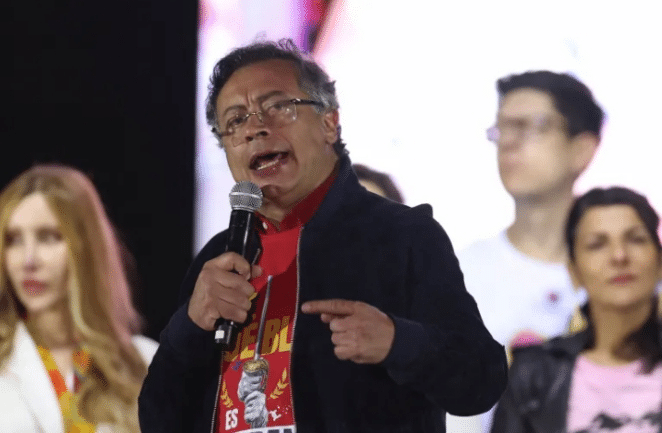
“He may have been carrying fish or cocaine, but he had not been sentenced to death,” Petro said, emphasizing that lethal force was unnecessary and unjustified.
The Trump administration has accused Petro of leniency toward drug traffickers, criticizing Colombia’s decision to shield certain rebel leaders from extradition and questioning his commitment to counter-narcotics efforts.
Tensions between Petro and Trump date back months, including the revocation of the Colombian president’s US visa in September for “reckless and incendiary” actions during the United Nations General Assembly.
Petro condemned the visa revocation as a violation of international norms, saying it demonstrated Washington’s disregard for sovereign nations and for those who speak out against human rights abuses.
Earlier in the day, Petro addressed a protest outside the UN headquarters, urging US soldiers to “disobey the orders of Trump” and “obey the orders of humanity” to protect civilians.
Following this, the US Department of the Treasury imposed sanctions on Petro, his family, and Interior Minister Armando Benedetti, citing insufficient efforts to control cocaine production in Colombia.
The sanctions intensified tensions, prompting Petro to suspend intelligence sharing with US security agencies as a demonstration of national sovereignty and a commitment to civilian protection.
Petro’s announcement coincided with the arrival of the Gerald R Ford Carrier Strike Group in the Caribbean, including thousands of sailors and tactical aircraft, raising fears of escalation.
US military operations have primarily focused on Venezuela, but Colombian waters and maritime routes are now directly affected, complicating regional security and intelligence coordination.
Colombian officials stress that the strikes threaten stability in the Caribbean, endangering commercial and fishing vessels that are vital to the livelihoods of local communities.
Petro described the attacks as indiscriminate, stressing that civilians have been killed without cause, and warned that ongoing strikes could escalate tensions across multiple Caribbean nations.
Analysts argue that suspending intelligence sharing represents a rare but strategic assertion of Colombian sovereignty in response to unilateral US military operations.
Regional organizations have expressed concern, urging urgent discussions on international law violations and warning that continued strikes may destabilize multiple countries simultaneously.
Petro also criticized US counter-narcotics policy, noting that the current approach amplifies violence, weakens local governments, and fails to dismantle leadership structures of major drug trafficking networks.
The president emphasized that cooperation on security matters must respect sovereignty, human rights, and international law, contrasting sharply with the Trump administration’s unilateral approach.
Civil society groups in Colombia have supported Petro’s decision, noting that suspending intelligence sharing sends a strong signal that civilians’ safety cannot be sacrificed for military agendas.
Observers highlight that while intelligence sharing has been suspended, Colombia maintains diplomatic channels for dialogue, signaling measured resistance rather than a complete rupture in relations.
The Caribbean strikes highlight Washington’s preference for unilateral intervention over multilateral cooperation, prompting criticism from affected nations and international observers concerned with civilian protection.
Petro’s announcement underscores the responsibility to defend Colombian citizens and their livelihoods, particularly those reliant on fishing and maritime trade, disrupted by missile attacks.
In Bogotá, public demonstrations have expressed support for Petro and his decision to suspend intelligence sharing, highlighting a shared commitment to sovereignty and civilian safety.
Political analysts note that the suspension strengthens Petro’s domestic position, portraying him as a leader willing to assert Colombia’s interests against external pressures.
Colombia now faces a complex diplomatic environment, balancing the protection of sovereignty and civilians with potential US responses, including sanctions, trade restrictions, or further military action.
The Caribbean region, already facing economic and environmental challenges, is further threatened as US operations disrupt trade and civilian life, underscoring the importance of coordinated security.
Petro’s stance has drawn both praise and criticism internationally, illustrating the tension between human rights priorities, national security, and US strategic interests in Latin America.
The US maintains that its operations are essential for countering drug trafficking and ensuring regional security, claims disputed by Colombia and neighboring countries affected by missile strikes.
Similar strikes in the Pacific have caused civilian casualties, prompting demands for independent investigations and accountability to prevent future harm in international waters.
Colombian officials stress that intelligence sharing is essential for combating organized crime but cannot be exploited to justify unilateral military strikes that endanger civilian lives.
Regional leaders are monitoring the situation closely, with some considering similar measures if US military actions persist, potentially redefining traditional intelligence-sharing agreements.
The international community has called for diplomacy, adherence to international law, and protection of civilians instead of unilateral military measures that escalate regional tension.
Petro’s criticism reflects broader Latin American concerns about sovereignty, civilian protection, and respect for international norms in the context of US unilateral operations.
Legal scholars note that suspending intelligence sharing could set a precedent for sovereignty-based restrictions on international military cooperation in regions threatened by foreign military action.
Petro has called for multilateral dialogue, urging Latin American and European leaders to address the consequences of US strikes and advocate for accountability and restraint.
Bogota continues to play a role as a regional mediator while defending national interests and protecting citizens affected by Caribbean strikes.
Petro emphasizes evidence-based targeting in security operations, warning against assumptions that all maritime targets are legitimate and prioritizing civilian safety.
The president challenges US claims of targeting only drug traffickers, citing reports of civilian deaths and flawed intelligence guiding missile strikes.
Human rights organizations have echoed Petro’s concerns, calling for investigations to ensure that civilian casualties are addressed and not politicized under the guise of counter-narcotics operations.
Petro has proposed strengthening regional security mechanisms to mitigate unilateral strikes and protect maritime populations, commercial shipping, and local economies.
The US response stresses operational necessity while requesting Colombia to resume intelligence sharing for broader counter-narcotics operations, keeping tensions high between the two governments.
Analysts predict that suspending intelligence sharing may influence other Latin American nations to reconsider cooperation under similar circumstances, asserting regional autonomy in security matters.
The strikes have exposed weaknesses in regional coordination, prompting Petro to advocate for multilateral oversight to prevent civilian harm and stabilize security in the Caribbean.
Colombian officials insist that while intelligence sharing is crucial for law enforcement, it cannot be exploited to justify unilateral lethal operations in international waters.
Petro’s move has sparked debate domestically and internationally, balancing counter-narcotics objectives with the protection of human rights and civilian safety.
Public demonstrations in Bogotá signal broad approval of the president’s decision, supporting intelligence sharing suspension as a measure of sovereignty and citizen protection.
Contingency planning in Colombia includes diplomatic initiatives, international appeals, and regional coordination to mitigate escalation from further US military action.
Petro has stated that suspension is conditional, dependent on the cessation of missile strikes and adherence to international law, leaving room for potential resumption of intelligence sharing.
The message is clear: civilian protection and national sovereignty take precedence over unilateral military measures, establishing a firm stance against external pressure.
Colombia asserts its rights and prioritizes human security while maintaining relations with global powers like the United States amid escalating Caribbean strikes.
Petro’s approach reflects a broader Latin American trend of nations asserting sovereignty, challenging external influence, and defending civilian populations from foreign military operations.

The Caribbean strikes contextualize the decision to suspend intelligence sharing, emphasizing human, legal, and diplomatic stakes of US military actions in the region.
Petro’s actions may influence other maritime nations, reshaping regional norms on intelligence cooperation and establishing principles for protecting civilians against unilateral interventions.
Bogota continues to urge international actors to pressure the US for restraint, accountability, and lawful conduct, signaling commitment to principled diplomacy in the Caribbean.
The president balances sovereignty, civilian protection, and diplomacy, reinforcing Colombia’s opposition to unilateral military measures with lethal consequences.
Suspending intelligence sharing marks a defining moment in Petro’s presidency, demonstrating a commitment to sovereignty, humanitarian principles, and regional stability in Latin America.