Civilian deaths in Iran pass 700 as relentless US-Israeli airstrikes hit major cities, while authorities impose sweeping restrictions that residents say are trapping frightened communities under bombs and surveillance.
According to figures compiled by rights organisations, more than 700 civilians have been killed since the outbreak of the US-Israel war on Iran last weekend, marking one of the deadliest escalations in recent years.
The Iranian Red Crescent Society said at least 555 people had died nationwide, while the US-based Human Rights Activists News Agency reported 742 civilian fatalities, including 176 children.
Independent verification remains extremely difficult because of a near-total internet blackout across much of the country, leaving families reliant on sporadic calls and fragmented messages to piece together developments.
Norway-based rights group Hengaw warned that civilian casualties are rising sharply, particularly in southern provinces where densely populated neighbourhoods sit close to military facilities and security installations.
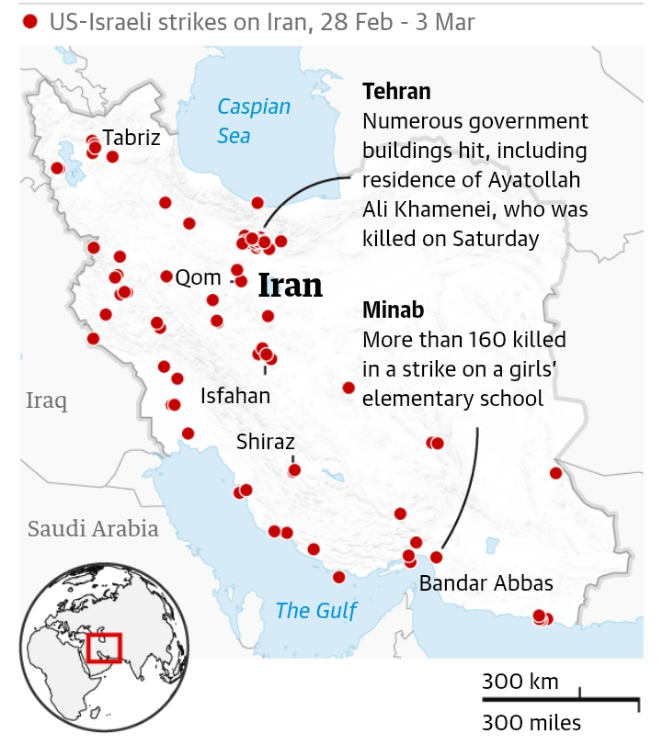
The highest number of reported civilian deaths occurred in Hormozgan province after a missile strike on a girls’ elementary school in Minab, an attack said to have killed more than 150 people, many of them children.
Images and testimonies emerging from Minab describe chaotic rescue efforts, grieving relatives and entire communities overwhelmed by the scale of destruction inflicted within seconds of the strike.

Elsewhere, residents in several cities described a barrage of alerts and warning messages sent to their mobile phones by security authorities as joint strikes continued across strategic and urban targets.
In Sanandaj, capital of Iranian Kurdistan, people said messages attributed to the intelligence wing of the Islamic Revolutionary Guard Corps warned that public gatherings would be treated as cooperation with the enemy.
The warnings stated that remaining on the streets could be interpreted as aiding hostile operations, framing restrictions as necessary to prevent unrest and thwart alleged “terrorist actions”.
Activists argue the messaging is designed to discourage protests and prevent civilians from organising relief or documenting damage, effectively confining residents indoors while bombardments continue.
An Iranian news outlet operating in exile, IranWire, reported similar text messages circulating in multiple provinces, cautioning citizens against “any movement” during the ongoing attacks.
A student in Tehran described intense explosions shaking residential districts, with smoke clouds hanging over the skyline as uncertainty spread about which areas might be targeted next.
He said internet shutdowns have left people scrambling to communicate through intermittent connections, unsure whether to shelter in place or attempt to flee towards smaller towns.
A Kurdish student, speaking via a relative abroad, claimed the alerts were intended to prevent escape from neighbourhoods located near military installations, increasing the risk to ordinary residents.
Despite communications blackouts, some detainees have managed to contact family members. In Urmia, a prisoner reportedly called relatives to reassure them that no executions had taken place that day.
In Mahabad, electricity was said to have been cut entirely following airstrikes, compounding fear and limiting access to medical care and emergency services for those injured in blasts.
Hiwa Bahrami of the Democratic Party of Iranian Kurdistan accused authorities of placing military bases within populated regions, arguing this strategy exposes civilians to disproportionate danger.
In Tehran, residents described efforts to leave the capital as bombardments intensified, though fuel shortages, blocked roads and security checkpoints complicated evacuation attempts.
Matin, a former journalist in the city, said he blamed the government for the crisis but feared that foreign strikes were killing innocent people whose lives had already been constrained by sanctions.
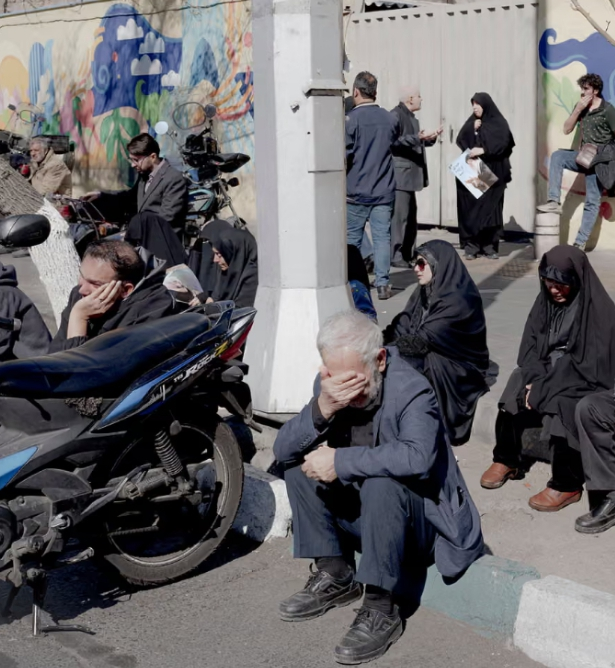
He described conflicting emotions: anger at leaders for years of repression and economic hardship, alongside dread that continued bombardment would devastate neighbourhoods filled with families and children.
Zhila, a film-maker based in the capital, said many Iranians had hoped for change but were now grappling with the human cost of war, unsure whether external intervention would bring relief.
She spoke of economic strain, lost opportunities for young people and the psychological toll of constant explosions, arguing that years of political confrontation had left society deeply scarred.
As the conflict escalates, humanitarian organisations warn that civilian deaths in Iran pass 700 could be only the beginning if strikes continue at current intensity without safeguards for residential areas.
With communications restricted and fear mounting, the true scale of casualties may take weeks to establish, but communities across Iran are already confronting profound loss and uncertainty.
About The Author