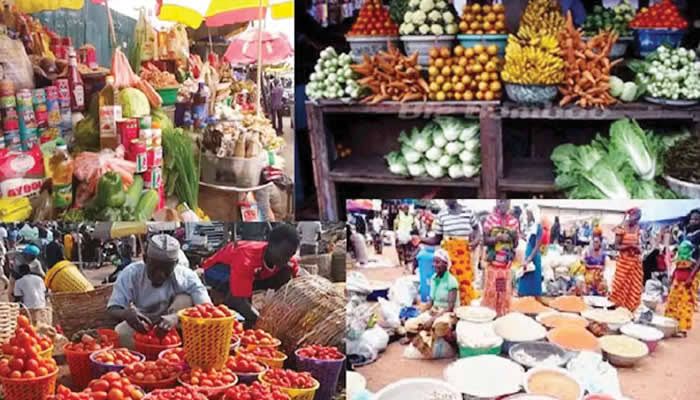
As Nigerians embrace the 2025 Christmas season, households across the country are experiencing a mixed economic reality.
While some essential food prices have declined, other festive items and livestock costs continue to rise, forcing families to navigate a complex market landscape.
Relief in Christmas food prices: Staples more affordable
Ireport247news.com survey of major markets, including Lagos’ Mile 12 and Bola Ige international market(Gbagi) Ibadan, revealed notable declines in staple food prices compared to last year.
For instance, a 50kg bag of foreign rice, which sold for as high as N140,000 in December 2024, now ranges between N56,000 and N65,000.
Local rice prices similarly fell from around N94,000 to N58,000, with some sellers offering it for N45,000.
Experts attribute this decline to increased participation in farming and improved storage methods by both households and traders.
“Many Nigerians went into farming, which has increased supply and stabilized prices of staples such as rice, garri, and pepper,” said Madam Bukky, a Lagos-based foodstuff trader.
She added, however, that some items initially dropped but have risen again due to seasonal festive demand.
Vegetables show volatility amid festive demand
While staple grains and tubers offer relief, vegetables such as tomatoes, peppers, and onions remain highly volatile.
Repeated market checks in ibadan show that the price of a large basket of tomatoes doubled within a week, from N20,000–N25,000 to N40,000–N45,000, reflecting the surge in yuletide demand.
Traders noted that while supply from northern states such as Jos has improved, perishability and high seasonal demand continue to trigger fluctuations.
“We have surplus tomatoes this year, but festive demand pushes prices up,” said Wasiu, a tomato trader.
Onions and pepper experienced sharp declines, with a bag of onions now selling for N80,000–N120,000 compared to N280,000–N300,000 last year.
Similarly, pepper dropped from N64,000 to around N56,000, while honey beans fell from N13,000 per paint bucket to N5,000.
Cooking oils bring modest relief to households
Vegetable and palm oil prices have also softened.
For instance, a 4.5-litre keg of Power Oil sells for N16,000, down from N19,000 in 2024, while five-litre kegs of Golden Terra and Mamador oils dropped by roughly 14–15 per cent.
Budget-conscious consumers increasingly opt for refill sachets or unbranded oils, providing affordable alternatives amid festive expenses.
Mrs. Comfort Ugochi, a Lagos wholesaler, explained, “End-users buy large kegs for households or gifts, but sachets remain popular for resale in communities due to their affordability.”
Seasonings spike as festive demand bites
Despite relief in staples and oils, seasoning cubes and spices have increased sharply.
Chicken-flavoured seasoning cubes rose by 19.6 per cent, while Knorr chicken cubes and Maggi crayfish cubes climbed by around 11–12 per cent.
Mrs. Ugochi added, “Households choose cheaper brands to manage budgets, especially with rising costs of other festive essentials.”
Festive hampers and decorations: Prices soar
The cost of Christmas hampers, decorations, and gift items has surged. Large non-alcoholic hampers now sell for N85,000, up from N60,000 last year, while small hampers increased from N40,000 to N55,000.
Christmas trees and decorative items have similarly risen, with trees now N65,000 compared to N50,000 last year.
Traders cited higher manufacturing costs, energy expenses, and supply chain constraints as key drivers.
“We had to adjust retail prices due to rising production costs, although we hope demand will improve as the season progresses,” said Miss Bose Olawuyi, a supermarket employee.
Livestock prices: Festive proteins beyond reach for many
While staples are more affordable, meat, poultry, and other livestock products remain expensive.
Frozen turkeys now retail at N75,000–N76,000, up from N48,000–N52,000 last year, while live turkeys cost N90,000–N100,000 locally.
Similarly, live chicken now retail at N25,000-N40,000 , way up from N15,000-N25,000 last year price, while frozen chicken is fluctuating between N48,000-N60,000 depending on the type.
Goat meat averages N70,000, with larger animals reaching N120,000–N250,000.
Foreign exchange pressures, feed costs, and seasonal demand continue to drive these increases. Consumers are turning to alternative proteins such as Panla fish and smaller goat portions to meet festive needs.
The human angle: Relief for consumers, losses for farmers
The decline in staple prices provides relief for households, but surplus harvests have hurt farmers’ income, particularly for crops like onions. In northern regions, insecurity and transport challenges exacerbate losses.
Urban consumers in Enugu, Lagos, Oyo and Abuja benefit from more stable prices, but disposable incomes remain constrained.
Regional variations and market outlook
While Lagos markets enjoy multiple supply chains and competitive pricing, northern markets contend with insecurity and longer supply routes.
Analysts suggest that effective storage, better farming practices, and supply chain improvements have tempered staple price spikes.
However, livestock, imported goods, and festive items remain vulnerable to currency fluctuations and transport costs.
Dare Adu, CEO of Foodthrift, said, “Compared to last year, December 2025 shows more predictable pricing for essentials, but meat and imported items remain expensive.
Households are adapting their shopping to balance costs and festive demands.”
The 2025 Christmas season presents a combination of relief and challenge.
Staple foods such as rice, honey beans, onions, and cooking oils are more affordable, easing household budgets.
Conversely, livestock, festive hampers, decorations, and seasonings remain costly, forcing consumers to make calculated adjustments.
For farmers and traders, surplus production amid high festive expectations has led to both opportunities and losses.
Nigerians are reminded that strategic planning, resourcefulness, and careful budgeting remain crucial as they navigate the festive period.
About the Author