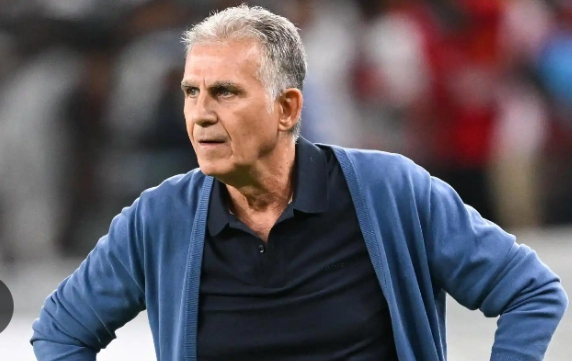
Carlos Queiroz World Cup views are drawing attention again after the veteran coach argued that the tournament is losing its rarity. Speaking on the state of international football, Queiroz said the expansion of spots, especially in South America, is making qualification “lose its significance.”
The Portuguese tactician, who has managed at five World Cups, warned that when “everyone qualifies,” the competition itself starts to mean less.
From Portugal to Iran: A Coach Who Knows Qualification
Queiroz is one of the few managers to lead three different nations to the World Cup. He took Portugal to the 2010 tournament, then guided Iran to the next three editions in 2014, 2018, and 2022. He also led South Africa to the 2002 World Cup. That track record gives weight to his critique of the modern World Cup qualification debate.
“The Real Success Would Be Not Qualifying”
Referencing South America’s current format, Queiroz said: “The real success now in South America would be in not qualifying.” He explained that six of South America’s 10 teams now qualify automatically for the World Cup, with the seventh-place side getting another chance through inter-confederation play-offs.
“Who did not qualify in Europe?” he asked. “The qualification tournaments start to lose their significance if everyone qualifies. Qualification should be serious, it should be very tough, very competitive.”
For Queiroz, scarcity is what gives the World Cup its prestige. “The World Cup should be something with meaning and significance. It should be rare,” he stated.
The Shift From Football to the Football Moneyball Era
The coach’s sharpest line came when he tied expansion to commercial pressures. “But, as you know, today money talks in the game,” he said. “Where we used to talk about football, it is now moneyball.”
Why “Moneyball” Matters for Fans
In baseball, “Moneyball” describes using data and economics to maximize results. In Queiroz’s framing, the football moneyball era means decisions are driven by revenue, broadcast deals, and inclusion rather than sporting merit alone. More teams mean more matches, more markets, and more money.
But Queiroz argues there is a cost. When qualification is less selective, the road to the World Cup feels less dramatic. For supporters who grew up watching nations miss out by a single point, the new math changes the emotional stakes.
“Qualification should be very tough, very competitive,” he repeated, suggesting that difficulty is a feature, not a flaw.
South America World Cup Spots and the Competitive Balance
The focus on South America World Cup spots highlights a broader FIFA strategy. With 48 teams at the 2026 tournament, confederations received more slots. CONMEBOL’s increase to six automatic places plus a play-off spot means only three of the 10 members will fail to reach the inter-confederation stage.
Does More Access Equal Better Football?
Proponents say expansion gives more nations experience and grows the game globally. Critics, including Queiroz, counter that it dilutes the achievement. “If everyone qualifies,” he argued, “the tournament starts to lose its significance.”
The debate is not new. Coaches have long disagreed on whether inclusion or exclusivity builds a stronger World Cup. But Queiroz’s perspective is unique because he has lived both sides. He has celebrated qualification with Iran and felt the pressure of missing out with others. He knows how narrow the margins used to be.
Carlos Queiroz Coaching Career and His Legacy of Standards
The comments also reflect a career built on structure and discipline. Across his Carlos Queiroz coaching career, he has been known for demanding high standards, detailed preparation, and defensive organization.
Lessons From Three Continents
- Portugal 2010: Took a talented squad to South Africa, where expectations were high.
- Iran 2014, 2018, 2022: Built resilient teams that competed closely with global powers, often punching above their weight.
- South Africa 2002: Led Bafana Bafana to their second World Cup appearance.
In each case, qualification was treated as an achievement in itself. “It should be rare,” he insists, because rarity creates stories. When Ghana, Nigeria, or other African nations fight through a brutal CAF group, the reward feels earned. When a region gets seven of 10 teams in, the narrative changes.
What the World Cup Qualification Debate Means Going Forward
FIFA’s expansion aims to make the tournament more global. More games, more fans, more revenue. Yet Queiroz’s warning is about meaning. “The World Cup should be something with meaning and significance,” he said.
Finding a Middle Ground
One option is to keep more teams but make the qualifying phase itself tougher and longer. Another is to protect the play-offs as true elimination games, not second chances. Either way, the conversation is shifting from “who gets in” to “what getting in is worth.”
Queiroz is not calling for fewer nations to dream. He is calling for the dream to cost something. “Qualification should be serious,” he said. In his view, seriousness is what separates a festival from a championship.
For fans following World Cup news, fixtures, and qualifier updates, his words are a reminder that format changes have cultural effects. When money, access, and prestige collide, coaches like Queiroz will keep asking: what are we trying to protect, the tournament or the feeling of reaching it?
As he put it: “Today money talks in the game.” And in the Carlos Queiroz World Cup views, that conversation is only getting louder.
About The Author