

Brent crude price fell sharply on Wednesday after U.S. President Donald Trump said negotiations with Iran were nearing completion, prompting traders to cut geopolitical risk positions tied to possible supply disruptions in the Strait of Hormuz.
Brent July futures fell $5.92, or 5.3%, to $104.87 a barrel by 1422 GMT after trading as high as $111 earlier in the week. U.S. West Texas Intermediate June crude dropped $6.11, or 5.9%, to $98.34 per barrel.
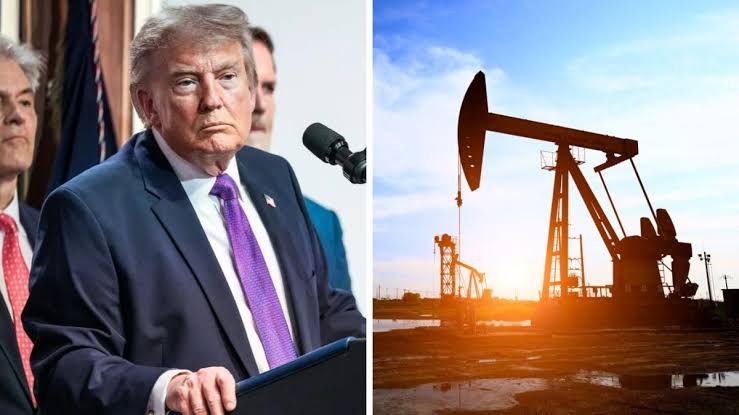
The sell-off marked one of the largest intraday declines since Middle East tensions escalated earlier this year.
Trump said on Tuesday that talks with Tehran were in the “final stages” but warned military pressure would intensify if negotiations failed.
The comments eased immediate fears that the conflict could trigger a prolonged disruption to Gulf crude exports.
“The market is removing part of the geopolitical premium that built up over the past two weeks,” said Helima Croft, global head of commodity strategy at RBC Capital Markets.
Still, traders said volatility remained elevated as shipping activity through the Strait of Hormuz continued to operate far below normal levels.
Why oil prices fell today
Oil markets have rallied for weeks on fears that fighting involving Iran, Israel and the United States could severely disrupt crude shipments from the Gulf.
The Strait of Hormuz handles roughly 20% of global oil and fuel flows. Any threat to shipping through the corridor typically pushes prices higher.
Brent crude surged above $111 per barrel earlier this week as tanker rates, marine insurance premiums and physical crude prices climbed across Asia and Europe.
Wednesday’s decline came after investors reassessed the likelihood of a worst-case supply scenario.
Iran’s Foreign Ministry spokesperson Esmaeil Baghaei said Tehran was prepared to cooperate with regional states to establish measures for safe maritime traffic.
That helped improve market sentiment, although traders said the situation remained fragile.
“Today’s move is more about reducing panic positioning than confidence that the crisis is over,” said Giovanni Staunovo, commodity analyst at UBS.
Read Also: Siminalayi Fubara withdraws from Rivers APC Governorship primaries
Related: Iran tightens control of Strait of Hormuz with checkpoints, ship vetting and passage deals
Oil market reaction remains highly volatile
Despite Wednesday’s sell-off, analysts said crude markets remained vulnerable to fresh geopolitical shocks.
Brent is still trading well above its average level for the year. Traders continue to monitor tanker movements, shipping insurance costs and U.S.-Iran diplomatic developments.
Goldman Sachs said geopolitical risk premiums could remain elevated even if a temporary agreement is reached.
Shipping disruptions in the Gulf are also continuing to tighten parts of the physical crude market.
According to shipping data from LSEG and Kpler, three supertankers carrying roughly six million barrels of Middle Eastern crude crossed the Strait of Hormuz on Wednesday after remaining stranded inside the Gulf for more than two months.
Traffic through the waterway remains sharply reduced.
Before the conflict escalated in February, between 125 and 140 vessels passed through the strait daily. Current traffic averages about 10 ships per day, according to maritime analytics firms Kpler and SynMax.
That slowdown has delayed crude deliveries to Asia and raised transportation costs for refiners.
Shipping rates for Very Large Crude Carriers operating in the Gulf have more than doubled since the conflict intensified, tanker brokers said.
War-risk insurance premiums have also surged.
“The market is still one headline away from another sharp rally,” said Warren Patterson, head of commodities strategy at ING.
Brent crude price today and OPEC+ supply outlook
Investors are also monitoring broader supply conditions beyond the Middle East conflict.
The Organization of the Petroleum Exporting Countries and allies, known as OPEC+, have maintained cautious production management despite recent price volatility.
Several producers continue to face operational constraints, limiting spare supply capacity.
Meanwhile, U.S. crude inventory data and refinery utilisation figures remain central to short-term market direction.
Analysts said refiners in Asia have increasingly sought alternative crude grades from West Africa, Brazil and the United States to reduce exposure to Gulf shipping risks.
That shift has improved demand for some Nigerian crude grades in recent weeks.
Nigeria could benefit from stronger crude demand
Nigeria may benefit if buyers continue diversifying away from Middle Eastern supply routes.
Traders said Nigerian grades such as Bonny Light, Qua Iboe and Forcados have attracted stronger interest from European and Asian refiners because of lower shipping risk and favourable refining quality.
However, lower benchmark crude prices could also create fiscal pressure for Africa’s largest oil producer.
Oil exports remain Nigeria’s main source of foreign exchange earnings and government revenue.
The Nigerian government built much of its 2026 budget framework around elevated oil prices following the outbreak of the Middle East conflict earlier this year.
A prolonged decline below $100 per barrel could weaken revenue projections and pressure foreign reserves.
It could also complicate efforts to stabilise the naira and contain inflation.
The Central Bank of Nigeria held interest rates steady this week after business groups warned that prolonged high borrowing costs were hurting manufacturing activity.
Lower global crude prices may eventually reduce fuel import costs and ease pressure on transport prices.
Still, economists said domestic relief would depend heavily on exchange-rate stability and fuel market pricing adjustments.
Traders focus on next phase of U.S.-Iran negotiations
Market participants said attention now remains fixed on whether Washington and Tehran can reach a formal agreement.

Analysts said any collapse in negotiations could quickly reverse Wednesday’s losses.
ING said the oil market remained “extremely headline-driven” as traders attempted to price shifting geopolitical risks in real time.
For now, investors are balancing two competing market signals: easing fears of an immediate supply collapse and continued uncertainty around one of the world’s most important oil shipping corridors.
“The geopolitical premium has been reduced, but not eliminated,” Croft of RBC Capital Markets said.
Read more @ireport247news
About The Author
